Table of Contents
- Introduction: When a Toddler Needs Help but Has No Words
- Why Teaching Toddlers to Ask for Help Matters
- Why Toddlers Struggle to Ask for Help
- What Science Says About Help‑Seeking Skills
- The Long‑Term Benefits of Teaching Help‑Seeking Early
- How to Teach Toddlers to Ask for Help (Step‑by‑Step)
- Phrases Toddlers Can Use to Ask for Help
- Common Parent Mistakes (And Better Alternatives)
- Everyday Activities That Encourage Help‑Seeking
- Recommended Tools
- Frequently Asked Questions
- Freebies
Introduction
When A Toddler Needs Help But Has No Words
A toddler stands in front of a toy that will not open. The lid is stuck. Small hands pull harder. The frustration grows. Suddenly, tears fall, the toy is thrown, and the room fills with cries.
This moment is familiar in many homes.
What looks like a tantrum is often a communication gap. Toddlers frequently know what they need, but they do not yet know how to ask for help. Teaching toddlers to ask for help is one of the most powerful yet overlooked parenting skills. It supports emotional regulation, language development, confidence, and healthy parent‑child relationships.
Why Teaching Toddlers to Ask for Help Matters
Helping a toddler learn to ask for help is not about creating dependence. It is about giving a child the tools to communicate needs safely and effectively. When toddlers know how to ask for help, they feel understood, supported, and more in control of their emotions.
Teaching this skill supports several key areas of development.
• Reduces frustration and toddler tantrums
Many toddler tantrums begin when a child feels stuck but cannot explain the problem. When toddlers are unable to open a toy, complete a task, or express confusion, frustration quickly builds and spills over into crying or aggressive behavior.
Teaching toddlers to ask for help gives them an alternative to meltdown behavior. Instead of escalating emotionally, they learn that support is available. Over time, this reduces the intensity and frequency of tantrums because the child has a clear communication pathway.
• Develops expressive language skills
Asking for help requires toddlers to put feelings and needs into words. This strengthens expressive language by encouraging them to use phrases with purpose and meaning.
When parents model and reinforce help-seeking phrases consistently, toddlers begin to:
- Expand their vocabulary
- Form short sentences
- Use language functionally in real situations
This supports overall speech development and builds confidence in communication.
• Builds early problem-solving abilities
Asking for help is a problem-solving skill. It teaches toddlers that when they encounter difficulty, they have options beyond giving up or becoming overwhelmed.
By learning to pause, recognize a challenge, and request assistance, toddlers begin to understand:
- Problems can be solved
- Support can be sought appropriately
- Effort and communication lead to solutions
These early experiences lay the foundation for flexible thinking and resilience later in life.
• Helps toddlers feel safe seeking support
Children are more likely to ask for help when they feel emotionally safe. Teaching this skill communicates an important message: your needs matter and support is available.
When caregivers respond calmly and consistently to help-seeking, toddlers develop a sense of security. This emotional safety encourages children to reach out instead of withdrawing, acting out, or suppressing their needs.
Over time, this strengthens emotional regulation and self-trust.
• Strengthens trust between toddlers and caregivers
Each time a toddler asks for help and receives a supportive response, trust is reinforced. The child learns that caregivers are reliable, responsive, and emotionally available.
This trust:
- Improves cooperation
- Strengthens attachment
- Supports healthy parent-child relationships
Children who trust that their needs will be met are more likely to communicate openly and less likely to use challenging behaviors to gain attention.
What research shows:
Early childhood studies consistently show that children who can clearly express their needs experience fewer behavioral challenges, improved emotional regulation, and stronger social connections. Help-seeking is not a weakness; it is a foundational communication skill that supports lifelong emotional health.
Why Toddlers Struggle to Ask for Help
Toddlers are not refusing to ask for help, being stubborn, or trying to “act out.” They are navigating a developmental stage where emotional capacity grows faster than communication and self-regulation skills.
Several overlapping developmental factors explain why asking for help is difficult at this age.
Key reasons include:
- Limited expressive language development
Toddlers often understand far more than they can say. While receptive language (what they understand) develops early, expressive language (what they can verbalize) takes more time.
Asking for help requires toddlers to:
- Recognize a problem
- Identify the need for support
- Recall the correct words
- Put those words together
This is a complex process for a developing brain. Without enough expressive language, frustration builds inside the body and comes out as crying, screaming, or physical behavior.
Why this matters for parents:
A toddler who melts down may not be misbehaving. They may simply lack the words needed to ask for help in that moment.
2. A strong developmental drive for independence
Between the ages of one and four, toddlers experience a powerful need to do things on their own. This is a healthy and necessary part of development.
At this stage, children are learning:
- Control over their bodies
- Decision-making
- Confidence in their abilities
Needing help can feel confusing or discouraging. Some toddlers avoid asking for help because they want to succeed independently or fear that asking means they are not capable.
Why this matters for parents:
When independence is respected and supported, toddlers are more willing to seek help without feeling ashamed or discouraged.
3. Emotional overwhelm limits access to language
When toddlers become frustrated, the emotional center of the brain becomes highly active. At the same time, access to the language and reasoning centers temporarily decreases.
In moments of emotional overload:
- Words are harder to recall
- Logical thinking shuts down
- Crying or physical reactions take over
This is why toddlers may know the phrase “help me” during calm moments but be unable to use it when they are upset.
Why this matters for parents:
Teaching help-seeking during calm moments is far more effective than expecting it during a meltdown.
4. Lack of consistent language modelling
Children cannot use language they have not heard repeatedly. Many toddlers experience situations where adults anticipate needs quickly or fix problems before the child has a chance to ask.
Without consistent modeling:
- Toddlers do not learn the words for asking
- Crying becomes the fastest communication tool
- Help-seeking language remains unfamiliar
Modeling phrases such as “I need help opening this” gives toddlers a clear template to copy.
Why this matters for parents:
The more often toddlers hear help-seeking language used naturally, the more likely they are to adopt it themselves.
5. Fear of being misunderstood or ignored
Some toddlers have experienced moments where attempts to communicate were not understood or were dismissed. Over time, this can reduce a child’s confidence in using words.
When toddlers feel unsure whether help will come, they may:
- Escalate emotionally
- Act physically
- Stop trying to communicate verbally
Why this matters for parents:
Consistent, responsive reactions to communication attempts build trust and encourage future help-seeking.
What this means overall:
Toddlers struggle to ask for help not because they cannot learn, but because their brains are still developing the skills required for communication, emotional regulation, and confidence. With modelling, patience, and support, help-seeking becomes a skill they can and will learn.
What Science Says About Help-Seeking Skills
Research in developmental psychology and early childhood neuroscience shows that help-seeking is not an instinctive behaviour in young children. It is a learned social-emotional skill that develops gradually as the brain matures and through repeated experiences with responsive caregivers.
Help-seeking grows when several key conditions are consistently present. These are achieved through-
• Repetition–
Toddlers learn through repetition. Each time a child hears, sees, and practices a phrase like “help me”, the brain strengthens the neural connections responsible for language and communication.
Neuroscience research shows that repeated experiences:
- Improve memory recall
- Increase language fluency
- Make skills easier to access under stress
This means toddlers need to hear help-seeking language many times across different situations before they can use it independently.
What this means for parents:
Consistent daily practice matters more than one-time instruction.
• Adult modelling-
Children learn communication primarily through imitation. When caregivers model help-seeking language aloud, toddlers absorb both the words and the social meaning behind them.
For example:
- “I need help opening this jar.”
- “This is tricky. I’m going to ask for help.”
These moments teach toddlers that:
- Asking for help is normal
- It is safe to need support
- Problems can be solved through communication
What this means for parents:
Modeling language is more effective than correcting behavior after a meltdown.
• Emotional safety-
The brain learns best in environments where children feel emotionally safe. When toddlers feel judged, rushed, or ignored, the brain shifts into a stress response that limits learning and communication.
Responsive caregiving calm tone, empathy, and availability signals safety to the child’s nervous system. This safety allows the brain to stay open to learning new skills, including asking for help.
What this means for parents:
A calm, supportive response creates the conditions needed for communication to develop.
• Language scaffolding-
Language scaffolding means giving toddlers the words they need before they can find them on their own. Instead of expecting full sentences, caregivers provide short, simple cue phrases that toddlers can repeat.
Examples include:
- “Help, please.”
- “I need help.”
- “Help opening.”
Over time, these supported phrases become internalized and can be used independently.
What this means for parents:
Short, repeated phrases are developmentally appropriate and more effective than complex language.
• Responsive caregiving-
Research from Harvard’s Center on the Developing Child highlights the role of “serve and return” interactions. When a child communicates a need and an adult responds promptly and supportively, the brain strengthens pathways related to communication, emotional regulation, and trust.
These interactions:
- Improve self-regulation
- Support expressive language
- Reduce stress responses
- Strengthen parent-child attachment
What this means for parents:
Every time a toddler asks for help and receives a supportive response, their brain is learning how communication works.
Science shows that help-seeking develops through repeated exposure, modelling, emotional safety, and responsive interaction. When toddlers are supported in these ways, asking for help becomes a natural part of communication rather than a last resort during frustration.
The Long-Term Benefits of Teaching “Help-Seeking” Early
Teaching toddlers to ask for help is not just a short-term strategy to reduce tantrums. It is an investment in a child’s long-term emotional, social, and academic development. When children learn early that they can express needs safely, this skill continues to shape how they navigate challenges as they grow.
Children who learn to ask for help early are more likely to experience the following long-term benefits:
1. Stronger self-advocacy in school and learning environments
Children who are comfortable asking for help as toddlers are more likely to speak up in classroom settings. They are better able to:
- Ask questions when they do not understand
- Request clarification from teachers
- Seek support instead of shutting down
This reduces learning anxiety and helps children stay engaged academically. Over time, self-advocacy supports confidence in learning and a positive relationship with education.
2. Healthier ways of managing frustration and stress
Early help-seeking teaches children that they do not need to handle frustration alone. Instead of expressing stress through aggression, withdrawal, or avoidance, they learn to reach out for support.
As children grow, this skill supports:
- Better emotional regulation
- Reduced aggressive behavior
- Improved coping strategies during challenges
This becomes especially important during transitions such as starting school, handling social conflicts, or facing academic pressure.
3. Greater resilience when facing challenges
Resilience is not about never struggling. It is about knowing what to do when things feel hard. Children who learn to ask for help develop resilience because they understand that challenges are manageable with support.
These children are more likely to:
- Try again after setbacks
- Seek guidance instead of giving up
- View mistakes as part of learning
This mindset supports perseverance and emotional strength across childhood and adolescence.
4. Stronger and healthier peer relationships
Help-seeking is closely tied to social communication. Children who can express needs clearly are better able to:
- Resolve conflicts with peers
- Ask for help during group activities
- Communicate boundaries and emotions
These skills reduce social misunderstandings and support the development of empathy, cooperation, and positive friendships.
5. Improved emotional wellbeing into adolescence and adulthood
The ability to ask for help does not end in early childhood. Children who learn this skill early are more likely to:
- Seek support during emotional distress
- Communicate needs in relationships
- Ask for guidance in academic or work settings
This reduces feelings of isolation and supports mental and emotional wellbeing later in life.
Help-seeking skills extend far beyond toddlerhood into school readiness, academic success, emotional regulation, social competence, adolescence, and even adult relationships and workplaces. Teaching toddlers to ask for help lays the foundation for confident communication, resilience, and lifelong emotional health.
How to Teach Toddlers to Ask for Help (Step by Step)
Teaching toddlers to ask for help is a gradual process. It requires consistency, patience, and an understanding of how toddlers learn language and regulate emotions. The goal is not perfect words, but steady progress and emotional safety.
1. Model the language consistently throughout the day
Toddlers learn language by hearing it used in real situations. When caregivers model help-seeking language out loud, children learn both the words and the social meaning behind them.
Use simple phrases such as:
- “I need help opening this.”
- “This is tricky. I’m going to ask for help.”
- “Can you help me, please?”
Say these phrases during everyday tasks, even when the toddler is not struggling.
What parents should know:
Modeling works because toddlers imitate what they hear most often. Repeated exposure builds familiarity and makes the words easier to recall later.
2. Validate feelings before introducing language
When a toddler is frustrated, the emotional brain is highly active. Trying to teach language before acknowledging feelings can increase distress.
Start by naming the experience:
- “This is hard.”
- “I see you’re frustrated.”
- “That didn’t work the way you wanted.”
Once the child feels understood, gently introduce the language:
- “Let’s ask for help.”
- “You can say, ‘help me.’”
What parents should know:
Emotional validation calms the nervous system, making it easier for toddlers to access language and learn new skills.
3. Teach short, repeatable phrases that match developmental level
Toddlers need language that is simple and easy to remember. Long sentences are difficult to process, especially under stress.
Start with:
- “Help.”- Starting with one word
- “Help me.”- Adding simple words together
- “Help, please.”- Adding more context to their language
As language skills grow, phrases can gradually expand.
What parents should know:
Using the same short phrases repeatedly helps toddlers store them in memory and retrieve them when needed. Consistency matters more than variety at this stage.
4. Respond promptly and positively when your toddler asks for help
When a toddler attempts to ask for help, respond as quickly and calmly as possible. This reinforces the idea that communication works.
Responses can include:
- Helping immediately
- Offering guidance while supporting effort
- Praising the attempt rather than the outcome
What parents should know:
Prompt responses strengthen the brain’s understanding that asking for help leads to support. This increases the likelihood that the child will use the skill again.
5. Practice help-seeking during calm, everyday moments
Toddlers learn best when they are calm. Practicing during play, dressing, or snack time helps the language become familiar before frustration sets in.
Examples:
- Pausing during play and prompting help-seeking
- Pretending to struggle with a toy and asking for help
- Encouraging your toddler to ask for help with small tasks
What parents should know:
Expecting toddlers to use new language during meltdowns is unrealistic. Teaching during calm moments prepares them to use the skill later when emotions are higher.
Teaching toddlers to ask for help works best when parents focus on modeling, emotional validation, simplicity, responsiveness, and consistent practice. These steps work together to support communication, reduce frustration, and build confidence over time.
Phrases Toddlers Can Use to Ask for Help
Toddlers learn language best when phrases are short, consistent, and tied to real experiences. When children are overwhelmed or frustrated, long sentences are difficult to recall. Simple phrases give toddlers an accessible way to communicate needs before emotions escalate.
Starting with a small set of clear phrases helps build confidence and reduces communication breakdowns.
Foundational help-seeking phrases
These phrases are developmentally appropriate for toddlers and easy to repeat:
- “Help, please”
A polite, two-word phrase that is easy to remember and widely understood. This is often the first help-seeking phrase toddlers learn. - “Help me”
A direct phrase that clearly communicates need. It allows toddlers to express vulnerability without needing additional explanation. - “I need help”
This phrase supports self-awareness by helping toddlers name their need for support. It also strengthens sentence structure as language develops. - “Can you help?”
This introduces social communication and turn-taking. It helps toddlers learn how to request assistance in shared environments. - “Help opening” / “Help fixing”
Situational phrases connect language to problem-solving. They help toddlers explain what kind of help they need, reducing frustration.
Why these phrases work
These phrases are effective because they:
- Use simple vocabulary toddlers can recall easily
- Match toddlers’ current language development
- Can be paired with gestures or visual cues
- Are flexible across many situations
Repeated exposure helps these phrases become automatic responses instead of crying or physical reactions.
To support learning:
- Model the phrases throughout the day, even when the child is calm
- Accept approximations and partial attempts
- Respond positively whenever a toddler tries to ask for help
- Use visual cue cards to support memory and recall
Consistency is more important than perfection. Over time, toddlers begin to use these phrases independently.
Why this matters:
These simple phrases form the foundation for confident communication. When toddlers can ask for help, they feel understood, supported, and more capable of navigating challenges.
Common Parent Mistakes (And Better Alternatives)
Most parents want to help their toddlers communicate better. However, without realizing it, some well-intended responses can make help-seeking harder for young children. Understanding these patterns allows parents to make small adjustments that lead to big changes.
Mistake: Waiting for perfect words
Many parents wait for toddlers to say the full phrase correctly before responding. When the words come out unclear, incomplete, or mixed with crying, the message may be overlooked.
Why this can be difficult for toddlers:
Toddlers are still learning how to form words and sentences. Requiring perfect language places pressure on a child whose expressive skills are still developing. This can lead to frustration or avoidance of communication.
Better alternative: Accept approximations
Respond positively to any attempt to communicate, even if the words are incomplete or unclear. A gesture, a single word, or a sound paired with eye contact is still communication.
This teaches toddlers that their efforts matter and encourages them to keep trying.
Mistake: Solving problems immediately
When a toddler struggles, many adults step in quickly to fix the problem. While this feels helpful, it can remove the opportunity for the child to practice asking for help.
Why this can be difficult for toddlers:
If problems are always solved for them, toddlers may rely on crying or waiting instead of learning to use words. The chance to develop communication skills is missed.
Better alternative: Pause and prompt help-seeking
Before stepping in, pause briefly and model the language:
- “This looks tricky.”
- “You can ask for help.”
- “Say ‘help me.’”
This small pause gives toddlers the chance to practice the skill in a supported way.
Mistake: Correcting tone before acknowledging emotions
Parents sometimes focus first on how a toddler asks for help, especially if it comes out as whining or yelling.
Why this can be difficult for toddlers:
When emotions are high, toddlers are not yet able to regulate tone. Correcting tone too quickly can make children feel misunderstood and escalate frustration.
Better alternative: Address emotions before language
Start by validating the feeling:
- “You’re frustrated.”
- “That’s hard.”
Once the child feels understood, gently guide the language:
- “Let’s ask for help.”
This approach supports emotional regulation and communication at the same time.
What parents should remember:
Mistakes are part of learning for both children and caregivers. Small shifts in response accepting attempts, pausing before helping, and validating emotions can significantly improve a toddler’s ability to ask for help.
Everyday Activities That Encourage Help-Seeking
Toddlers learn best in real-life situations, not structured lessons. Everyday activities naturally present small challenges that require support, making them ideal opportunities to practice asking for help in a low-pressure way.
When caregivers slow down and intentionally use these moments, help-seeking becomes part of daily life rather than a skill taught only during meltdowns.
• Puzzles and problem-solving toys
Puzzles, shape sorters, and simple problem-solving toys often create moments of mild frustration. Pieces may not fit, or solutions may not be immediately clear.
How this supports help-seeking:
Instead of stepping in immediately, caregivers can pause and model phrases such as:
- “This is tricky.”
- “You can ask for help.”
This teaches toddlers to recognize difficulty and communicate before frustration escalates.
• Dressing and self-care routines
Putting on shoes, fastening buttons, or pulling up zippers are common daily challenges for toddlers.
How this supports help-seeking:
Dressing routines are predictable, making them ideal for practicing language. Parents can prompt help-seeking by saying:
- “Need help with the zipper?”
- “You can say ‘help me.’”
Repeated practice during these routines builds confidence and independence.
• Snack and meal preparation
Opening containers, peeling fruit, or pouring drinks often require assistance.
How this supports help-seeking:
Instead of anticipating needs, caregivers can wait briefly and encourage toddlers to ask for help. This reinforces the idea that communication leads to support and problem-solving.
These moments also strengthen sequencing and language development.
• Building blocks and construction play
Blocks and construction toys often fall, wobble, or collapse, leading to frustration.
How this supports help-seeking:
Caregivers can model calm problem-solving and prompt toddlers to ask for help when structures fall. This teaches persistence, communication, and emotional regulation during play.
• Outdoor and active play
Play is beneficial for children’s growth and can also be a good avenue to encourage your child to ask for help. Climbing, riding toys, and playground equipment naturally require support and supervision.
How this supports help-seeking:
Outdoor play encourages toddlers to assess their limits and ask for assistance when needed. Prompting phrases such as “help up” or “help me down” supports safety and communication.
Everyday activities already provide the perfect practice ground for help-seeking. When caregivers slow down, model language, and respond supportively, toddlers learn that asking for help is a normal and effective part of navigating daily challenges.
RECOMMENDED TOOLS
- Toddler visual cue cards: My Essential Needs Cards 12 Flashcards for visual aid Special Ed, Speech Delay Non Verbal Children .

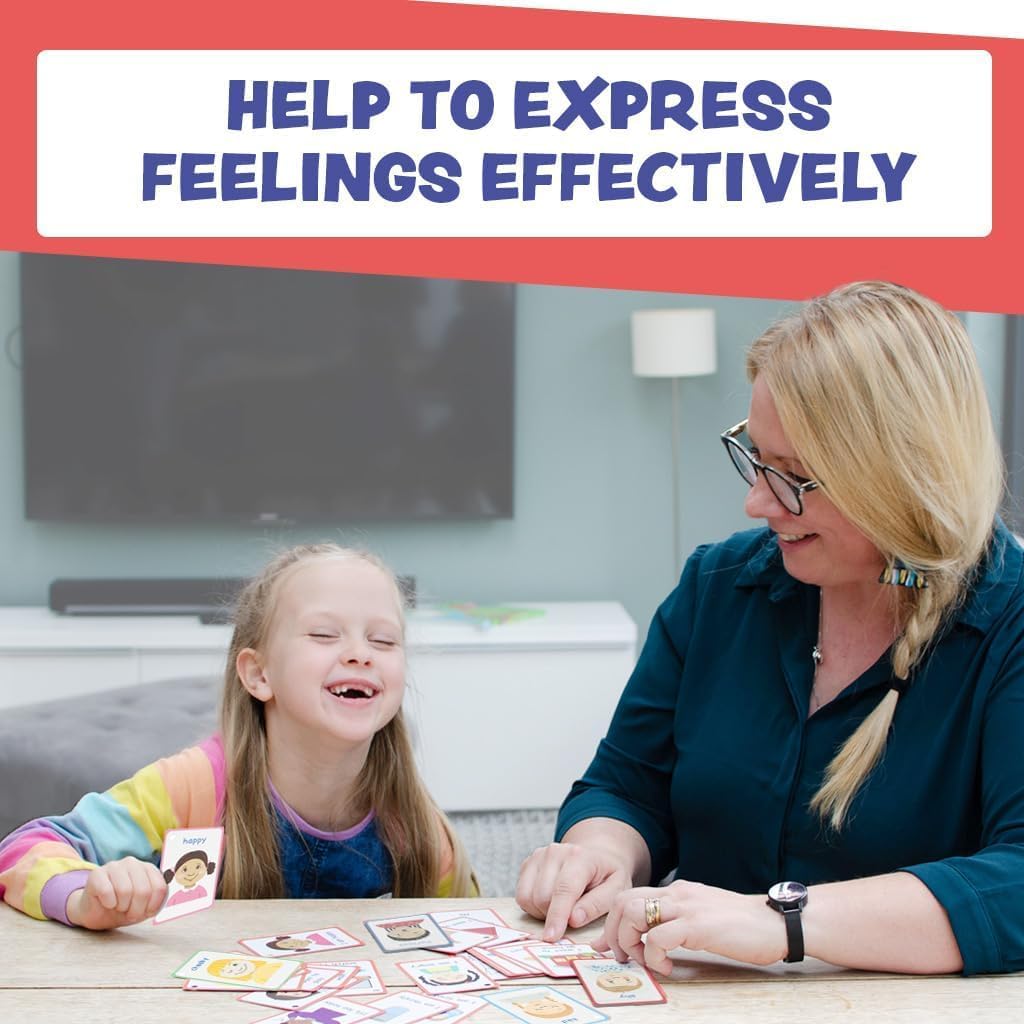
- Emotion flashcards: Feelings and Emotions 27 PECS Flashcards For SEN Special Education, Autism as Cue Cards, Aiding with Empathy and Social Skills.
- Open‑ended toys like blocks: Magnetic Tiles Building Block with 10 Metal Cars for Kids Construction STEM Toy Preschool Creativity Learning Toys for Girls, Boys and Toddlers 3 to 8 Years Old

- Parenting books on communication: Supporting Children’s Speech, Language and Communication Needs

FREQUENTLY ASKED QUESTIONS
At what age should toddlers learn to ask for help?
From 12 months onward, with support.
Does teaching help‑seeking reduce independence?
No. It supports confident independence.
Parent Story
Learning to ask for help does not happen overnight. For many families, it begins with small changes and the right kind of support.
One parent shared this experience:
“Before, every small struggle ended in tears. Dressing, opening toys, even snack time felt like a daily battle. Once we started using simple help phrases with visual reminders, the meltdowns reduced. Our toddler still gets frustrated sometimes, but now reaches out instead of shutting down.”
Stories like this reflect what research and practice both confirm: when toddlers are given clear language and visual support, communication improves and frustration decreases.
To support families on this journey, the following free tools were created.
Free Resources from Raising Smiles
These free resources are designed to help parents move from frustration to connection by giving toddlers clear, simple tools they can actually use.
Ask-for-Help Visual Cue Cards For Toddler (Free Download)
Toddlers often know they need help but cannot find the words in the moment. These Ask-for-Help Visual Cue Cards provide clear visual and language support when emotions run high.
Each card features:
- Simple, toddler-friendly phrases such as “Help me” and “Can you help?”
- Clean visuals that support language processing
- Easy prompts parents can use during daily routines
How this helps:
Visual cues reduce pressure on speech, support language recall, and give toddlers a concrete way to communicate before frustration turns into a meltdown. Research shows that visual supports strengthen comprehension and expressive language, especially during emotional moments.
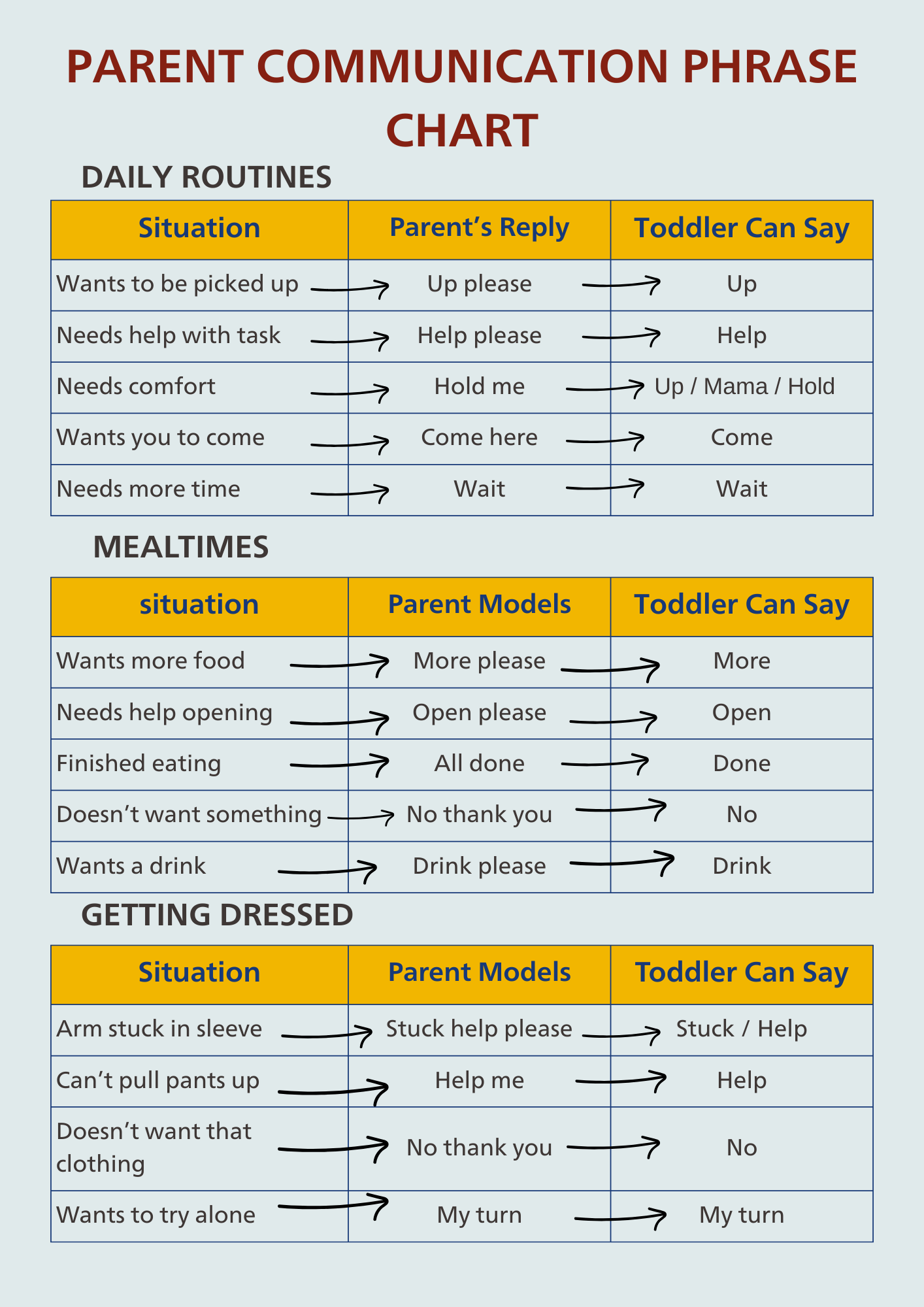
Parent Communication Phrase Chart (Free Download)
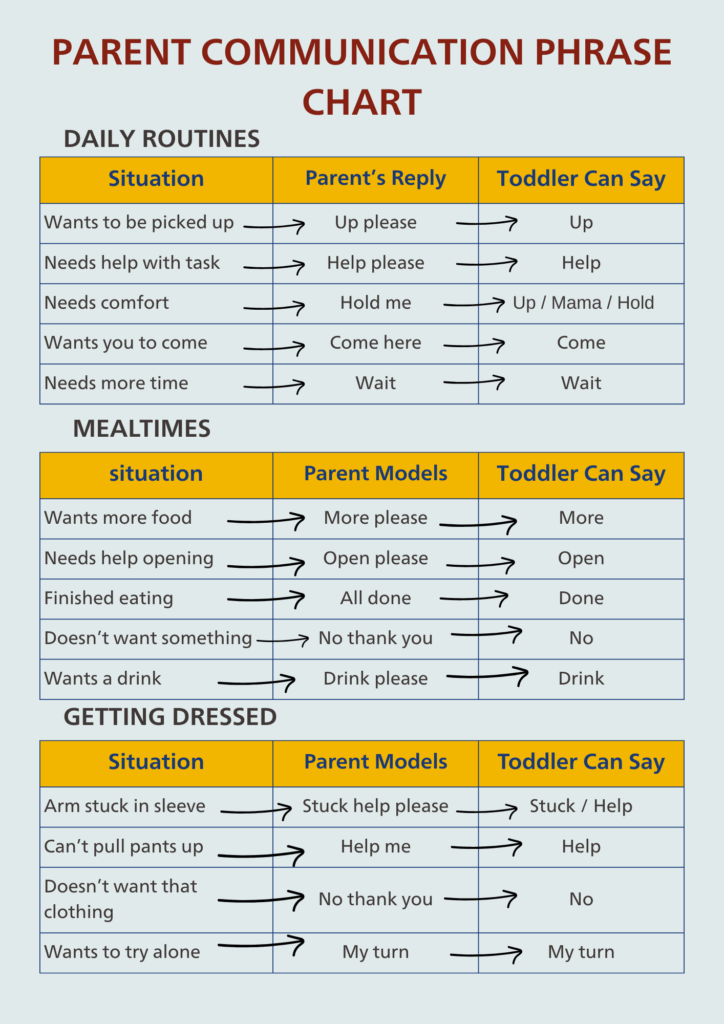
The Toddler Communication Phrase Chart is a practical, everyday tool that helps parents model helpful language consistently.
The chart includes:
- Short, developmentally appropriate phrases toddlers can learn
- Common daily situations (play, dressing, eating, cleanup)
- Clear examples of what parents can say and what toddlers can repeat
How this helps:
Toddlers learn language through repetition and modeling. This chart supports parents in using the same phrases consistently, which strengthens memory, speech development, and confidence. Over time, toddlers begin to use these phrases independently instead of relying on crying or physical reactions.
What You Should Do
If tantrums often start because your toddler cannot express a need, these tools can help create meaningful change.
Download the free Ask-for-Help Visual Cue Cards and Toddler Communication Phrase Chart today and begin supporting calmer communication, stronger emotional skills, and a more connected parent-child relationship.