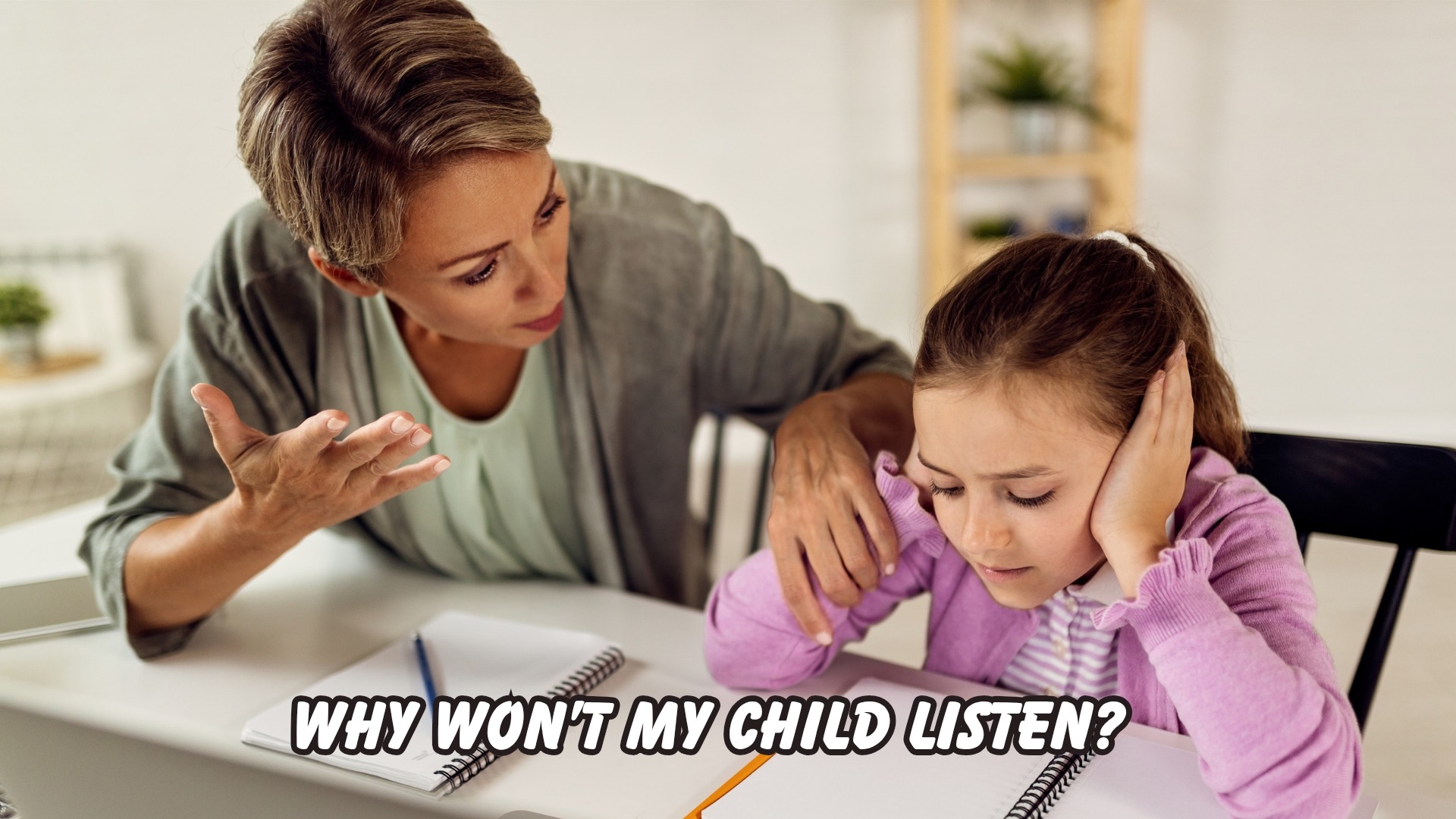
7 Reasons Children Ignore You and What Parents Can Do
If you feel like you have to tell your child the same thing five, six or even ten times before they finally do it, you are definitely not alone.
“Put your shoes on.”
Nothing.
“Please put your shoes on.”
Still nothing.
“Did you hear me?”
“Yes.”
“Then why haven’t you put your shoes on?”
And suddenly what started as an ordinary school morning has turned into shouting, tears, threats, negotiations and everyone leaving the house frustrated.
Sometimes it can feel as though your child is deliberately ignoring you.
But before you conclude that your child is rude, stubborn, lazy or simply “not listening”, it is worth looking at what might actually be happening.
Because hearing you and processing what you said are not always the same thing.
Children are still developing attention, language, working memory, self-control and the ability to shift their attention from something they are doing to something an adult wants them to do.
That does not mean children should never be expected to listen or follow instructions. They absolutely need boundaries and expectations.
But understanding why your child isn’t listening can change what you do next.
And sometimes, a small change in the way we give an instruction can make a surprisingly big difference.
Is my child actually not listening?
Before you repeat yourself for the fourth time, ask yourself a simple question:
Did my child actually stop, listen and understand what I said?
Imagine your child is building something with LEGO.
You are in the kitchen and call:
“Come and get your shoes on, we’re leaving in ten minutes!”
Your child says nothing.
You call again.
Still nothing.
You might interpret that as:
“They are ignoring me.”
But your child may have been so absorbed in what they were doing that they didn’t properly shift their attention to you.
This is particularly relevant for younger children, but older children can struggle with it too.
Children’s attention and listening skills develop over time. NHS speech and language guidance recommends getting a child’s attention before speaking, keeping instructions short and breaking longer instructions into manageable steps.
So instead of assuming:
“My child won’t listen.”
try asking:
“What is getting in the way of them listening?”
That is a much more useful starting point.
7 reasons your child may not be listening
1. You don’t actually have their attention
This is one of the simplest things to change.
Calling instructions from another room is convenient for us, but it isn’t always effective.
Your child may be playing, reading, drawing, talking to a sibling or concentrating on something else.
By the time they hear your voice, they may only catch the last few words.
Try getting physically closer first.
Say their name.
Pause.
Make sure they have noticed you.
Then give the instruction.
For example:
Instead of:
“Daniel! How many times do I have to tell you? Put your shoes on!”
Try:
“Daniel.”
Pause.
“It’s time to put your shoes on.”
That’s it.
No five-minute speech.
No list of everything they have done wrong that morning.
Just the instruction that matters right now.
NHS guidance on attention and listening similarly recommends using a child’s name, getting their attention and reducing competing distractions before giving instructions.
Try this tonight
Choose one ordinary instruction:
“Please put your cup in the kitchen.”
Walk over to your child.
Say their name.
Wait until they acknowledge you.
Give the instruction.
Then wait.
You may discover that your child was not actually refusing to listen. They simply weren’t tuned in.
2. You’re giving too many instructions at once
This is one I think many parents, including myself, can recognise.
We say:
“Go upstairs, get dressed, brush your teeth, put your dirty clothes in the basket, get your school bag, put your shoes on and come downstairs.”
Then we wonder why our child comes downstairs wearing one sock, holding a toy and having forgotten everything else.
The problem may not be defiance.
There were simply too many things to remember.
Children have developing working-memory and language-processing skills, and long instructions can be difficult to hold onto.
NHS speech and language guidance recommends breaking instructions into shorter chunks and giving children time to respond before adding another instruction.
Try one instruction at a time
Instead of:
“Get dressed, brush your teeth and pack your bag.”
Try:
“Get dressed.”
Wait.
Then:
“Now brush your teeth.”
Then:
“Now get your school bag.”
This may feel slower initially.
But if it means you aren’t repeating yourself ten times, it may actually make your mornings quicker.
3. Your child doesn’t fully understand what you mean
Sometimes we think we’re being clear when we’re actually using words that are too vague.
“Behave.”
“Be good.”
“Get ready.”
“Sort yourself out.”
“Stop messing around.”
What exactly does that mean to a child?
“Get ready” might mean putting on a jumper.
You might mean:
Get dressed, brush your teeth, put your shoes on and bring your school bag downstairs.
Those are very different instructions.
The more specific the instruction, the easier it is for your child to know what success looks like.
Instead of:
“Stop being silly.”
Try:
“Please sit on the chair.”
Instead of:
“Get ready for school.”
Try:
“Please put your trousers on.”
Instead of:
“Clean your room.”
Try:
“Please put the books on the shelf.”
Then:
“Now put the clothes in the basket.”
Clear instructions reduce the amount of guesswork your child has to do.
If you suspect a possible developmental concern, check this- Understanding Developmental Regression in Children: Causes, Signs & When to Seek Support
4. They’re deeply involved in something else
Have you ever tried talking to someone while they are concentrating intensely on something?
You can say their name three times and they genuinely may not register what you’ve said.
Children experience this too.
Your child might be:
- building LEGO
- drawing
- reading
- playing football
- completing a puzzle
- talking to a sibling
- watching something
- playing a game
- deeply involved in imaginative play
That doesn’t mean they should never stop what they’re doing.
But giving them a transition warning can help.
For example:
“You’ve got five more minutes to finish your LEGO, then we’re getting ready for dinner.”
A few minutes later:
“Two more minutes.”
Then:
“Okay, it’s time to stop and come for dinner.”
You’re helping their brain prepare for the change instead of expecting an instant switch.
For some children, a visual timer can make this even easier.
5. You’ve repeated the instruction so many times that the first request no longer feels urgent
This one is uncomfortable, because sometimes the problem isn’t entirely the child.
Sometimes we’ve accidentally taught them that they don’t need to respond to the first instruction.
Think about what happens:
“Please put your shoes on.”
Nothing.
“I said put your shoes on.”
Nothing.
“How many times do I have to ask?”
Nothing.
“If you don’t put your shoes on now, we’re going without you.”
Then eventually Mum or Dad finds the shoes, brings them over, helps put them on and gets everyone into the car.
The child has learned something unintentionally:
The first instruction isn’t really the deadline.
This doesn’t mean you should become harsher.
It means you need to become more consistent and deliberate about the instructions you give.
Child Mind Institute guidance similarly recommends giving fewer directions, being close to the child when giving them, allowing time for processing and following through when necessary.
A better approach
Only give an instruction when you are prepared to follow through.
Get their attention.
Give one clear instruction.
Wait.
If they don’t respond, calmly repeat or simplify it.
Then follow through with the consequence you have already established.
The aim isn’t:
“How can I make my child obey me?”
It is:
“How can I make my expectations clear and predictable?”
6. They’re tired, hungry, overwhelmed or emotionally dysregulated
Not every listening problem is a discipline problem.
Sometimes a child who normally follows instructions well suddenly seems impossible.
Think about the circumstances.
Did they just come home from school?
Are they hungry?
Did they sleep badly?
Have they had a difficult day?
Are they overwhelmed?
Have they been rushing from one activity to another?
Are they already upset about something?
A child who is emotionally overloaded may have less capacity for another instruction.
That doesn’t mean you remove every boundary.
It means you may need to change the way you approach the situation.
Instead of:
“Stop crying and put your shoes on NOW.”
Try:
“You’ve had a hard afternoon. Let’s take a minute. Then we’re going to put your shoes on.”
You can acknowledge the emotion and maintain the boundary.
Those two things can exist together.
7. They may genuinely be struggling with attention, language or processing
This is the part parents shouldn’t ignore.
If your child occasionally ignores you because they are busy playing, that’s one thing.
But if they consistently struggle to follow instructions, especially across different settings, it may be worth looking more closely.
For example, does your child:
- frequently seem not to hear you?
- struggle to follow even simple instructions?
- forget instructions immediately?
- need instructions repeated constantly?
- struggle to understand questions?
- become lost when given more than one step?
- have difficulty following classroom instructions?
- appear to understand much better when shown rather than told?
- have difficulties with speech, language, reading or learning as well?
- struggle significantly with attention in different environments?
Difficulty following instructions can sometimes be associated with difficulties understanding language. NHS speech and language services note that children with language-understanding difficulties can appear to ignore adults, struggle with instructions and have difficulty remembering information.
That doesn’t mean your child has a particular condition.
It simply means persistent difficulties deserve attention rather than being dismissed as bad behaviour.
If you are concerned, speak with your child’s teacher, SENCO or an appropriate health professional.
How to get your child to listen without shouting
Let’s be honest.
Most parents have shouted.
You can be the calmest parent in the world and still have moments when you find yourself saying:
“I HAVE ASKED YOU THREE TIMES!”
The problem is not that you lost your patience once.
The problem is when shouting becomes the main communication system in the house.
If your child only responds when your voice gets louder, everyone becomes trapped in the same cycle.
You ask.
They don’t respond.
You repeat.
They don’t respond.
You shout.
They finally move.
So the lesson your child receives is:
“Mum doesn’t really mean it until she’s shouting.”
The solution is not to whisper sweetly while your child completely ignores you.
It is to make the earlier instruction clearer, calmer and more consistent.
Try the “Name, Connect, Tell, Wait” method
This is simple enough to remember when you’re tired.
1. Name
“Amara.”
2. Connect
Move closer and make sure she knows you’re speaking to her.
3. Tell
“Please put your shoes on.”
4. Wait
Give her a moment to process and respond.
Don’t immediately say the same sentence six more times.
Child Mind Institute guidance similarly recommends proximity, clear and specific instructions, one direction at a time and giving children time to process before repeating an instruction.
Stop asking questions when you are actually giving an instruction
This is a small change that can make a difference.
If you need your child to do something, don’t disguise the instruction as a question.
Instead of:
“Can you put your shoes on?”
Try:
“Please put your shoes on.”
Instead of:
“Are you ready to tidy up?”
Try:
“It’s time to tidy up.”
Why?
Because “Can you…?” sounds like a request that can be answered.
And children are often very good at answering:
“No.”
Clear doesn’t mean harsh.
You can be warm and still be direct.
Give choices where choices are appropriate
Not everything needs to become a negotiation.
But giving controlled choices can help children feel involved.
Instead of:
“Get dressed.”
Try:
“Do you want the blue top or the green top?”
Instead of:
“We’re leaving now.”
Try:
“Do you want to put your shoes on here or by the front door?”
The destination hasn’t changed.
The boundary hasn’t changed.
But your child has some control over how they get there.
Use visual reminders for routines
Some children respond much better when they can see what needs to happen.
A morning routine might be:
1. Get dressed
2. Brush teeth
3. Eat breakfast
4. Put school bag on
5. Shoes
6. Leave
Instead of saying all six things repeatedly, put the routine somewhere your child can see it.
This is particularly useful for younger children and children who struggle with language processing or remembering multi-step instructions. NHS speech and language guidance recommends visual support, breaking instructions into steps and giving children time to process.
Praise the behaviour you want to see
This doesn’t mean throwing sweets at your child every time they listen.
Sometimes the most powerful reward is simply your attention.
Instead of only noticing when your child ignores you, notice when they respond.
“Thank you for putting your shoes on the first time I asked.”
“I noticed you stopped playing and came when I called you. Well done.”
“You remembered all three steps without me reminding you.”
Be specific.
Your child learns exactly what behaviour you are praising.
Child Mind Institute recommends specific, labelled praise when children follow directions because it tells them exactly what behaviour was successful.
Make listening a skill you practise, not just something you demand
You don’t have to wait until your child is refusing to put their shoes on to practise listening.
Make it fun.
Play “Simon Says”
This classic game actually gives children an opportunity to practise listening carefully before acting.
NHS children’s services recommend games such as Simon Says as a way of developing attention and listening skills.
Start simple:
“Simon says touch your nose.”
Then gradually increase the challenge.
“Simon says touch your nose and then clap.”
For older children:
“Simon says touch your nose, clap twice and then sit down.”
Now you’re practising:
- listening
- attention
- memory
- sequencing
- impulse control
without sitting your child down and announcing:
“Today we’re going to work on your listening skills.”
Try the “Bring Me…” game
This is another simple activity that costs nothing.
Say:
“Bring me something that is red.”
Then:
“Bring me something you wear on your feet.”
For older children:
“Bring me something from your bedroom that starts with the letter B.”
You can increase the difficulty gradually.
NHS speech and language guidance also suggests games where children listen to descriptions and retrieve particular objects as a way of supporting listening and understanding.
What if my child says “I heard you” but still doesn’t do it?
This is where things get interesting.
Hearing an instruction doesn’t necessarily mean agreeing with it.
Your child may have heard:
“Turn the game off.”
They may simply not want to.
That is different from not understanding.
And yes, children sometimes deliberately test boundaries.
That’s normal.
Your job isn’t to eliminate every disagreement.
Your job is to make the boundary predictable.
You can say:
“I know you heard me. It’s still time to turn it off.”
No ten-minute argument.
No lecture.
No need to prove that you’re right.
Just calmly hold the boundary.
What if my child only listens when I shout?
Don’t feel guilty, but don’t accept that as the permanent pattern either.
Start by changing the sequence.
Instead of increasing your volume:
Get closer.
Say their name.
Give one instruction.
Wait.
Follow through.
And when they respond:
Notice it.
It may take time for a new pattern to develop.
If your child has learned that the instruction doesn’t become serious until Mum or Dad shouts, changing that pattern requires consistency.
When should I be concerned about my child’s listening?
You don’t need to panic because your five-year-old ignored you while building a tower.
But speak to your child’s school or a relevant professional if difficulties are persistent, significant or occurring across different settings.
Pay particular attention if your child:
- frequently doesn’t respond to their name
- appears not to hear you
- struggles to understand everyday language
- cannot follow age-appropriate instructions
- needs instructions repeatedly simplified
- struggles similarly at school and home
- has noticeable speech or language difficulties
- has significant attention difficulties
- is also struggling with learning, reading or other areas of development
There can be many reasons for these difficulties, including attention, language understanding, hearing or other developmental factors.
The goal is not to label your child.
The goal is to understand what they need.
A simple 7-day listening challenge for parents
Rather than trying to change everything at once, choose one behaviour.
For the next seven days, practise getting your child to respond to a simple instruction.
Day 1: Get their attention
Use their name and move closer before speaking.
Day 2: Give one instruction
No long lists.
Day 3: Give processing time
Say it once, then wait.
Day 4: Make the instruction specific
Tell them exactly what you want them to do.
Day 5: Add a visual reminder
Use a picture, checklist or routine chart.
Day 6: Praise the behaviour
Notice when they respond without repeated reminders.
Day 7: Look for the pattern
Ask:
What worked best for my child?
That’s the information you want.
Because your child isn’t a project that needs “fixing”.
You are learning how your particular child listens, processes information and responds best.
FREE PRINTABLE: My Child’s Listening & Routine Tracker
If you find yourself constantly wondering:
“Why didn’t they listen?”
start tracking what happens rather than relying on memory.
We’ve created a simple 7-Day Listening & Routine Tracker for parents.
You can record:
It’s to help you spot patterns.
- what you asked your child to do
- whether they understood
- how many reminders they needed
- what was happening around them
- whether they were tired or distracted
- what strategy you used
- what seemed to help
Download the Raising Smiles 7-Day Listening & Routine Tracker
The idea isn’t to score your child.
Suggestions for parents
You don’t need to buy lots of products to teach your child to listen.
In fact, I would start with the strategies above before spending money.
However, some simple resources can make routines easier, particularly for younger children or children who benefit from visual structure.
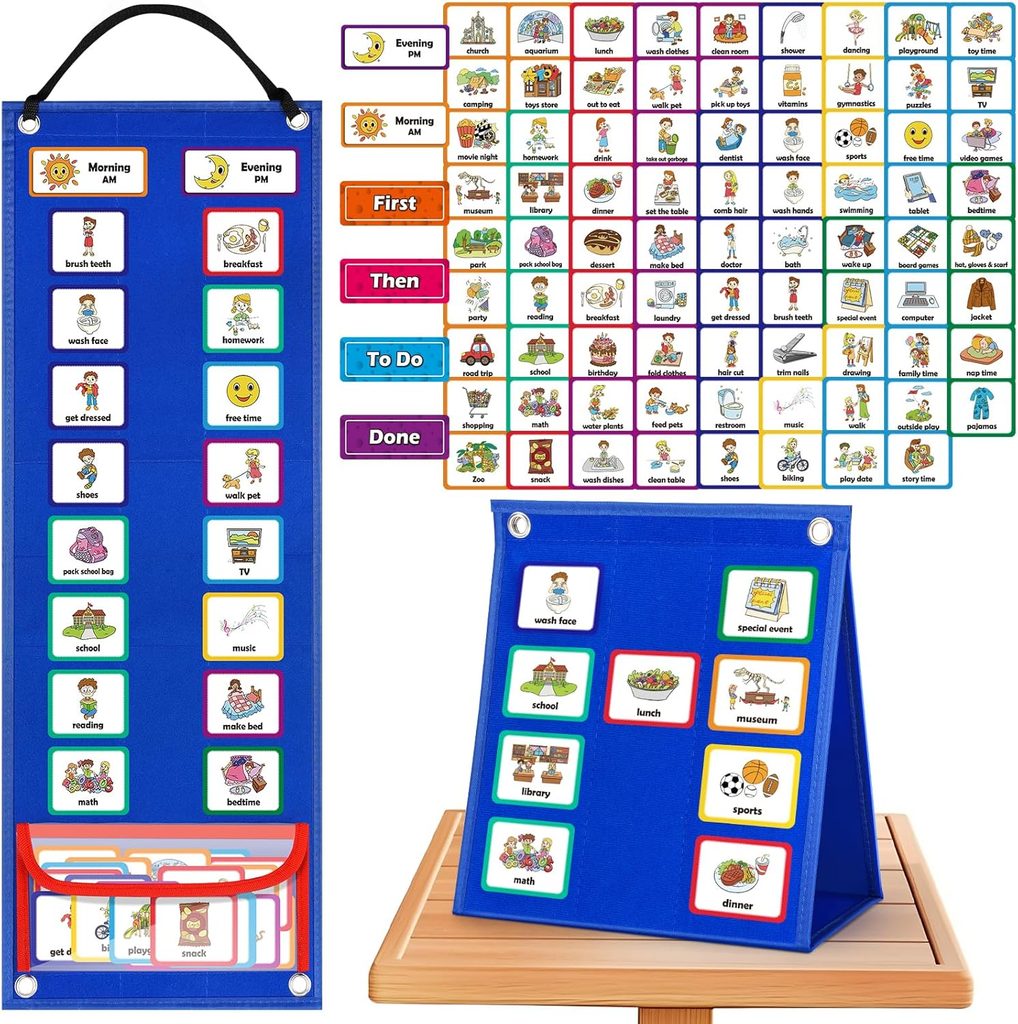
1. Visual routine charts
A visual morning or bedtime routine can reduce the number of verbal instructions you need to repeat.
Look for charts that allow children to move through steps independently rather than products that simply display lots of text.
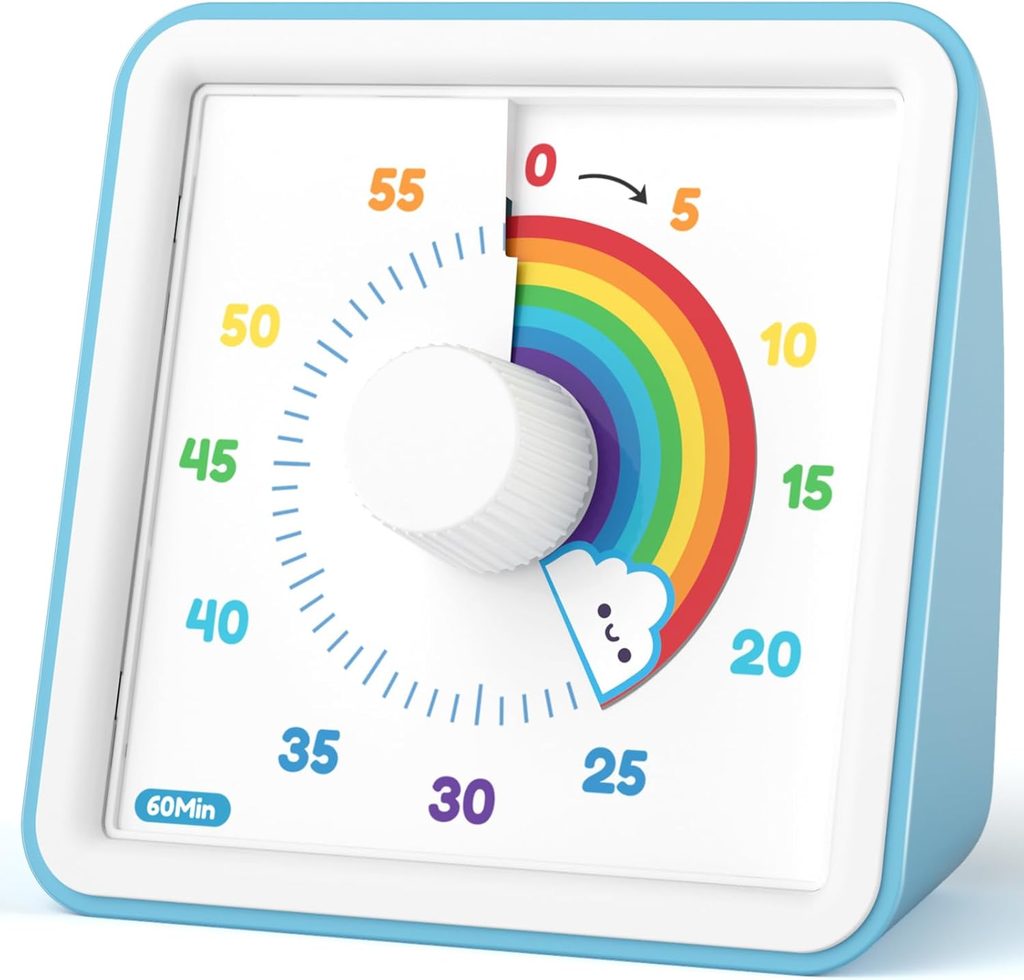
2. Visual timers
A visual timer can be particularly useful for transitions.
For example:
“You have five minutes to finish playing. When the timer finishes, we’re getting ready for bed.”
The child can see the remaining time rather than relying entirely on repeated verbal reminders.
3. Children’s routine boards
Oyster&Pop Magnetic Reward & Chore Charts for Children – 3 Pack Dry Erase
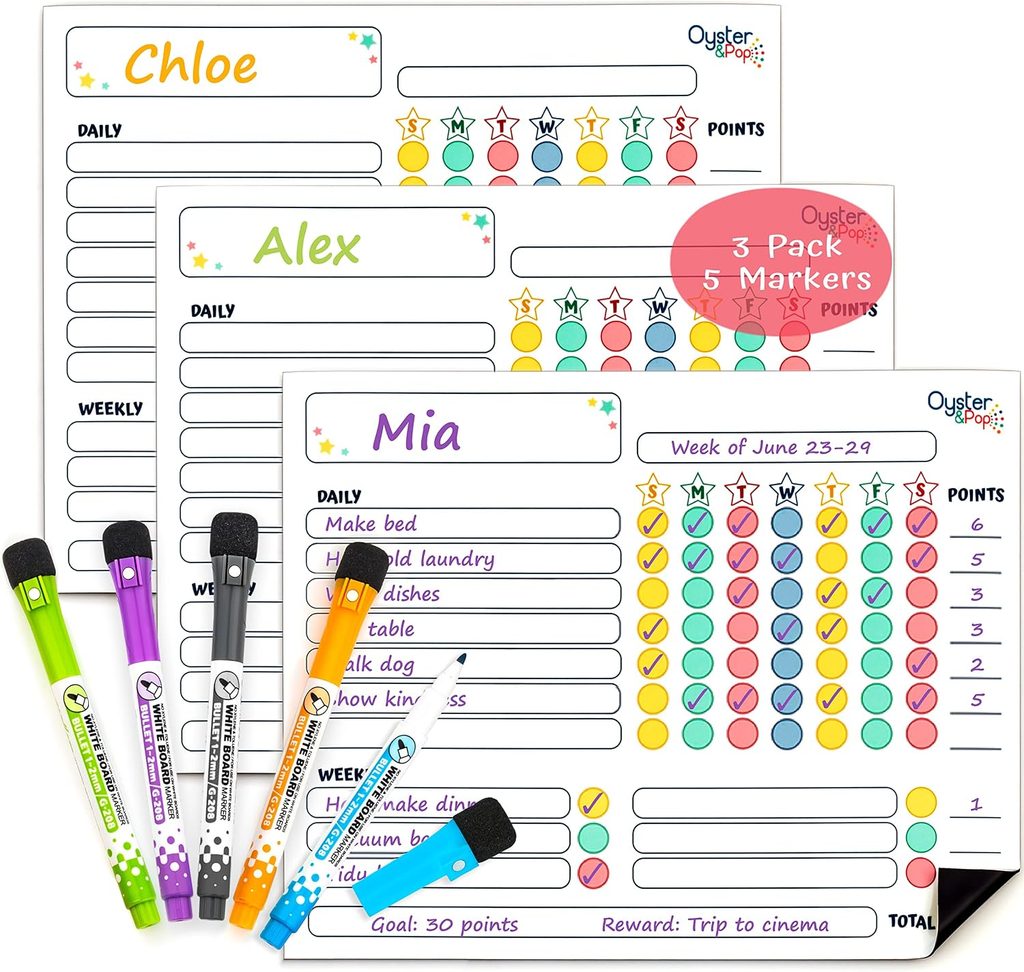
These can be useful for:
- morning routines
- bedtime
- homework
- getting ready for school
- tidying
- daily responsibilities
Choose something appropriate for your child’s age and ability.
4. Emotion cards

If your child frequently becomes overwhelmed or frustrated when asked to stop an activity, emotion cards can provide another way to talk about what is happening.
The important thing is not the product itself.
It is how you use it.
Before you buy anything, try this
For one week, change how you give the instruction before buying another product to solve the problem.
Try:
Get close.
Say their name.
Give one clear instruction.
Wait.
Follow through.
Praise the response.
You may be surprised by how much difference those small changes make.
The goal isn’t to raise a child who obeys every word
This is worth saying.
We don’t want children who blindly obey every instruction without thinking.
As children grow, we want them to develop:
- independence
- self-control
- communication
- reasoning
- responsibility
- the ability to ask questions
- the confidence to say when something doesn’t make sense
So the long-term goal isn’t:
“My child does everything I say immediately.”
It is:
“My child can listen, understand what is expected, communicate when they disagree or need help, and gradually learn to manage their own behaviour.”
Those are very different goals.
And sometimes the child who appears to “not listen” is actually telling us that they need clearer communication, more time to process, a more predictable routine or help developing the skills needed to respond.
Other times, yes, they’re simply testing the boundary.
They’re children.
Both things can be true.
Final thoughts for the parent who is exhausted from repeating themselves
If you have found yourself saying:
“How many times do I have to tell you?”
today, you’re not a bad parent.
Parenting is repetitive.
Very repetitive.
You will probably say “put your shoes on” approximately 4,000 times before your child becomes the person who remembers their shoes without being asked.
But you don’t have to shout louder to be heard.
Start by making your communication shorter, clearer and more predictable.
Get their attention.
Give one instruction.
Give them time.
Follow through calmly.
Notice the good moments.
And if your child’s difficulty with listening is persistent or seems bigger than ordinary childhood behaviour, don’t simply label them as naughty or difficult.
Ask a better question:
“What is making it hard for my child to listen?”
Sometimes that question leads you to the solution.