Is your child struggling to read compared with their classmates?
Here’s how to tell the difference between a normal stage of development and a reading difficulty that deserves extra support, plus practical things you can do at home.
There is a particular kind of worry that many parents know well.
Your child’s teacher says they are working below the expected reading level.
Another child their age is already reading books independently.
Your child is still sounding out simple words.
Or perhaps they can read a few words perfectly one day and struggle with them the next.
And suddenly you find yourself wondering:
“Is my child behind?”
“Will they catch up?”
“Could it be dyslexia?”
“Am I not doing enough at home?”
First, take a breath.
Being behind in reading at one particular point does not automatically mean that your child has a learning difficulty or will struggle with reading forever. Children develop at different rates, and reading is a complicated skill involving several different abilities, including decoding, fluency, vocabulary and comprehension.
But there is also an important reason not to simply ignore persistent difficulties.
If a child is consistently struggling to decode words, read accurately, read fluently or understand what they have read, identifying the difficulty early gives parents and teachers a much better opportunity to provide appropriate support.
So the question isn’t simply:
“Is my child behind?”
A better question is:
“What exactly is my child finding difficult, and are they making progress?”
Let’s look at what parents should know.
First: What does “behind in reading” actually mean?
The phrase sounds straightforward, but it can mean very different things.
A child might be described as behind because they:
- are not yet reading at the level expected for their year group
- struggle to recognise common words
- have difficulty remembering letter sounds
- find blending sounds difficult
- read very slowly
- guess words rather than decoding them
- miss or change words when reading aloud
- struggle to explain what they have read
- avoid reading
- become frustrated when asked to read
- understand stories when someone reads to them but struggle to read the same material independently
These are not all the same problem.
For example, one child may have good phonics skills but read very slowly. Another may read words accurately but struggle to understand the story. Another may understand stories extremely well when they are read aloud but struggle to decode even simple words themselves.
That distinction matters.
Reading isn’t one single skill.
The Education Endowment Foundation describes reading fluency as involving accurate and automatic word recognition alongside comprehension. Its current guidance highlights fluency as an important bridge between recognising words and understanding increasingly complex texts.
What should a child be able to do?
There is no single magic age at which every child suddenly becomes a fluent reader.
However, schools do have expectations for children’s reading development.
In England, systematic phonics is a major part of early reading instruction. Children learn that letters and combinations of letters represent sounds and then learn to blend those sounds to decode words. The Year 1 phonics screening check is designed to identify whether children have developed decoding skills to an age-appropriate standard.
Children who do not meet the expected standard in Year 1 normally have another opportunity to take the check in Year 2. Schools should use the information to identify children who need additional support.
But don’t become too focused on a particular reading level.
Reading schemes are useful for showing progression, but they are not a diagnosis of your child’s ability.
For example, Oxford Reading Tree has 20 levels, from books for children just beginning to learn about reading through to more advanced independent readers. Oxford itself describes the levels as a guide rather than an absolute measure of ability.
The important thing is the pattern of progress.
7 signs your child may need extra reading support
One difficult reading session does not necessarily tell you much.
But if you repeatedly notice several of these signs, it is worth talking to your child’s teacher.
1. They struggle to sound out simple words
Your child sees:
c-a-t
but cannot blend the sounds into cat.
Or they repeatedly forget sounds they appeared to know previously.
Phonics is one of the foundations of early reading. Children need to develop the ability to connect letters and letter combinations with sounds and blend those sounds together to decode words.
2. They guess words instead of reading them
For example, your child sees:
“The dog ran home.”
They look at the picture and say:
“The dog went home.”
The sentence makes sense, but they haven’t actually read the words.
This can happen occasionally, particularly with beginning readers.
However, if guessing becomes their main strategy, it is worth discussing with their teacher.
The Department for Education advises parents to encourage children to sound out unfamiliar words and blend the sounds rather than relying on pictures to guess.
3. Reading is extremely slow and effortful
Some children can technically read the words but have to work so hard to decode each one that reading a paragraph becomes exhausting.
You may notice:
- long pauses
- frequent restarting
- losing their place
- sounding out almost every word
- difficulty reading with expression
- forgetting the beginning of a sentence by the time they reach the end
This is where fluency becomes important.
A child who is still using a great deal of mental effort to decode individual words has less attention available for understanding the meaning of the text.
4. They understand stories when you read them but struggle when they read
This is a particularly useful thing to notice.
Try reading a short story to your child.
Can they:
- tell you what happened?
- explain why something happened?
- describe a character?
- predict what might happen next?
- answer questions about the story?
If yes, but they struggle when they have to read the same material themselves, the difficulty may be more strongly related to word reading or decoding than to their ability to understand language.
That distinction can be useful when speaking with school.
5. They avoid reading whenever possible
“I’m tired.”
“I don’t want to.”
“Can you read it?”
“I hate reading.”
Sometimes avoidance is simply a matter of preference.
But persistent avoidance can also develop because reading feels difficult, embarrassing or exhausting.
The response should not automatically be to force longer reading sessions.
Instead, try to discover why reading feels difficult.
6. They become unusually frustrated
Watch what happens emotionally.
Does your child:
- become upset when they make mistakes?
- refuse to continue?
- become angry when asked to read?
- compare themselves with classmates?
- say things such as “I’m stupid” or “I can’t read”?
The emotional side matters.
A child who repeatedly experiences failure can begin to associate books with failure.
That is one reason reading practice needs to be challenging enough to develop skills but not so difficult that every session becomes a battle.
7. Progress seems very limited despite regular support
This is perhaps the most important sign.
Children do not all progress at exactly the same rate.
But if your child has been receiving appropriate teaching and practice and you are seeing very little improvement over time, don’t simply assume they will eventually “grow out of it.”
Talk to school.
Could it be dyslexia?
Possibly, but reading difficulty does not automatically mean dyslexia.
Dyslexia is a learning difficulty that mainly affects reading, writing and spelling. The NHS notes that signs in children can include reading below the expected level, slow or hesitant reading, difficulties with language-related activities and persistent spelling difficulties. Dyslexia does not affect intelligence.
Other factors can also affect reading.
For example:
- inconsistent attendance
- gaps in phonics teaching
- language development
- hearing or vision difficulties
- limited opportunities to read
- lack of confidence
- difficulty concentrating
- changes in school or teaching
- another special educational need
This is why parents should avoid diagnosing a child based on a list of symptoms on the internet.
If you are concerned about dyslexia, the NHS recommends starting by speaking with your child’s school and SENCO. A GP cannot diagnose dyslexia, although they may help investigate other issues that could affect school performance, such as hearing difficulties.
The most important question: Is your child making progress?
Imagine two children.
Child A
They are currently reading below their classmates but have improved noticeably over the last six months.
They are learning new sounds.
They are recognising more words.
They are becoming more confident.
They still need support, but progress is happening.
Child B
They are also reading below their classmates.
But six months later, they are still struggling with many of the same basic skills.
They become increasingly frustrated and avoid reading.
Those two situations deserve very different conversations.
A reading level is a snapshot. Progress is the bigger picture.
What can you do at home?
You do not need to turn your home into a classroom.
In fact, one of the biggest mistakes parents make is thinking:
“If my child is behind, I need to make them read for an hour every night.”
Usually, a better approach is short, focused and consistent practice.
1. Read with your child every day
Even when your child is struggling to read independently, continue reading to them.
This is important.
Reading aloud exposes children to vocabulary, sentence structures, stories, ideas and language that may be beyond what they can currently decode themselves.
The Department for Education recommends reading aloud regularly and giving children opportunities to read different things.
And reading together should not disappear just because your child is learning to decode.
You can have two separate reading experiences:
“You read to me.”
and
“I read to you.”
Both matter.
2. Use books that match their current ability
If a child is struggling, giving them a book that is far beyond their decoding ability and saying “just try harder” can make reading feel impossible.
Ask the teacher which reading scheme, level or phonics stage your child is currently working at.
For early readers, decodable books can be particularly useful because the words are designed around the sounds the child has already been taught.
GOV.UK specifically advises parents to use books with the right level of phonics and explains that decodable readers allow children to work out unfamiliar words using their letters and sounds rather than simply guessing.
Some useful options for home
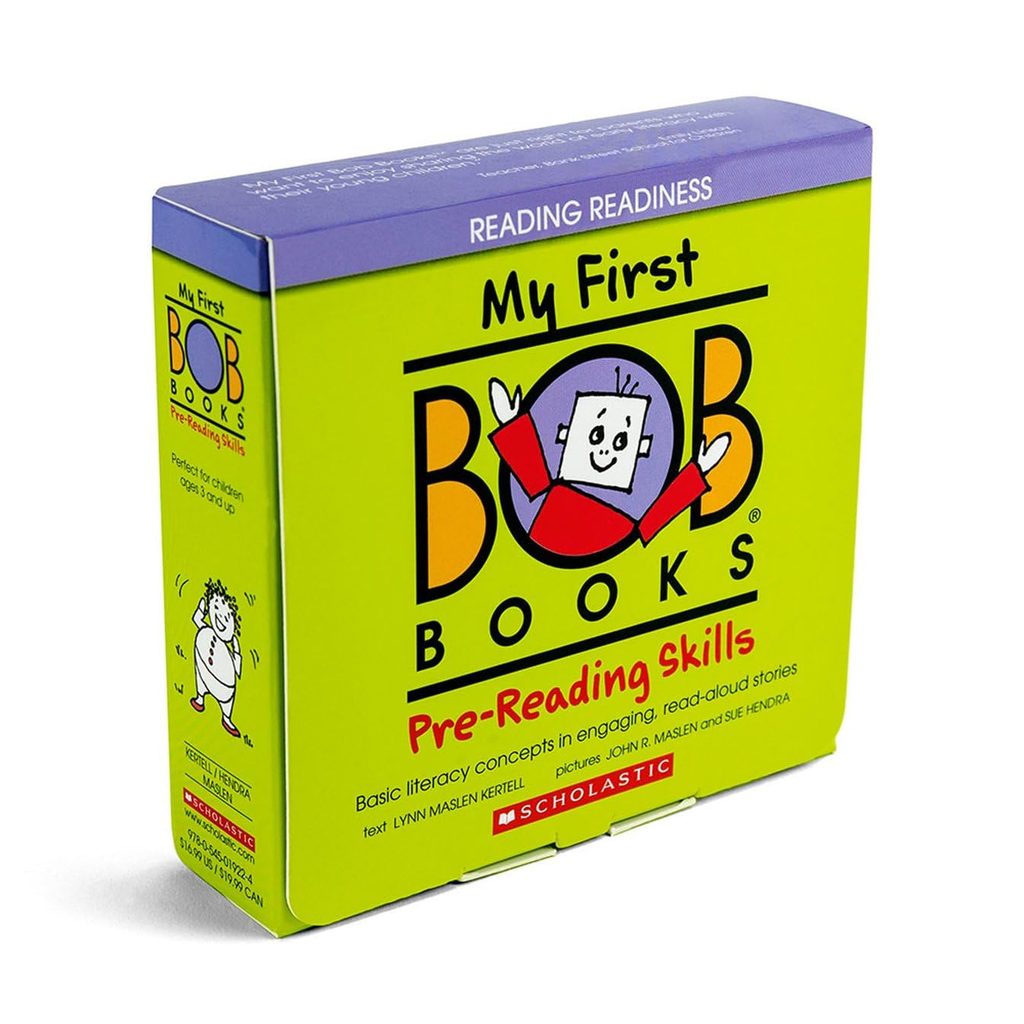
Bob Books can be useful for very early readers who need short, simple opportunities to practise decoding.
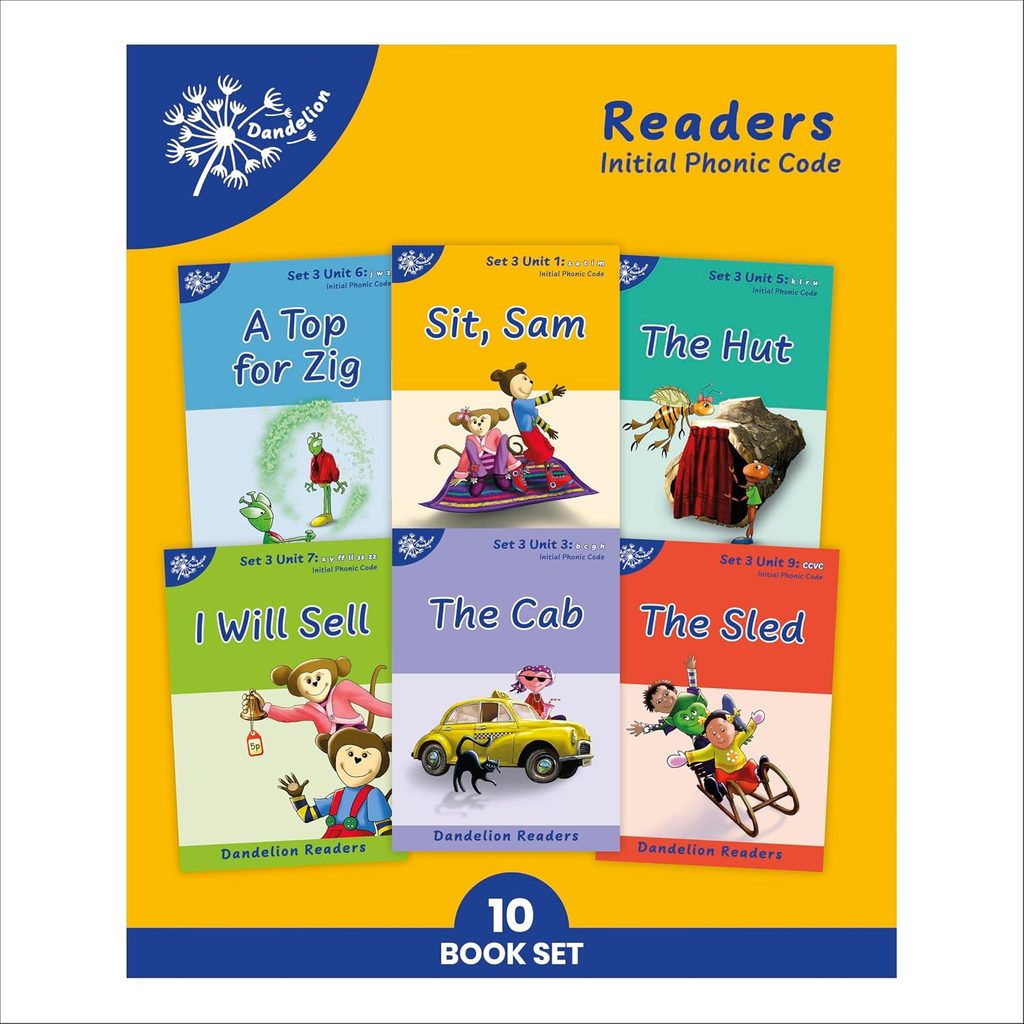
For children working through structured phonics stages, Dandelion Readers are another option worth exploring.
And if your child’s school uses Oxford Reading Tree, you can match home reading more closely to the school’s system. Oxford provides level and book-band information for parents, and also has a free eBook library.
3. Don’t make every book a lesson
This is where parents can accidentally kill the joy of reading.
Imagine your child finally chooses a book they love.
You sit down.
They read one page.
Then you interrupt:
“What’s that word?”
“Sound it out.”
“What sound does that make?”
“What does that sentence mean?”
“Try again.”
“What happened in the story?”
“Why?”
“Why?”
“Why?”
Suddenly the book feels like an exam.
Instead, separate skill practice from reading for pleasure.
Have a short period for phonics or reading practice.
Then have a story together simply because it is enjoyable.
4. Let your child choose some of the books
Your child does not have to read only “educational” books.
Comics count.
Non-fiction counts.
Football books count.
Animal books count.
Joke books count.
Magazines can count.
Graphic novels count.
Even repeatedly reading the same favourite book can be valuable.
Choice can help children become more engaged readers. BookTrust highlights the importance of giving children opportunities to choose what they read and creating enjoyable reading experiences.
If your child is obsessed with dinosaurs, don’t fight the dinosaurs.
Use the dinosaurs.
5. Read the same book more than once
Parents sometimes think:
“We’ve already read that one.”
But repetition can be incredibly useful.
The first reading may be about figuring out the words.
The second may be about fluency.
The third may be about understanding.
A familiar text can give a child an opportunity to experience what smoother reading feels like.
6. Try the “I read, you read” method
Choose a short paragraph.
You read it naturally first.
Then your child reads it.
You can repeat this with a few sentences rather than an entire chapter.
This can help your child hear:
- pronunciation
- pace
- expression
- punctuation
The goal isn’t to make them sound like a professional actor.
It’s to help reading become more natural.
7. Don’t correct every single mistake
This is difficult when you’re worried.
Your instinct may be to stop your child every time they make an error.
But constantly interrupting can make hesitant readers even more anxious.
If the word is important to understanding, help.
If your child has misread something and the meaning has changed, gently return to it.
For phonics practice, however, encourage them to use the decoding strategy they have been taught rather than simply giving them the word.
8. Talk about what you read
Reading isn’t just about saying the words correctly.
Ask simple questions:
“What happened?”
“Which character did you like?”
“Why did she do that?”
“What do you think will happen next?”
“Would you have done the same thing?”
This develops comprehension and turns reading into a conversation.
9. Don’t forget vocabulary
A child can decode every word in a sentence and still not understand it.
For example:
“The enormous creature emerged from the dense forest.”
A child might successfully sound out every word but not know what enormous, creature, emerged or dense means.
So talk.
Explain interesting words.
Use them in everyday conversation.
Connect books to real life.
That is part of building a strong reader too.
How long should your child read every day?
There is no magic number that works for every child.
For a struggling reader, 10 focused minutes can be more useful than 40 miserable minutes.
You could try:
10-minute reading routine
2 minutes:
Review a few sounds or tricky words.
4 minutes:
Read a short decodable or appropriately matched book.
2 minutes:
Re-read a familiar section for fluency.
2 minutes:
Talk about what happened.
Then stop.
If your child wants to continue, wonderful.
If not, you’ve still completed a useful session.
The Department for Education also emphasises that even a few minutes of reading each day can have an impact.
You can progress them to this- The 20-Minute Reading Habit That Changes Everything
What NOT to do if your child is behind
Don’t compare them constantly with siblings or classmates.
“Your sister could read this at your age” rarely produces the confidence you’re hoping for.
Don’t call them lazy.
A child who struggles with reading may be working incredibly hard.
Don’t make reading a punishment.
If reading becomes associated with punishment, you may get compliance without developing a love of reading.
Don’t make them guess from pictures.
Pictures are wonderful for discussing a story, but early readers also need to develop reliable decoding skills.
Don’t assume struggling means unintelligent.
Reading ability and intelligence are not the same thing. The NHS specifically notes that dyslexia does not affect intelligence.
Don’t wait indefinitely if nothing is changing.
If you’re concerned, speak to the school early.
What should I ask my child’s teacher?
Instead of simply asking:
“Is my child behind?”
try asking these questions:
1. What specific reading skills is my child struggling with?
2. Is the main difficulty phonics, decoding, fluency, comprehension or something else?
3. What reading stage or level are they currently working at?
4. What should they be able to do next?
5. Is my child making expected progress from their starting point?
6. What intervention or additional support is currently being provided?
7. What can we practise at home without conflicting with what school is teaching?
8. When should we review their progress?
Those questions will give you much more useful information than simply knowing that your child is “below average.”
When should I be more concerned?
There isn’t one universal age at which a parent should panic.
Instead, pay attention to persistence, severity and progress.
I’d particularly encourage you to speak with school if:
- your child is consistently struggling with basic decoding
- they cannot remember sounds they have repeatedly been taught
- they regularly guess words rather than decoding them
- reading is extremely slow or effortful
- they are significantly behind their peers and not catching up
- they are becoming increasingly distressed about reading
- spelling and writing difficulties are also significant
- there are concerns about speech and language
- there are concerns about hearing or vision
- reading difficulties continue despite appropriate additional support
The NHS advises parents who suspect dyslexia to speak with the school’s SENCO. Schools can provide support and, where appropriate, consider further assessment.
And what if my child is older?
Don’t assume that reading support is only for Reception and Year 1.
A child can reach Key Stage 2 still struggling with reading fluency, comprehension or decoding.
And once reading becomes difficult, it can start affecting other subjects.
Think about what happens when a Year 5 child cannot comfortably read a science question.
The problem isn’t necessarily that they don’t understand science.
They may not be able to access the question quickly enough.
The same can happen in:
- maths word problems
- history
- geography
- science
- homework instructions
- exams
Reading is increasingly the gateway through which children access the wider curriculum.
The EEF describes fluent reading as important because when decoding remains slow and effortful, children have less cognitive capacity available for comprehension and deeper understanding.
What if my child hates reading?
Don’t immediately conclude:
“My child isn’t a reader.”
Sometimes children don’t hate reading.
They hate finding reading difficult.
There is a difference.
Start by reducing the pressure.
Find something they genuinely care about.
If your child loves football, try football biographies or fact books.
If they love animals, use animal books.
If they love Minecraft, find age-appropriate Minecraft reading material.
If they love jokes, find joke books.
If they love superheroes, use superheroes.
The objective is to create more opportunities for your child to experience themselves as someone who can read, not someone who is always being reminded that they cannot read well enough.
BookTrust’s current guidance continues to emphasise enjoyment, choice and shared reading as important parts of developing reading habits.
A simple reading plan you can start tonight
You don’t need a complicated programme.
Try this for the next seven days.
Monday
5 minutes of phonics/word practice + 5 minutes reading.
Tuesday
Read a familiar book together.
Wednesday
5 minutes decoding + 5 minutes reading.
Thursday
Let your child choose the book.
Friday
Read a short passage twice and notice whether the second reading feels easier.
Saturday
Read something fun: comic, magazine, football book, animal book or joke book.
Sunday
Read together and talk about the story.
Then ask yourself:
Is anything becoming easier?
Not:
“Has my child caught up with everyone?”
Look for small changes.
A word that used to require help is now read independently.
A sentence is read with fewer pauses.
Your child volunteers to read.
They understand more of what they read.
They become less frustrated.
Those are meaningful signs.
FREE PRINTABLE: 7-Day Reading Check & Tracker
We’ve created a simple printable you can use at home.
It includes:
- a quick reading check
- things to observe while your child reads
- simple comprehension questions
- a guide to what to practise
- a 7-day reading tracker
- space to record how reading felt each day
- questions to help you decide whether to speak to school
Keep it somewhere visible and use it as a way of noticing progress rather than grading your child.
Reading resources worth considering
If you want additional resources at home, I’d focus on the right resource for your child’s current reading stage, rather than buying a huge pile of books.
One final thing every worried parent should remember
Your child does not need to become a fluent reader overnight.
And being behind today does not tell you exactly where they will be in two years.
What matters is that you notice the difficulty, understand what is causing it, support the skill that needs strengthening and involve school when necessary.
Most importantly, protect your child’s confidence while you do it.
A child can be a struggling reader today and still become a child who loves books.
They can need extra support and still be incredibly capable.
They can read more slowly than their classmates and still have a brilliant imagination, strong curiosity and enormous potential.
So if you’re sitting there wondering:
“Should I be worried?”
Don’t ignore persistent difficulties.
But don’t panic either.
Start with a better question:
“What does my child need help with, and what can we do next?”
That is where progress begins.