Contents:
- What Are Night Terrors?
- Understanding REM and Non-REM Sleep
- What Causes Night Terrors in Children?
- How Are Night Terrors Different from Nightmares?
- What Are the Signs of a Night Terror?
- How Long Do Night Terrors Last?
- At What Age Do Night Terrors Start and Stop?
- How Can I Help My Child During a Night Terror?
- Can Night Terrors Be Prevented?
- When Should I Be Concerned?
Child Sleep Terrors
If your child suddenly wakes up screaming, thrashing, or looking terrified—but doesn’t seem to recognize you or calm down—it can be incredibly alarming. You’re not alone! Toddler sleep terror or child sleep terror is more common that you know. Many parents experience this, and today, I want to answer the most frequently asked questions about night terrors so you can feel prepared and reassured.
What Are Night Terrors?
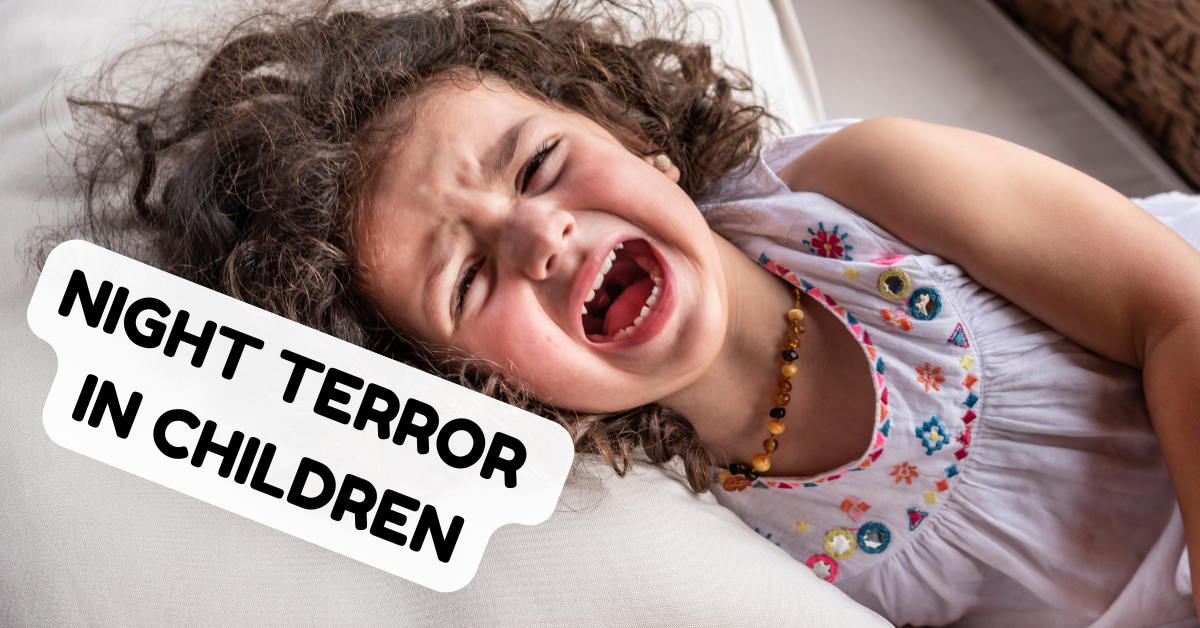
Night terrors, also known as sleep terrors, are episodes of intense fear, screaming, and confusion that happen during deep sleep. Unlike nightmares, which occur during REM sleep (the stage where dreaming happens), night terrors occur in non-REM sleep, meaning your child is not fully awake and will likely have no memory of the event in the morning.
Understanding REM and Non-REM Sleep
Sleep happens in cycles, and there are two main types: REM (Rapid Eye Movement) sleep and Non-REM sleep.
- REM Sleep: This is the stage where dreaming occurs. The brain is active, and the eyes move quickly under the eyelids. If a child wakes up from a nightmare, they are in REM sleep and can usually remember what scared them.
- Non-REM Sleep: This is the deep, restful part of sleep where the body repairs and grows. Night terrors happen during this phase, which is why children seem stuck between being asleep and awake—they aren’t fully aware of what’s happening and won’t remember it the next day.
What Causes Night Terrors in Children?
Child sleep terrors are usually triggered by disruptions in sleep patterns. Some common causes include:
- Overtiredness or irregular sleep schedules
- Stress or anxiety (even small changes in routine can be a trigger)
- Fever or illness
- Genetics (they often run in families)
- Sleep disturbances, such as breathing problems or restless leg syndrome
- High levels of activity before bedtime
- Transitioning from deep sleep to lighter sleep stages too quickly
How Are Night Terrors Different from Nightmares?
Many parents confuse night terrors with nightmares, but they are quite different:
- Nightmares happen during REM sleep, and children usually remember them.
- Night Terrors occur in deep non-REM sleep, and children typically have no recollection.
- A child having a nightmare can be comforted and will usually wake up fully.
- A child experiencing a night terror may not recognize you and won’t remember what happened.
What Are the Signs of a Night Terror?
If your child is experiencing a night terror, they may:
- Sit up suddenly and scream
- Appear wide-eyed and terrified but remain unresponsive
- Thrash around, kick, or push you away
- Sweat, breathe heavily, or have a racing heartbeat
- Talk or mumble nonsense
- Not recognize you when you try to comfort them
- Fall back asleep on their own, with no memory of the event in the morning
How Long Do Night Terrors Last?
Most night terror episodes last between 5 to 30 minutes, though they can feel much longer to a worried parent! Your child will usually settle back into sleep naturally once the episode ends.
At What Age Do Night Terrors Start and Stop?
Night terrors most commonly affect children between the ages of 3 and 7 years old, though they can sometimes start earlier (even in toddlers). Most children outgrow them by the time they reach their pre-teen years.
How Can I Help My Child During a Night Terror?
It’s heart breaking to see your little one so distressed, but the best thing you can do is:
- Stay calm. Although it’s scary, remember that your child isn’t fully awake and won’t remember it.
- Don’t try to wake them. Waking them up can make things worse and prolong the episode.
- Ensure their safety. If they’re thrashing or moving a lot, gently guide them back to bed to prevent injury.
- Speak softly and offer comfort. Even if they don’t seem to recognize you, a soothing presence can help.
- Wait it out. The episode will end on its own, and your child will fall back asleep naturally.
Can Night Terrors Be Prevented?
While there’s no guaranteed way to prevent night terrors, you can reduce the likelihood by:
- Establishing a consistent bedtime routine to promote good sleep habits
- Ensuring your child gets enough sleep (overtiredness is a major trigger)
- Avoiding stressful or stimulating activities before bed (no screen time 1 hour before sleep)
- Creating a calm, comfortable sleep environment
- Identifying and addressing potential triggers, such as illnesses or disruptions in routine
When Should I Be Concerned?
In most cases, night terrors are completely harmless and a normal part of development. However, consult a doctor if:
- The night terrors happen frequently (multiple times per night or several nights a week)
- They continue beyond the age of 10
- Your child is at risk of hurting themselves during an episode
- You notice other concerning symptoms, such as sleepwalking or excessive daytime drowsiness
Final Thoughts
Watching your child experience night terrors can be overwhelming, but rest assured they are not in pain and will have no memory of it the next day. With time and proper sleep habits, most children outgrow them completely. If your little one is going through this stage, you are not alone—and you are doing an amazing job!
If you found this post helpful, feel free to share it with other parents who might be dealing with the same worries. And as always, I’d love to hear your thoughts and experiences in the comments below!
Raising Smiles