What Genetics Really Says
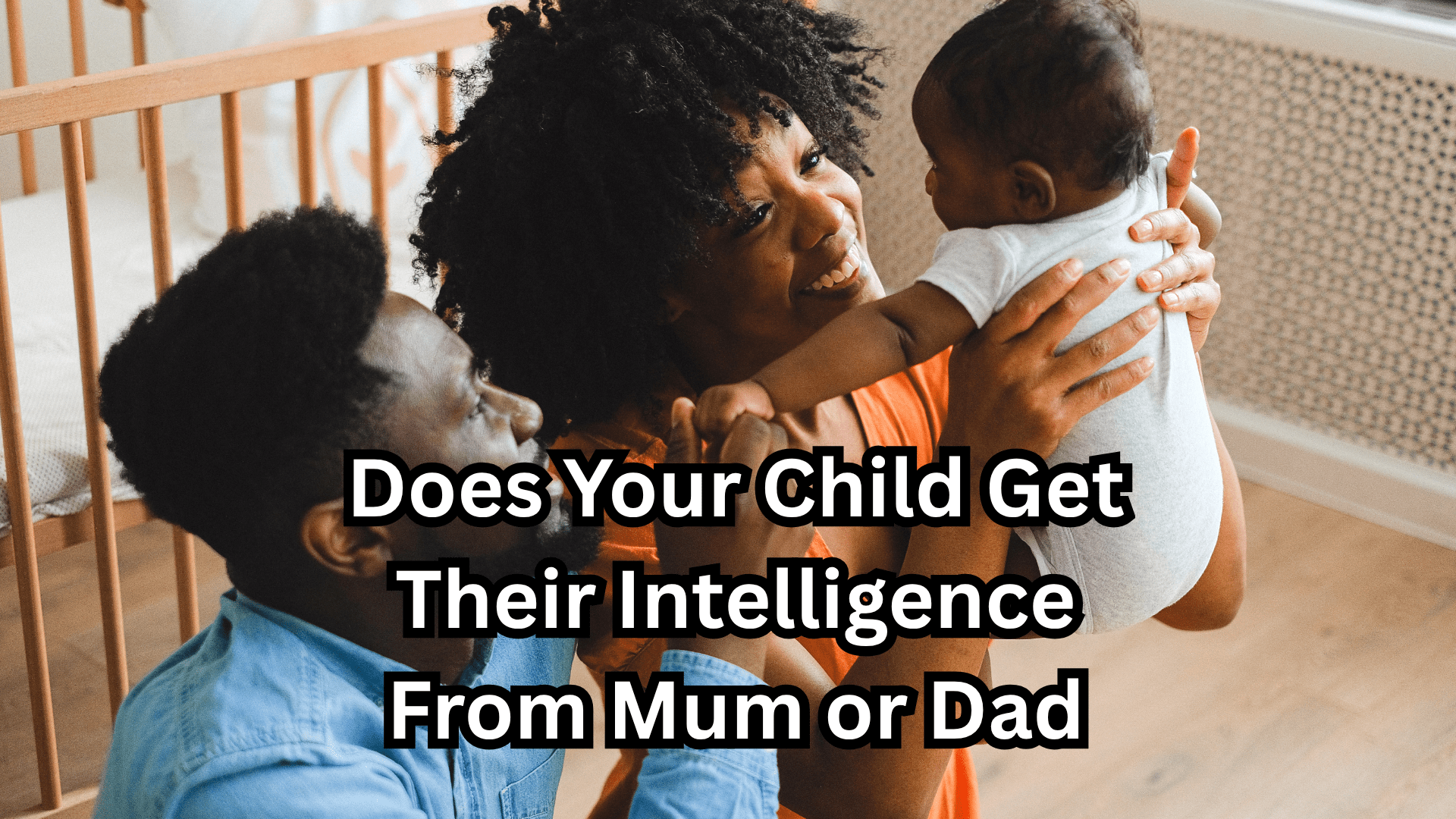
Does intelligence come from Mum or Dad? Here’s what genetics really tells us about inherited intelligence, genes, chromosomes, family traits and the role of a child’s environment.
Have you ever looked at your child doing something clever and thought:
“They definitely got that from their dad.”
Or perhaps you’ve heard the popular claim:
“Children get their intelligence from their mother.”
It sounds scientific.
It gets repeated everywhere.
And it has probably made many parents wonder whether there really is a particular parent responsible for passing intelligence on to their children.
But the truth is much more interesting.
Intelligence does not simply come from Mum or Dad
A child’s cognitive abilities are influenced by many genetic factors, as well as their environment and experiences.
So if you’re hoping this article will tell you whether Mum or Dad gets the credit for your child’s intelligence, the honest answer is:
You can’t divide intelligence that neatly.
Let’s look at what we actually know.
Does Intelligence Come From the Mother or Father
The short answer: both, and neither parent can claim all the credit.
Children inherit genetic material from both biological parents.
Many genes can contribute to characteristics associated with cognitive ability, and those genes are spread across the genome rather than being located in one simple “intelligence gene.”
Research into intelligence and cognitive ability suggests that genetic differences between people contribute to differences in cognitive performance, but environmental influences also matter substantially. (medlineplus.gov)
This means your child’s ability to learn, reason, remember, solve problems and understand information is not determined by one gene from one parent.
Instead, it is influenced by a complicated interaction between:
genes + development + environment + experience.
And that is why two children from the same family can have very different strengths.
Where Did the Idea That Intelligence Comes From Mum Come From?
You may have seen headlines claiming:
“Children inherit intelligence from their mothers.”
The idea is partly linked to research about genes on the X chromosome and the fact that some genes involved in brain development are located on the X chromosome.
But the internet often takes this information and turns it into a much simpler claim:
“The X chromosome carries intelligence, therefore children get their intelligence from Mum.”
That’s not an accurate description of how intelligence works.
There isn’t a single chromosome that contains a child’s intelligence.
And there isn’t a single “intelligence gene” that a mother passes to her children.
Cognitive ability is a complex trait influenced by many genetic variants.
So the popular statement is catchy, but it doesn’t reflect the full science.
Do Boys Get Their Intelligence From Their Mothers
This is one of the most common versions of the claim.
The reasoning usually goes something like this:
- boys have one X chromosome
- boys receive their X chromosome from their mother
- therefore boys get their intelligence from their mother
The first two points describe typical sex-chromosome inheritance correctly.
The third does not follow.
A boy typically receives:
X chromosome → Mum
Y chromosome → Dad
But the X chromosome is only one part of the genome.
A typical human has 23 pairs of chromosomes, not one X chromosome responsible for intelligence.
And cognitive ability is influenced by genetic variants across the genome.
So it would be misleading to tell a parent:
“Your son gets his intelligence from you because you gave him his X chromosome.”
That isn’t how the inheritance of intelligence works.
What Is Heritability?
This is where genetics can become confusing.
You may see claims such as:
“Intelligence is 50% genetic.”
It sounds as though scientists can look at your child and say:
“Half of their intelligence comes from their genes.”
They can’t.
Heritability does NOT mean that.
Heritability is a statistical measure describing how much variation in a particular trait within a particular population and environment can be associated with genetic differences.
It does not tell you how much of an individual child’s intelligence comes from genes.
MedlinePlus Genetics makes this distinction clearly: heritability describes variation among people in a population, not the percentage of an individual’s trait that is genetic. (medlineplus.gov)
This distinction is really important.
So How Much of Intelligence Is Genetic?
This is where you’ll often find different percentages quoted online.
Some large studies have found substantial genetic contributions to variation in cognitive ability, and estimates can change with age, population and the specific measure being studied. Research also indicates that genetic and environmental influences interact throughout development. (nature.com)
So there isn’t one scientifically useful number that you can apply to your individual child.
Instead of asking:
“What percentage of my child’s intelligence comes from Mum?”
a better question is:
“How do genes and a child’s environment work together to influence cognitive development?”
That is a much more useful way to think about it.
Your Child’s Environment Matters Too
This is the part parents can actually do something about.
Genes matter.
But children also develop through their experiences.
A child’s environment can include:
- conversations with parents
- reading
- play
- education
- relationships
- opportunities to explore
- sleep
- nutrition
- physical activity
- emotional security
- exposure to language
- opportunities to solve problems
- encouragement to ask questions
- access to learning resources.
This doesn’t mean parents can simply “make” a child intelligent.
It means children need environments that give their developing brains opportunities to learn.
Can Parents Make Their Child More Intelligent?
Be careful with this question.
You cannot turn your child into a genius by buying expensive educational toys or teaching them flashcards all day.
And you don’t need to.
What parents can do is create an environment that supports healthy development and learning.
That might look surprisingly ordinary.
Talk to your child.
Explain things.
Ask questions.
Listen to their answers.
Read together.
Talk about the pictures.
Ask what they think might happen next.
Let them tell you the story.
Let them play.
Children learn through exploration, experimentation and play.
Let them struggle a little.
If your child can’t solve something immediately, resist the temptation to do it for them.
Ask:
“What could we try?”
Encourage curiosity.
When your child asks:
“Why?”
You don’t have to have every answer.
Sometimes:
“I’m not sure. Let’s find out.”
is a fantastic answer.
Does Reading Make Children More Intelligent?
Reading is incredibly valuable for children’s language, vocabulary, knowledge and comprehension.
But it is important not to turn reading into an intelligence competition.
Your child doesn’t need to be reading chapter books at four to have a bright future.
What matters is building a positive relationship with language and learning.
You can support this by:
- reading aloud
- talking about stories
- introducing new vocabulary
- asking questions
- visiting libraries
- letting children choose books
- encouraging them to tell stories
- making reading enjoyable.
Reading should not become another way for parents to compare children.
The child who reads early isn’t automatically “smarter.”
And the child who develops later isn’t automatically less capable.
Children develop at different rates.
Why Are Some Children Naturally Better at Certain Things?
You may have two children who grow up in exactly the same house.
One loves numbers.
One loves stories.
One remembers every football statistic.
One can build complicated things from Lego.
One asks endless questions.
Another notices every tiny detail around them.
Does that mean one child is more intelligent?
Not necessarily.
Intelligence is not one single ability.
People have different cognitive strengths.
A child may find reading difficult but be excellent at spatial reasoning.
Another may struggle with maths but have exceptional verbal skills.
Another may have wonderful memory.
Another may be highly creative.
Another may be brilliant at solving practical problems.
This is why comparing siblings using one narrow definition of “smart” can be misleading.
Why Do Siblings Have Different Abilities?
This goes back to genetics.
Siblings inherit different combinations of genetic variants from their parents.
They also have different experiences.
Even children raised in the same home don’t experience exactly the same environment.
They may have:
- different friendships
- different teachers
- different interests
- different opportunities
- different birth-order experiences
- different personalities
- different responses to challenges.
So it is perfectly normal for siblings to have different strengths.
Same parents does not mean identical development.
And that is something worth remembering when children are being compared.
Can a Child Be Smarter Than Both Parents?
Absolutely.
A child’s cognitive abilities are influenced by a unique combination of genetic variants from both parents and their environment.
Genetic inheritance doesn’t work like receiving an exact copy of Mum’s or Dad’s abilities.
Children can inherit combinations of variants that differ from those expressed in either parent.
And their development also occurs in a different environment from the one their parents experienced.
So don’t assume:
“I’m not good at maths, so my child won’t be.”
Your child is not a carbon copy of you.
Can Intelligence Skip a Generation?
You may have heard people say:
“Your child gets their intelligence from their grandparents.”
This is another popular family saying that is more complicated than it sounds.
A child can inherit genetic variants that came from their grandparents through their parents.
So characteristics can appear to “run in families.”
But intelligence does not simply skip from parent to grandparent and then directly to a child.
Your child receives their genetic material from their biological parents.
Those parents, in turn, inherited genetic variants from previous generations.
So family patterns can exist without there being a simple:
Grandparent → child
inheritance pathway.
What About Personality and Intelligence?
Read more- What Do Children Inherit From Their Mum and Dad? 10 Traits Children Get From Their Parents
Parents sometimes notice that a child seems to have inherited both their personality and their abilities.
For example:
“She’s just like me. She loves books and she’s very quiet.”
There may be genetic influences on aspects of temperament and cognitive traits.
But personality and intelligence are not the same thing.
A quiet child isn’t necessarily more intelligent.
A very energetic child isn’t necessarily less intelligent.
A child who talks constantly isn’t necessarily more advanced.
And a child who doesn’t say much may simply have a different temperament.
Try not to turn personality into a measure of intelligence.
Children can be bright, capable and curious in very different ways.
What Can Parents Do to Support Their Child’s Brain Development?
You don’t need a house full of expensive educational equipment.
Some of the most valuable things parents can provide are remarkably simple.
Talk
Have conversations with your child.
Even young children benefit from hearing language, learning new words and being encouraged to communicate.
Read
Read stories together every day when possible.
Don’t worry about making every story educational.
Enjoying books matters too.
Play
Let children build, pretend, draw, experiment and explore.
Ask Questions
Instead of always giving answers, ask:
“What do you think?”
“Why do you think that happened?”
“What could we do differently?”
Encourage Curiosity
If your child asks 47 questions before breakfast, you may occasionally need a cup of tea.
But that curiosity is valuable.
Let Them Make Mistakes
Children learn from trying.
They don’t need to get everything right the first time.
Give Them Time to Think
Don’t rush to answer every question.
Sometimes give your child a few seconds to work it out.
Provide a Secure Relationship
Children learn within relationships.
Feeling safe, supported and able to communicate with trusted adults creates a strong foundation for development.
7 Things Parents Should Stop Saying About Intelligence
Sometimes the pressure doesn’t come from school.
It comes from us.
1. “You’re the clever one.”
This can make intelligence feel like a fixed identity.
2. “You’re just not good at maths.”
This can turn a temporary difficulty into something a child believes about themselves.
3. “Your sister is much better at reading.”
Comparison rarely motivates in the way parents hope.
4. “You’re so clever!”
Praise isn’t inherently bad, but specific feedback can be more useful.
Try:
“You kept trying even when that was difficult.”
5. “You get your brains from your mum.”
Fun family banter is one thing.
But children don’t need to believe intelligence belongs to one parent.
6. “He’s not academic.”
Children develop in different ways.
A difficulty in one area does not define their overall ability.
7. “You’re a genius!”
Celebrate achievements, but don’t make intelligence the centre of your child’s identity.
What Should You Say Instead?
Instead of:
“You’re so clever.”
Try:
“You worked really hard on that.”
Instead of:
“You’re naturally good at this.”
Try:
“You’ve practised a lot, and it’s paying off.”
Instead of:
“You’re not a maths person.”
Try:
“This part of maths is difficult for you right now. Let’s work through it.”
Instead of:
“Your brother is better at reading.”
Try:
“Let’s think about what could help you with this book.”
The goal is to help children understand that abilities can develop.
Genetics Gives Us Possibilities, Not a Simple Prediction
One of the biggest misconceptions about genetics is that a gene gives us a fixed answer.
Real biology is rarely that simple.
A child’s genetic makeup can influence development, but genes interact with other genes and with the environment.
This is why:
- siblings can be different
- children can develop at different rates
- abilities can change
- interests can develop
- experiences matter
- education matters
- relationships matter.
Your child’s DNA is not a report card.
It doesn’t tell you:
“This child will be good at maths.”
“This child will be a poor reader.”
“This child will become a genius.”
It is part of the biological foundation from which development occurs.
So, Does Your Child Get Their Intelligence From Mum or Dad?
If you’ve made it this far, here’s the answer to the question we started with:
Your child doesn’t get their intelligence exclusively from Mum or Dad.
Cognitive abilities are influenced by many genetic factors inherited from both biological parents, alongside environmental and developmental influences.
So no, you cannot look at your child and accurately say:
“Their intelligence came from Mum.”
or:
“Their intelligence came from Dad.”
And the popular claim that boys inherit their intelligence specifically from their mothers is an oversimplification of genetics.
The science is much more interesting than that.
The More Important Question for Parents
Perhaps instead of asking:
“Which parent did my child get their intelligence from?”
we should sometimes ask:
“What can I do today to help my child enjoy learning?”
You can read a story.
Have a conversation.
Go outside.
Build something.
Cook together.
Ask your child what they think.
Let them get something wrong.
Help them try again.
Answer a question.
Or admit:
“I don’t know. Let’s find out.”
These ordinary moments may not look like “brain development activities.”
But childhood isn’t a laboratory.
Children learn through everyday life.
Every Child Is More Than a Test Score
Your child is not their reading level.
They are not their maths grade.
They are not their IQ score.
They are not the fastest learner in the class.
And they are not the slowest.
A child’s development is much bigger than one measurement.
So rather than asking:
“Is my child intelligent?”
try asking:
“What is my child curious about?”
“What are they getting better at?”
“What makes them want to learn?”
“What support helps them thrive?”
Those questions can lead us somewhere much more useful.
Final Thought for Parents
Maybe your child has your eyes.
Maybe they have Dad’s smile.
Maybe they have Grandma’s laugh.
Maybe they have Mum’s determination.
Maybe they have a completely different personality from everyone else in the family.
And maybe one day they’ll surprise you with an ability you never knew was there.
That’s the beauty of children.
They inherit something from their families.
But they also become themselves.
Genes matter. Environment matters. Experiences matter. And your child is not limited to being a copy of either parent.
So the next time somebody asks:
“Who did your child get their brains from?”
you can smile and say:
“Probably a little bit from both of us. But we’re still discovering what they’re capable of.”
Helpful Books and Learning Resources for Curious Children
You don’t need expensive educational products to support your child’s learning. But if your child loves asking questions, solving problems and discovering how things work, these resources can make good additions to your home.
The Usborne Book of Science Activities
A practical option for children who enjoy experiments and learning through doing.
See Inside Your Body
A popular visual introduction to the human body for curious young learners.
The Usborne Big Book of Science Things to Make and Do
Useful for children who learn particularly well through practical activities.
National Geographic Kids Why?: Over 1,111 Answers to Everything
A strong choice for the child who seems to ask “why?” about absolutely everything.
The Big Book of How
Good for children who constantly want to understand how everyday things work.
Affiliate disclosure: Some links on Raising Smiles may be affiliate links. If you purchase through one of our links, we may receive a small commission at no additional cost to you. We only recommend resources that we believe may be useful to families.
Frequently Asked Questions
Is intelligence inherited from the mother?
No. Intelligence is a complex trait influenced by many genetic variants inherited from both biological parents, as well as environmental and developmental factors. It is not accurate to say that intelligence comes exclusively from the mother. (medlineplus.gov)
Do boys inherit intelligence from their mothers?
The claim that boys get their intelligence from their mothers because they inherit their X chromosome from Mum is an oversimplification. Cognitive abilities involve many genes across the genome and are also influenced by environmental factors.
Do children inherit intelligence from their fathers?
Genetic influences on cognitive ability come from genetic material inherited from both biological parents. It is not possible to attribute a child’s overall intelligence exclusively to their father.
Can intelligence be inherited?
Yes, genetic differences contribute to variation in cognitive abilities between people. However, heritability does not mean that a particular percentage of one child’s intelligence is genetically determined. (medlineplus.gov)
Can parents increase their child’s intelligence?
Parents cannot guarantee a particular level of intelligence, but they can provide environments that support healthy development and learning through conversation, reading, play, exploration, education, good routines and responsive relationships.
Why are siblings different if they have the same parents?
Siblings inherit different combinations of their parents’ genetic variants and also have different experiences and environments as they grow. This contributes to differences in appearance, personality, interests and abilities.
Can a child be more intelligent than their parents?
Yes. Children are not genetic copies of their parents. Their unique genetic combination and their experiences can result in different strengths and abilities.
Can intelligence skip a generation?
There is no simple “skipping a generation” mechanism for intelligence. Genetic variants can be passed through generations, but intelligence is influenced by many genes and environmental factors rather than one simple inherited trait.
The Bottom Line
Does your child get their intelligence from Mum or Dad?
Not in the simple way social media often suggests.
Your child inherits genetic information from both biological parents, and cognitive development is influenced by a complex combination of genetics, environment and experience.
So instead of trying to work out which parent deserves the credit, give your child something even more valuable:
a home where questions are welcomed, mistakes are safe, books are enjoyed, curiosity is encouraged and learning is part of everyday life.
Because sometimes the most important thing we can give a child isn’t the answer.
It’s the confidence to keep asking questions.
Raising Smiles – helping parents raise confident, curious and capable children.