by Nonye Chukwujama
Introduction: When Imagination Meets a Pumpkin
Last year, my son came running into the kitchen wearing a red cape and a paper crown he’d made from a cereal box.
“Mummy,” he said proudly, “I’m the Pumpkin King and I save the candy, not scare people.”
I couldn’t help but laugh, but what struck me most wasn’t his costume it was his imagination. In that little moment of play, I saw problem-solving, storytelling, confidence, and joy all rolled into one.
As parents, we often think of Halloween as candy and costumes a night of fun chaos but inside our children’s minds, something much deeper is happening. Halloween sparks imagination, encourages emotional intelligence, and gives kids a safe way to explore bravery, creativity, and empathy.
In this blog, we’ll explore what happens inside a child’s mind during Halloween.
7 Reasons Behind The Science On Why Pretend Play Helps Kids Evolve Emotionally and Intellectually.
And How You Can Make This Season Both Meaningful And Magical.
1. Why Halloween Is More Than Costumes; It’s Brain Fuel
Halloween might look like make-believe on the surface, but according to child psychologists, it’s one of the most powerful opportunities for cognitive and emotional development.
Dr. Jacqueline Harding, author of The Brain That Loves to Play, explains that pretend play stimulates the prefrontal cortex the part of the brain responsible for creativity, problem-solving, and emotional regulation.
When a child chooses a costume, they’re not just dressing up; they’re making choices, building stories, and processing emotions.
A little girl dressing up as a doctor might be exploring her curiosity about helping people. A boy choosing to be a dragon might be learning how to face fears symbolically.
Halloween gives kids a “safe stage” to act out big feelings bravery, curiosity, excitement without real-world danger.
2. The Psychology of Pretend Play: How Costumes Build Confidence
Pretend play has long been linked to higher emotional intelligence (EQ) and social confidence in children.
A study from the University of Cambridge found that children who engage in frequent role-play develop stronger empathy and social understanding, as they practice stepping into another person’s shoes.
So when your child becomes a superhero, a witch, or a talking pumpkin, they’re not just pretending, they’re building empathy and courage.
They’re learning to say, “What would it feel like to be someone else?” a foundational skill for emotional intelligence.
Even simple acts like putting on a mask or cape can change how they see themselves. Researchers call this “enclothed cognition” the psychological effect clothing has on a person’s confidence and behavior.
So yes, the costume really does make them brave.
Our favorite tool for sparking imaginative adventures is this [1. fort-building kit – affiliate link].

3. Facing Fear the Healthy Way: How Halloween Teaches Emotional Resilience
For many parents, Halloween can bring worries about fear spooky decorations, scary masks, or jump scares. But handled gently, this “pretend fear” can actually help children learn emotional regulation.
Dr. Stephanie Carlson, a developmental psychologist at the University of Minnesota, describes Halloween as “a safe sandbox for fear.”
When children know they’re safe but still experience mild fright, their brains practice coping with big emotions, similar to when they learn to handle frustration or disappointment.
By processing fear in a controlled, supportive environment, kids strengthen the neural pathways that help them stay calm under stress later in life.
In simple terms:
They learn: “I can feel scared and still be okay.”
That’s a life skill that reaches far beyond Halloween night.
4. Social Skills & Connection: How Trick-or-Treating Builds Community
Think about what happens when kids go trick-or-treating they greet neighbors, take turns, say thank you, and share candy with siblings.
That’s not just fun, it’s a social-emotional workshop in disguise.
Halloween gives children real-world practice in:
- Politeness (“Trick or treat!” “Thank you!”)
- Social confidence (approaching new people)
- Self-control (waiting their turn)
- Community connection (feeling part of something bigger)
A 2020 study published in Child Development Research found that positive group activities, like neighborhood celebrations boost children’s sense of belonging and security.
So even though Halloween night can feel busy, what’s really happening is social learning at its best.
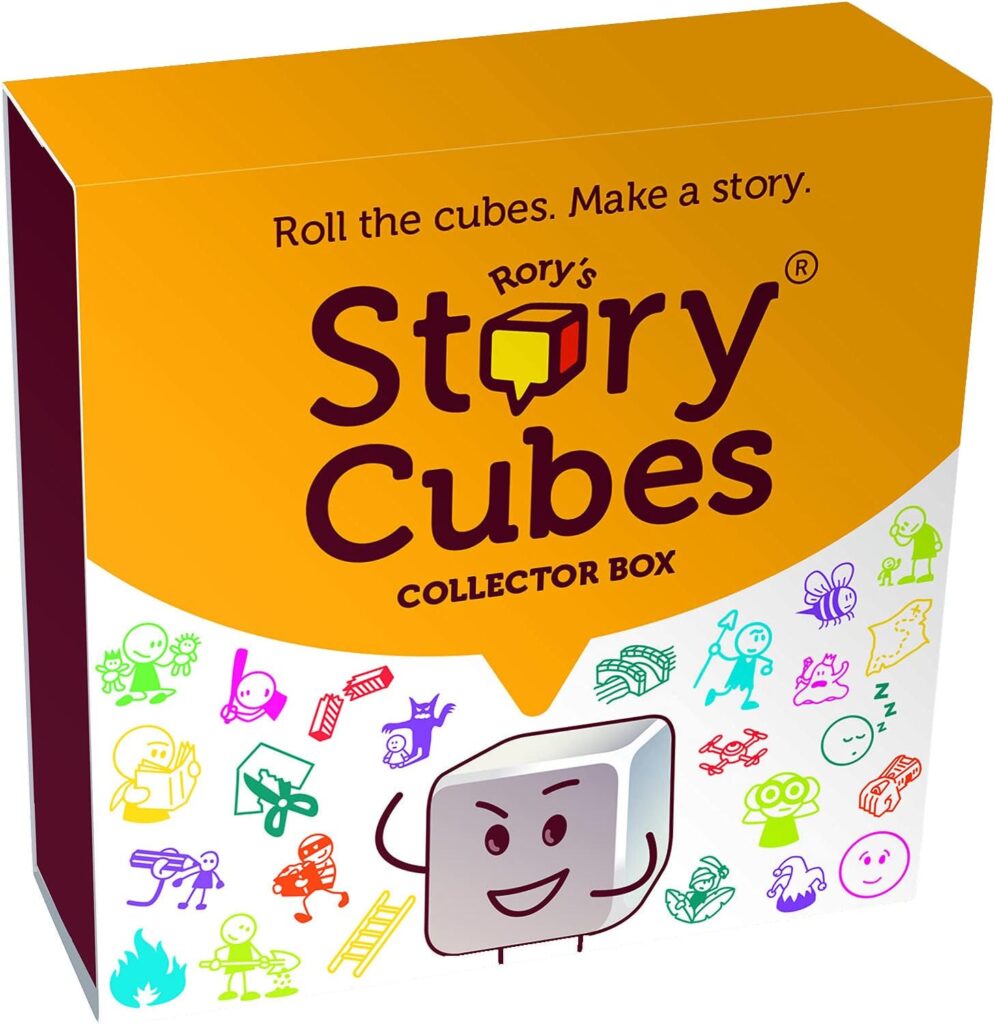
Find our favorite Story cube for kids [affiliate link].
5. Imagination Meets Intelligence: The Cognitive Benefits of Play
When children design costumes, invent characters, or imagine new stories, their brains light up literally.
Researchers from Harvard’s Center on the Developing Child have shown that imaginative play strengthens connections between the right (creative) and left (logical) hemispheres of the brain.
That balance between creativity and reasoning improves memory, critical thinking, and adaptability all key components of intelligence quotient (IQ).
So yes, that makes Halloween not just an emotional playground but also a cognitive gym for your child’s developing brain.
Encourage your kids to plan their own Halloween skits, make decorations, or invent games. These small acts build the same neural networks that support reading, problem-solving, and creativity in school.
6. Family Bonding Through Shared Rituals
Every tradition we build as parents from pumpkin carving to bedtime stories becomes a thread that ties our children to us emotionally.
Halloween, when reframed around connection instead of fright, offers the perfect chance to build family memories that last.
Start simple:
- Make it a “family costume” night where everyone dresses with a theme (e.g., storybook characters).
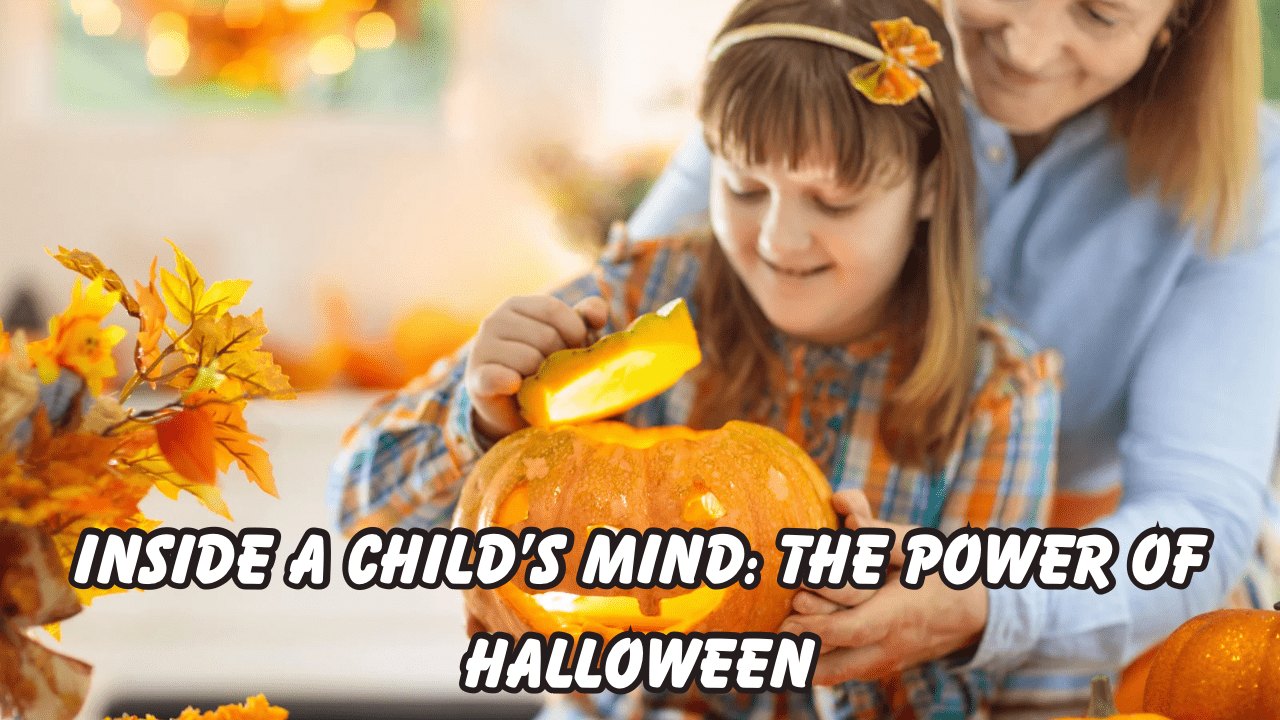
- Try a “thankful pumpkin” activity where everyone writes something kind or funny on a shared pumpkin.
- End the night with a cozy storytelling session stories of courage, laughter, or childhood memories.
These small moments tell your child, “Home is where we laugh, learn, and belong.”
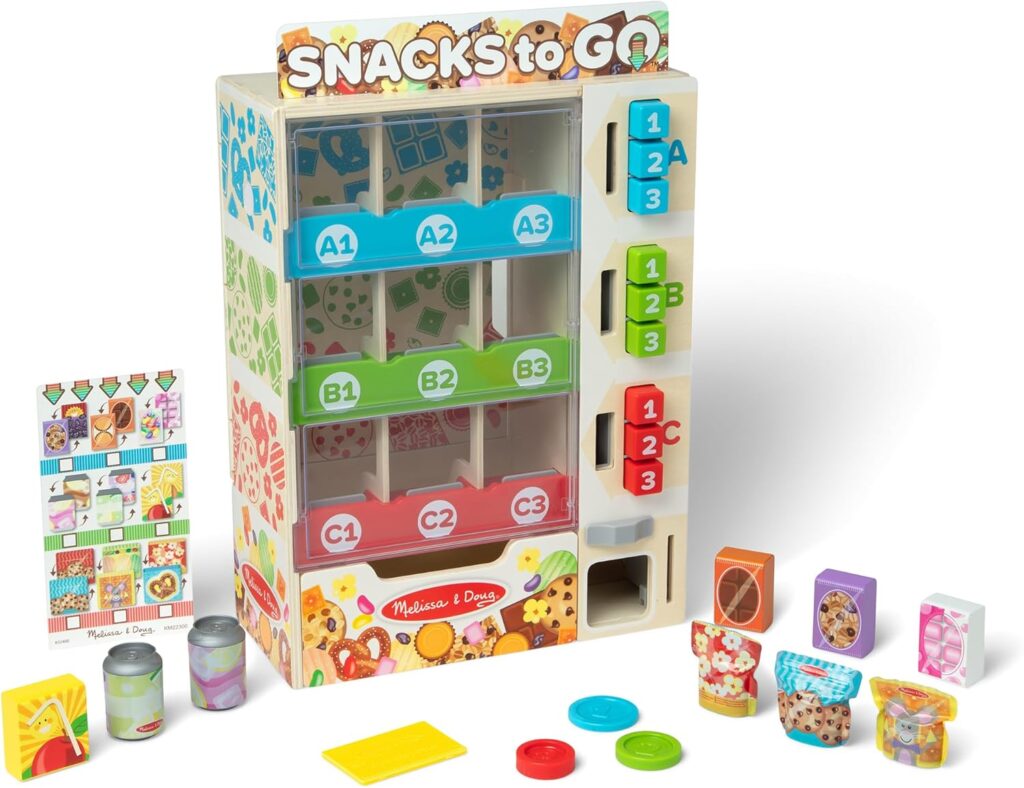
You can explore the full collection here: [Melissa & Doug Wooden Play Sets – affiliate link].
7. The Science of Joy: Why Fun Matters for Growth
Play and laughter are not “extra” parts of childhood they’re essential.
Neuroscientist Dr. Stuart Brown, founder of the National Institute for Play, states:
“Play is not a luxury. It’s a biological necessity that shapes the brain and helps children navigate emotions, relationships, and creativity.”
When kids experience joy and laughter even through something as simple as dressing up or giggling with friends their brains release dopamine and oxytocin, the “feel-good” hormones that strengthen memory and social bonding.
So yes, when your child laughs at their wobbly paper bat or dances in a silly hat, their brain is growing.
Affiliate Picks: Tools That Encourage Imaginative Play.
1. The Storytelling Lantern Kit
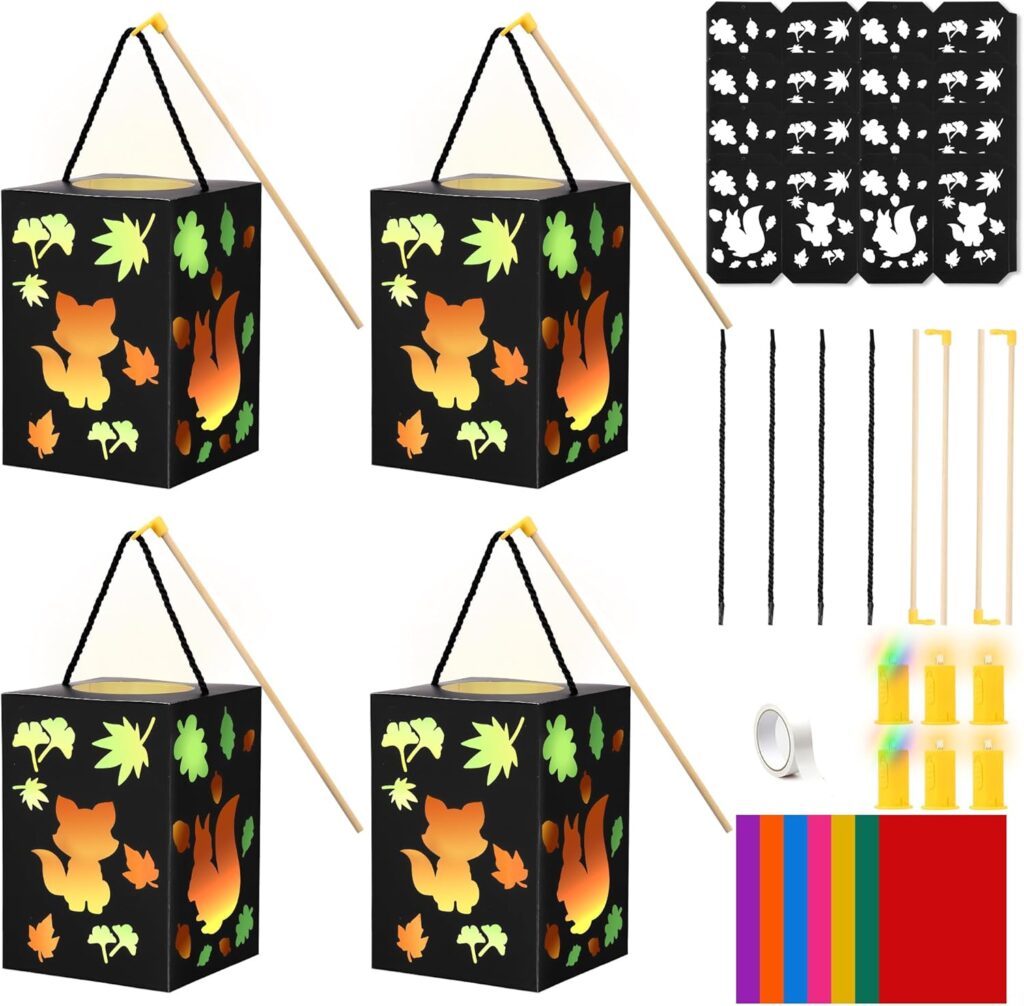
Create a warm “campfire” setting for storytelling at home. This kit lets kids design paper lanterns and then tell their own “shadow stories” using silhouettes.
Why it’s perfect: Helps kids explore fear, courage, and imagination in a safe, cozy setting.
2. Lovevery Pretend Play Kits
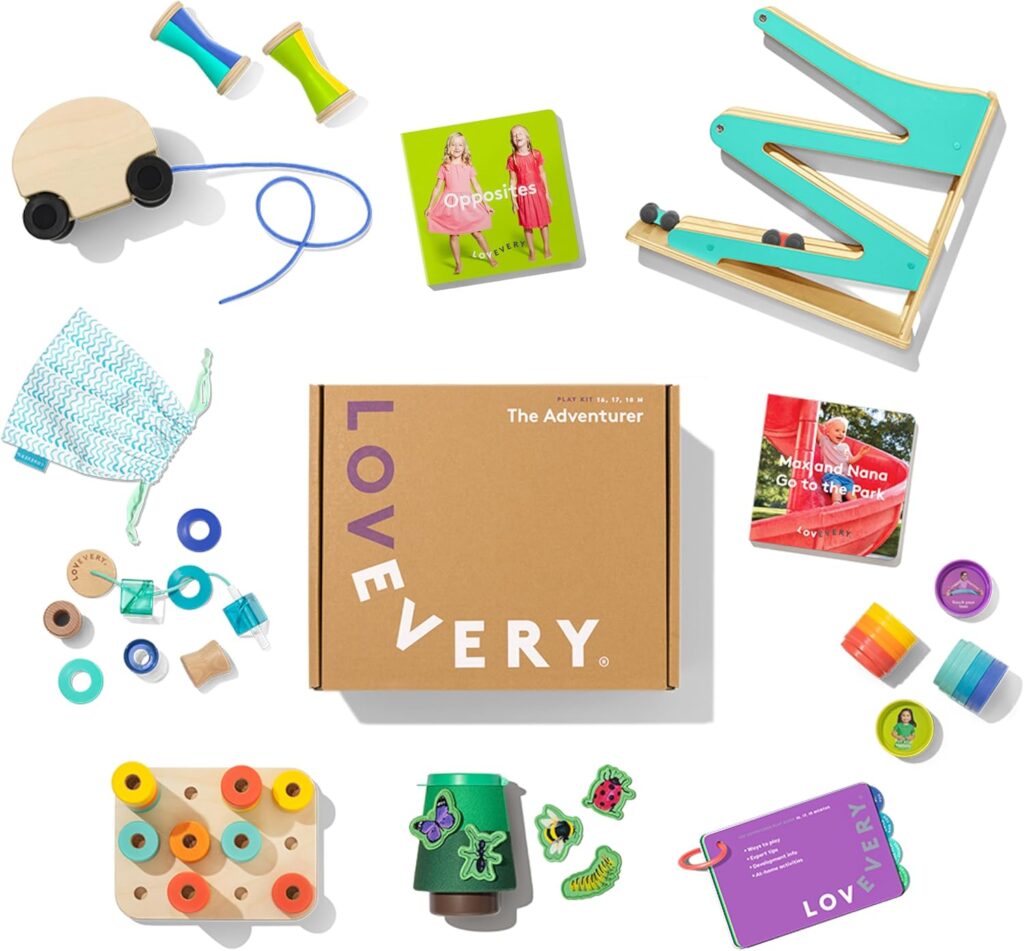
Lovevery’s themed playsets (like The Storyteller Play Kit or The Investigator) encourage imagination and role-playing, letting kids act out real-life situations.
Why it’s perfect: Builds emotional understanding and empathy as kids mimic family roles and solve small problems.
3. Fat Brain Toys “Squigz” and Building Kits

Squigz are open-ended suction toys that kids can build into imaginative creatures, shapes, or “monsters.”
Why it’s perfect: Strengthens focus, problem-solving, and creative confidence through sensory play.
4. “Big Emotions” Story Dice
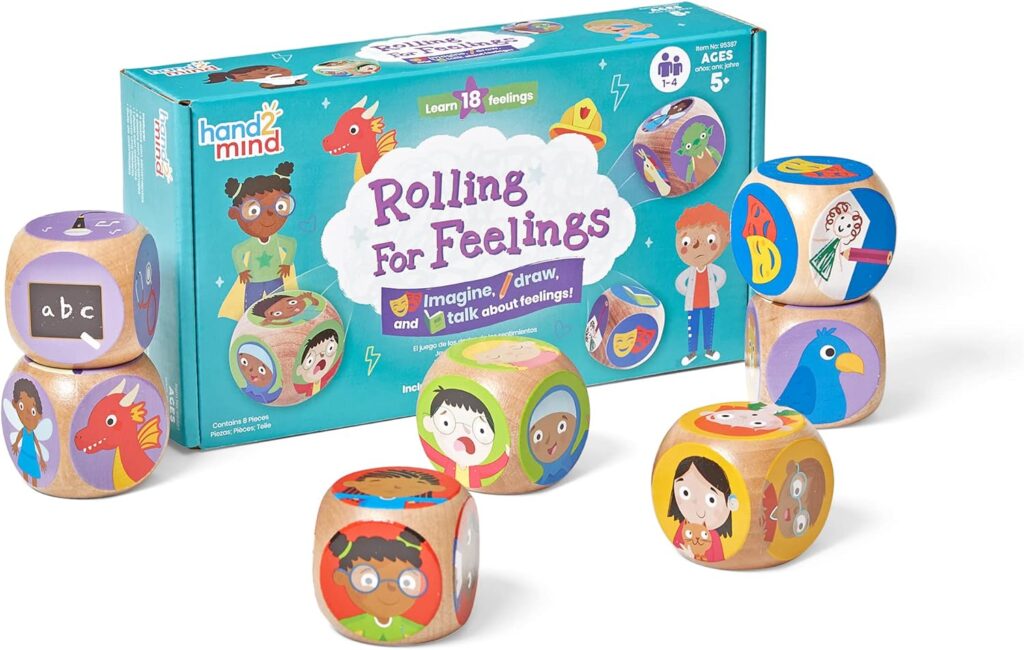
A fun storytelling game featuring dice printed with faces and situations that represent emotions.
Why it’s perfect: Encourages emotional literacy, kids learn to name feelings like fear, excitement, and bravery while crafting stories.
5. Magnetic Story Board or Felt Play Set
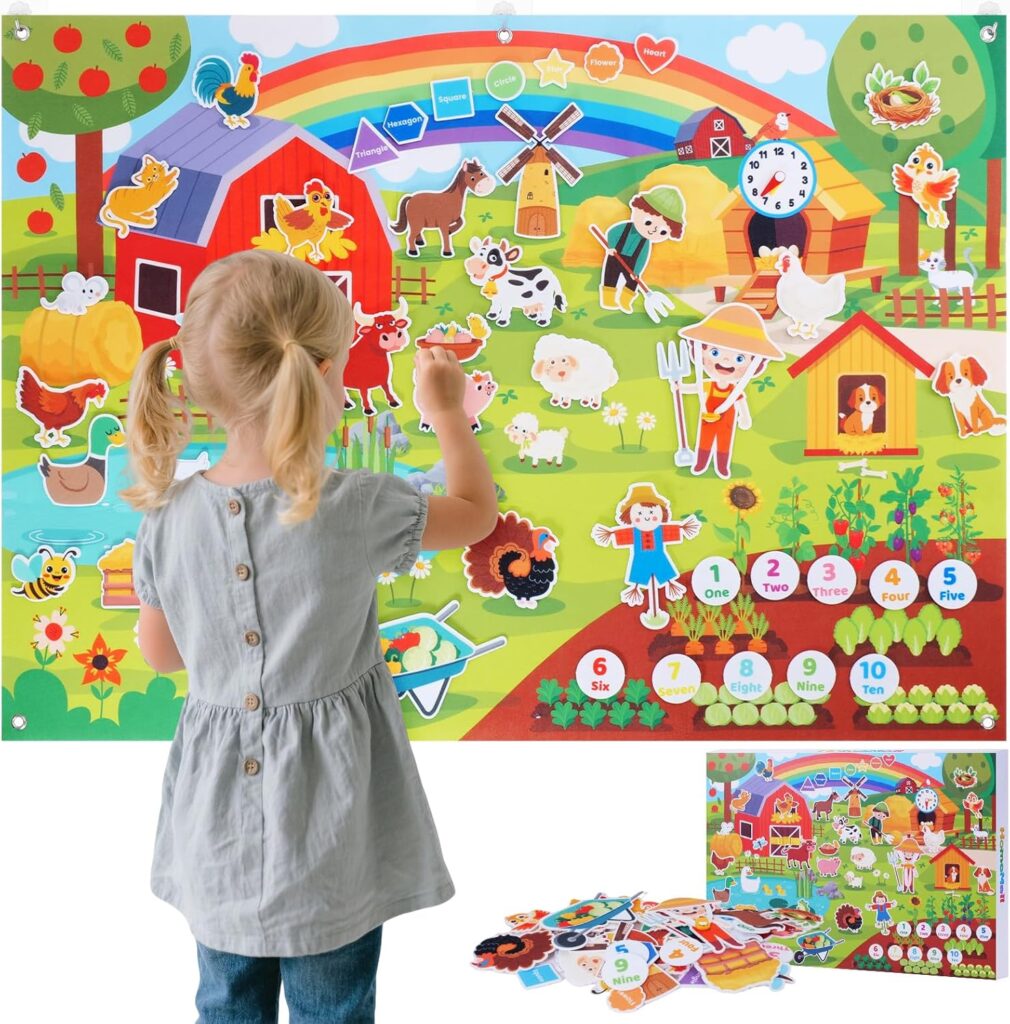
These sets let kids create scenes with reusable pieces; castles, forests, or families and narrate their own tales.
Why it’s perfect: Helps improve focus and sequencing, and supports kids in exploring “what happens next” thinking.
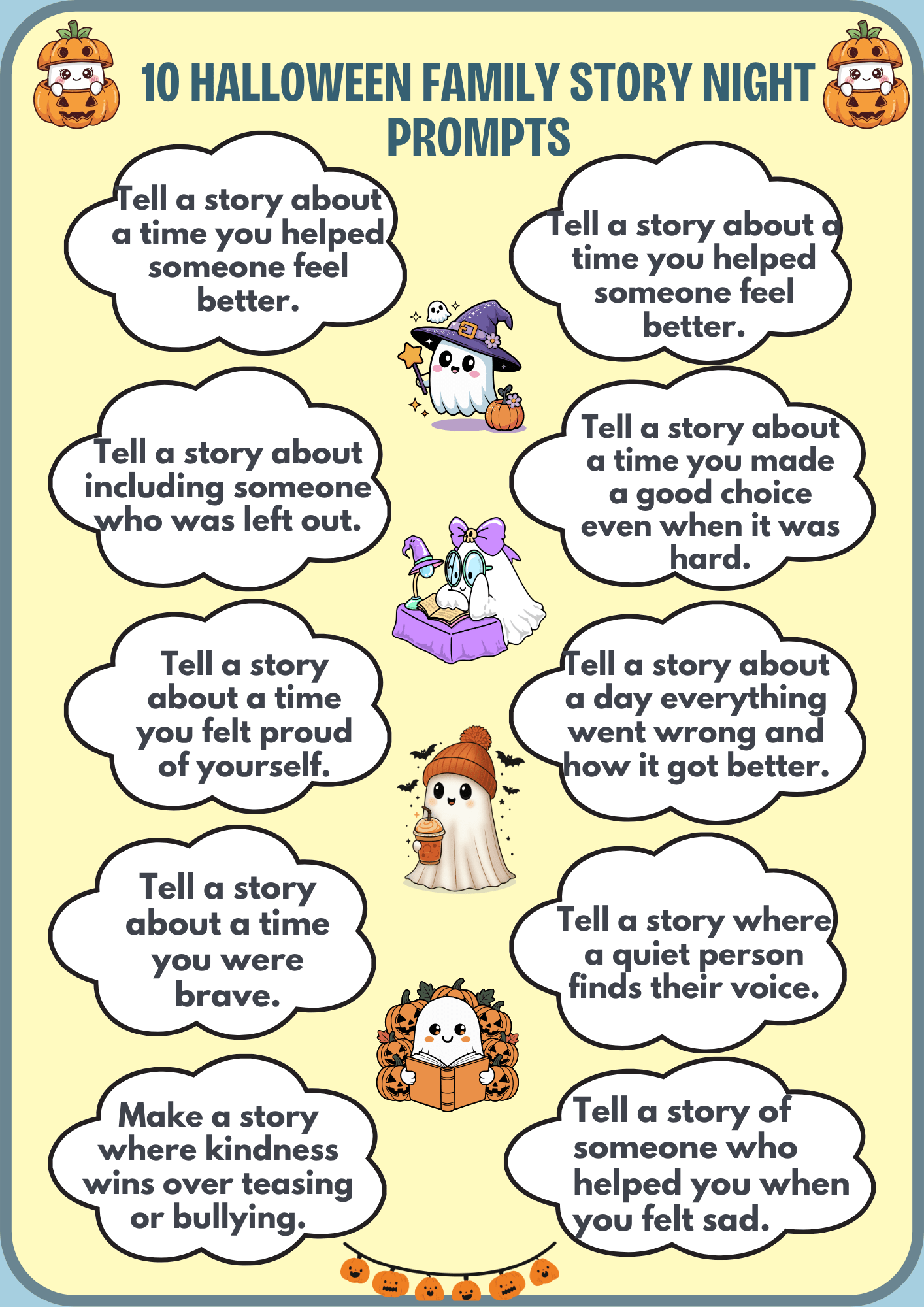
Free Printable for the Week: “Family Story Night Prompts + Halloween Kindness Week Challenge”
At Raising Smiles, we’ve created a free printable set that combines the magic of storytelling with the joy of kindness perfect for this season of imagination and connection.
Our Family Story Night Prompts include 10 thoughtful, creative cards that help your child express emotions, build confidence, and stretch their imagination. These prompts are simple yet powerful they turn bedtime or family evenings into moments of laughter, reflection, and deeper bonding.
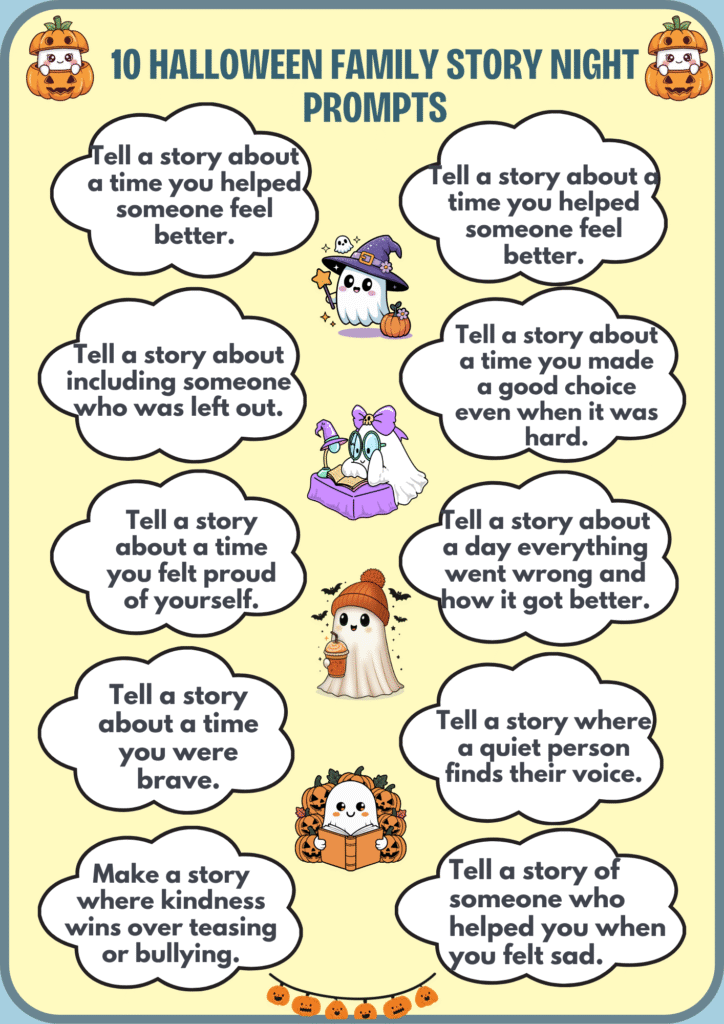
To make it even more meaningful, we’ve paired it with our Halloween Kindness Week Challenge, a 7-day guide filled with small, heartwarming acts of kindness your family can do together. From writing a thank-you note to leaving a sweet surprise for a neighbor, each challenge helps your child learn empathy, compassion, and emotional awareness in fun, age-appropriate ways.
To get your free printable pack, simply comment “INTERESTED” under this blog post or share it with another parent who loves meaningful family moments. The download link will be sent straight to your inbox.
It’s a little mix of creativity, kindness, and connection all wrapped up in one Raising Smiles printable set.
Final Thoughts: A Parent’s Reflection
As parents, we often try to protect our kids from anything scary. But maybe what they need isn’t protection from every shadow maybe they need us to guide them through it with laughter, stories, and love.
Halloween, at its heart, isn’t about fear at all it’s about imagination.
It’s a chance for our children to explore who they are, to try on courage for size, and to learn that even in the dark, there’s always light.
So this year, let’s look beyond the costumes and candy. Let’s celebrate the magic happening inside their minds the creativity, the bravery, and the growing hearts that make childhood so beautiful.