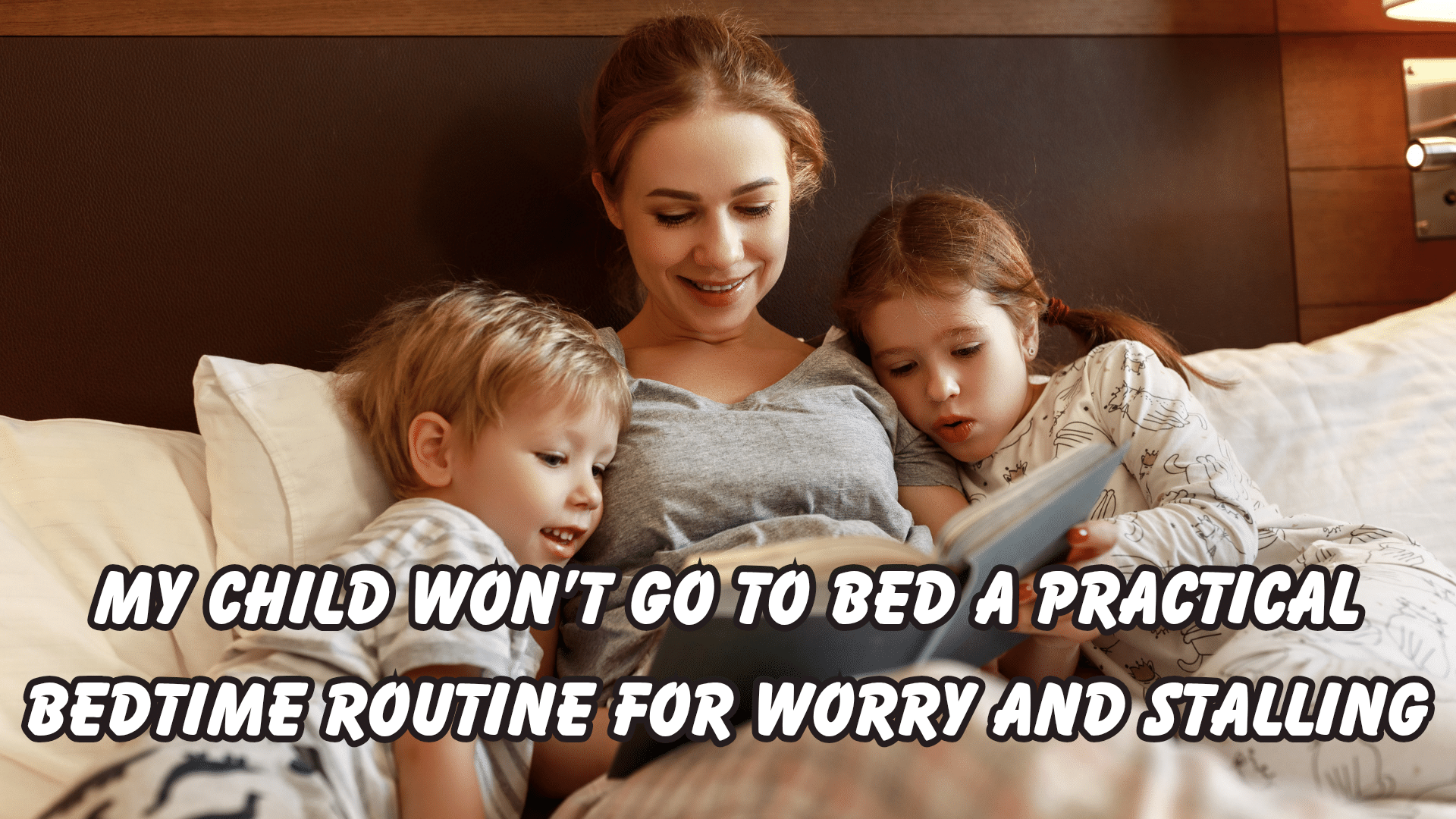
Some evenings, bedtime feels like a negotiation that never ends. You have finished dinner, tidied up, and reminded your child that it is time to sleep. But suddenly, they need another drink of water. Then they remember a question they forgot to ask. A few minutes later, they are calling your name because they cannot find their favourite toy.
And when you finally think they are asleep, little footsteps appear in the hallway. If your child won’t go to sleep without a long list of requests, you are certainly not alone. Many parents experience bedtime battles, especially during the toddler and preschool years. Even older children can struggle with bedtime worries, separation anxiety, or the transition from a busy day to a quiet night.
The good news is that bedtime does not have to become a nightly argument. A predictable bedtime routine for kids can help children feel safe, understand what comes next, and gradually develop the confidence to settle down independently.
In this guide, we will explore why children resist bedtime, how to create a realistic 30-minute routine, what to say when your child keeps getting out of bed, and how to respond when worries make sleep difficult.
You will also find a free printable bedtime visual routine and worry parking-lot page to help your family put these ideas into practice.
What we covered
- Why does my child refuse to go to sleep?
- How to tell whether bedtime stalling is really about worry
- How to create a bedtime routine for kids that actually works
- A practical 30-minute bedtime routine
- What to say when your child asks for one more thing
- What to do when your child keeps getting out of bed
- How to help a child who is anxious at bedtime
- Common bedtime mistakes that can make sleep harder
- When should parents seek professional advice about sleep?
- Free printable bedtime routine and worry parking-lot page
- Helpful bedtime products for parents and children
- Frequently asked questions about children’s bedtime
4 Reasons Why Your Child Refuses to Go to Sleep?
When a child refuses to go to bed, it is easy to assume they are simply being difficult.
But bedtime resistance is often a child’s way of communicating a need they cannot yet explain clearly.
Understanding what is happening beneath the behaviour can help you respond with patience while still maintaining a clear bedtime boundary.
1. They are not ready to separate from you
For young children, bedtime means separating from the people who make them feel safe.
During the day, they can see you, hear you, and come to you whenever they need comfort. At night, the house becomes quieter, the lights go out, and they are expected to remain in their own space.
That transition can feel difficult.
Your child may ask for another story, another cuddle, or another drink of water because they want a little more time with you.
This does not mean you should abandon the bedtime routine. It means your child may need reassurance that you are still available even when it is time to sleep.
2. They have had a busy or overwhelming day
Children spend much of their day learning, following instructions, sharing, waiting, and managing emotions.
By evening, they may be physically tired but emotionally overwhelmed.
Some children become unusually energetic when they are overtired. Others become tearful, clingy, or argumentative.
A child who seems determined to stay awake may actually need help slowing down.
3. They want more control
Children naturally begin seeking independence as they grow.
Bedtime can become a place where they test that independence.
They may insist on choosing a different pyjama, refusing the bedtime story, or asking for something they already know is not available.
Offering small choices can help your child feel involved without allowing bedtime to become a negotiation.
For example:
“Would you like to wear your blue pyjamas or your yellow ones?”
“You can choose the story. After the story, it will be time to sleep.”
The choices are yours to provide, but your child gets to participate.
4. They may not be sleepy yet
Sometimes the problem is not behaviour at all.
Your child may be going to bed before they are ready to sleep, particularly if they have recently stopped napping or their daily schedule has changed.
If your child regularly lies awake for a long time, consider whether their bedtime matches their current sleep needs.
Children need different amounts of sleep depending on their age. A consistent bedtime and wake-up time can help establish a healthy rhythm, but the timing may need to be adjusted.
How to Tell Whether Bedtime Stalling Is Really About Worry
One of the most helpful things parents can do is look beyond the request itself.
A child who asks for water every night may simply enjoy the attention or be testing the boundary. But a child who repeatedly asks whether you are still in the house, worries about shadows, or becomes upset when the bedroom door closes may be experiencing genuine fear.
Common signs of bedtime anxiety include:
- Asking repeated questions about what might happen during the night.
- Wanting a parent to stay in the room until they fall asleep.
- Becoming distressed when the lights are turned off.
- Worrying about being alone, bad dreams, or noises in the house.
- Complaining of stomach discomfort or headaches around bedtime.
- Calling for reassurance repeatedly after being tucked in.
Sometimes children cannot explain what they are feeling.
Instead of asking, “Why are you being difficult?” try:
“Is there something about bedtime that feels scary or uncomfortable?”
Or:
“Does your body feel worried when it is time to sleep?”
You may discover that your child is worried about something that happened at school, a frightening story they heard, or simply the unfamiliar feeling of being alone in a quiet room.
You do not need to solve every worry immediately. Often, listening calmly and helping your child feel understood is an important first step.
How to Create a Bedtime Routine for Kids That Actually Works
A good bedtime routine does not need to be complicated.
In fact, the simpler and more predictable it is, the easier it becomes for children to follow.
The aim is to create a familiar sequence that helps your child move from daytime activity to nighttime rest.
– Start with a consistent bedtime
Choose a bedtime that allows your child to get enough sleep and fits your family’s daily schedule.
Try to keep bedtime and wake-up time reasonably consistent, including on weekends.
A predictable rhythm helps your child’s body learn when it is time to sleep.
– Begin winding down before bedtime
Avoid leaving energetic games, loud television, or exciting activities until the final few minutes before bed.
Instead, begin slowing things down about 30 minutes before your child’s bedtime.
Dim the lights, put away stimulating toys, and move into quieter activities.
For many families, this is when the bedtime routine officially begins.
– Make the routine visible
Young children often respond better to pictures than repeated verbal instructions.
A bedtime visual routine can show each step in order:
- Put toys away.
- Take a bath or wash up.
- Put on pyjamas.
- Brush teeth.
- Choose a bedtime story.
- Have a cuddle and say goodnight.
- Get into bed and settle down.
Your child can move a marker, turn over a picture, or tick off each completed step.
This helps them understand what comes next and reduces the need for constant reminders.
– Keep the routine short enough to repeat
A routine that takes an hour may feel manageable on a quiet evening but become difficult when everyone is tired.
Start with a simple 30-minute routine and adjust it to suit your child.
The most important part is not doing everything perfectly. It is repeating the same sequence often enough that it becomes familiar.
A Practical 30-Minute Bedtime Routine
Here is a simple routine you can try tonight.
The times are flexible. You can adjust them to your child’s age, needs, and bedtime.
Minutes 0–5: Prepare for sleep
Give your child a gentle reminder that bedtime is approaching.
For example:
In five minutes, we are going to start getting ready for bed.
Help them put away toys, choose their pyjamas, and finish any small tasks.
If your child tends to resist transitions, a visual timer can help them understand when one activity is ending and another is beginning.
Minutes 5–10: Wash up and brush teeth
Keep this part calm and predictable.
If your child enjoys choosing their own toothbrush or pyjamas, allow them to make a small choice.
You might say:
“Would you like to brush your teeth before or after putting on your pyjamas?”
Both choices lead to the same bedtime routine.
Minutes 10–20: Read a story and connect
Choose a quiet activity that helps your child feel close to you.
This might be reading a bedtime story, talking about the best part of their day, or sharing a few minutes of gentle conversation.
For children who struggle with bedtime worries, this is also a good time to talk about anything that is bothering them.
Try asking:
“What was something good that happened today?”
“Was there anything that made you feel worried?”
“Is there anything you would like to talk about before we say goodnight?”
You do not need to turn this into a long conversation. A few minutes of undivided attention can make a meaningful difference.
Minutes 20–25: Prepare for worries
If your child often becomes anxious at bedtime, use this time to acknowledge their worries.
You can invite them to draw or describe something that is on their mind.
For example:
“Sometimes our brains remember worries when everything becomes quiet. Let’s talk about yours before bedtime.”
Write down the worry or draw a simple picture of it.
Then remind your child:
“We have talked about this worry, and we can think about it again tomorrow. You do not have to solve everything tonight.”
This teaches children that worries can be acknowledged without allowing them to take over the entire bedtime routine.
Minutes 25–30: Cuddle, tuck in, and say goodnight
Finish with the same familiar words every evening.
For example:
“You are safe. I love you. It is time to rest now. I will see you in the morning.”
A predictable goodnight message can become a comforting signal that the routine is complete.
After saying goodnight, try to keep the environment calm and avoid restarting the routine unless your child genuinely needs something.
What to Say When Your Child Asks for One More Thing
One of the most exhausting parts of bedtime is the endless list of requests.
“One more story.”
“I need water.”
“Can you fix my blanket?”
“I forgot to tell you something.”
It is understandable that parents become frustrated, especially after a long day.
But children often respond better to calm, consistent boundaries than to repeated warnings or arguments.
Here are some simple scripts you can use.
When your child asks for another story
“I know you love stories. We have finished our two stories for tonight. Tomorrow, we can choose another one.”
– When your child asks for water
“Here is your water. You can keep it beside your bed if you need a drink.”
If your child is genuinely thirsty, provide water rather than turning it into a battle.
– When your child says they are not tired
“You may not feel sleepy yet, but it is still time to rest your body. You can lie quietly and look at your book.”
For younger children, choose a safe, quiet activity that does not become a new source of stimulation.
– When your child says they are scared
“Thank you for telling me. I know that feeling scared can be uncomfortable. Let’s make your room feel cosy, and then we will settle down together.”
Try to avoid dismissing the fear with phrases such as “There is nothing to be scared of.”
Even if the fear seems unrealistic to an adult, it can feel very real to a child.
– When your child keeps negotiating
“We have finished our bedtime routine. I love you, and it is time to sleep.”
You may need to repeat the same sentence several times.
That is okay.
The goal is not to make your child happy about the boundary every night. It is to help them understand that the boundary is predictable and that you can remain loving and calm while maintaining it.
What to Do When Your Child Keeps Getting Out of Bed
Some children settle down easily but repeatedly leave their rooms.
They may come looking for you, ask another question, or say they need to use the toilet.
The best response depends on why they are getting out of bed.
– First, check whether they genuinely need something
If your child needs the toilet, is thirsty, feels unwell, or is frightened, respond to the need.
You do not need to ignore genuine discomfort to maintain a bedtime boundary.
However, if your child repeatedly leaves the room for small requests, try to make the response brief and predictable.
– Walk them back calmly
If your child gets out of bed without a genuine need, gently guide them back.
You can say:
“It is bedtime now. I will help you get back into bed.”
Avoid turning the walk back into a long conversation.
The more exciting or emotionally intense the interaction becomes, the more likely bedtime may turn into a prolonged cycle of leaving and returning.
– Consider a bedtime pass
For some preschool and school-age children, a bedtime pass can be helpful.
Give your child one small card that they can use for one reasonable request after bedtime, such as a drink of water or a final hug.
Once they have used the pass, remind them that the next step is staying in bed.
The pass should be introduced as a positive tool, not a punishment.
It may not be suitable for every child, particularly very young children who cannot yet understand the concept.
– Gradually reduce your presence if needed
Some children feel more comfortable when a parent stays nearby.
If your child needs you to remain in the room until they fall asleep, you can gradually reduce your presence.
For example:
- Begin by sitting beside the bed.
- After a few nights, move your chair slightly farther away.
- Continue moving toward the doorway over time.
- Eventually, work toward leaving the room after the goodnight routine.
Move at a pace that feels manageable for your child.
If your child becomes very distressed, pause and offer reassurance before trying again.
The aim is to build confidence, not force independence overnight.
How to Help a Child Who Is Anxious at Bedtime
Bedtime anxiety can be particularly difficult because the house is quiet, distractions disappear, and worries may become more noticeable.
Children may fear darkness, nightmares, separation, or things they do not fully understand.
Here are a few ways to help.
– Take their worries seriously
You do not need to agree with every fear to acknowledge how your child feels.
Instead of saying:
“That is silly. There is nothing there.”
Try:
“That sounds frightening. I am glad you told me.”
Then help your child identify what might make the room feel more comfortable.
– Create a small comfort plan
A comfort plan might include:
- A favourite soft toy, if appropriate for the child’s age.
- A familiar bedtime story.
- A night-light with a gentle glow.
- A short reassurance phrase.
- A consistent goodnight routine.
The goal is to help your child develop a sense of safety without creating a long list of conditions that must be met before they can sleep.
– Teach a simple calming activity
You can help your child practise slow breathing during the day, when they are relaxed.
For example:
“Let’s take a slow breath in, then gently breathe out.”
You can also invite them to imagine a peaceful place, such as a garden, beach, or favourite story setting.
Practising these activities during the day makes them easier to use when worries appear at night.
– Use a worry parking lot
A worry parking lot is a simple place where children can put their worries before bedtime.
They can draw a picture, write a few words, or tell you what is bothering them.
The worry is not ignored. It is acknowledged and set aside until there is a suitable time to think about it.
For example:
“Let’s put that worry on our page. We can talk about it together tomorrow after breakfast.”
This can be especially useful for children who suddenly remember every concern just as the lights go out.
Common Bedtime Mistakes That Can Make Sleep Harder
Even loving, well-intentioned parents can fall into habits that make bedtime more difficult.
– Changing the rules every evening
If bedtime is 8:00 pm one night, 9:30 pm the next, and 10:00 pm when your child protests, it can become difficult for them to understand what to expect.
A flexible routine is fine, but try to maintain a predictable structure.
– Using bedtime as a punishment
Sending a child to bed angrily or threatening to remove their comfort items can make bedtime feel like something negative.
Instead,
keep bedtime connected to rest, comfort, and the natural rhythm of the day.
– Making promises you cannot keep
It can be tempting to say, “I will stay here all night,” simply to help your child settle.
But if you cannot realistically keep that promise, it may create more uncertainty later.
Offer reassurance that you can genuinely provide.
For example:
“I will stay with you for a few minutes, then I will go to my room. If you need me, I will hear you.”
– Expecting immediate results
A new bedtime routine may take time to become familiar.
Your child may still ask for another story, get out of bed, or struggle with worries during the first few nights.
That does not mean the routine has failed.
Look for gradual improvements, such as fewer requests, shorter settling times, or greater confidence when you leave the room.
When Should Parents Seek Professional Advice About Sleep?
Most children experience occasional bedtime resistance.
However, persistent sleep difficulties may sometimes be connected to anxiety, medical conditions, or other issues that deserve professional attention.
Consider speaking with your child’s healthcare professional if:
- Your child regularly takes a very long time to fall asleep despite a consistent routine.
- Sleep difficulties are affecting their mood, behaviour, learning, or daytime functioning.
- Your child snores loudly, gasps, or seems to have difficulty breathing during sleep.
- They frequently wake in significant distress or experience persistent nightmares.
- Bedtime anxiety is severe, continues for several weeks, or interferes with everyday activities.
- Your child seems unusually tired during the day despite having enough opportunity to sleep.
A healthcare professional can help assess whether there is an underlying issue and recommend appropriate support.
For children with persistent anxiety, a child psychologist may also be able to help them develop practical coping skills.
You do not need to wait until the situation becomes overwhelming before asking for help.
Frequently Asked Questions About Children’s Bedtime
Why does my child suddenly refuse to go to bed?
A sudden change in bedtime behaviour may be connected to a new fear, a change in routine, illness, developmental changes, or something that has happened during the day.
Try to identify what has changed and offer reassurance while maintaining a consistent bedtime structure.
How long should a bedtime routine last?
A bedtime routine of around 20–30 minutes works well for many families.
The ideal length depends on your child’s age, sleep needs, and the activities included in the routine.
A shorter, predictable routine is often easier to maintain than a long one.
Should I let my child cry when they refuse to sleep?
There is no single approach that works for every child or family.
If your child is upset, frightened, or needs something, respond calmly and offer appropriate reassurance.
You can maintain a clear bedtime boundary while still helping your child feel safe and supported.
What if my child keeps getting out of bed every night?
Check whether your child has a genuine need, such as using the toilet, feeling unwell, or being frightened.
If the requests are mainly about delaying bedtime, calmly guide your child back to bed and keep the interaction brief and predictable.
Consistency can help reduce repeated bedtime battles over time.
What should I do if my child is scared of the dark?
Acknowledge the fear rather than dismissing it.
You can use a gentle night-light, a familiar comfort object, or a short reassurance phrase.
Help your child practise calming activities during the day so they have something familiar to use when they feel worried at night.
Helpful Bedtime Products for Parents and Children
You do not need to buy lots of products to create a peaceful bedtime.
A few simple tools may help make the routine easier to follow, particularly if your child benefits from visual reminders or familiar bedtime activities.
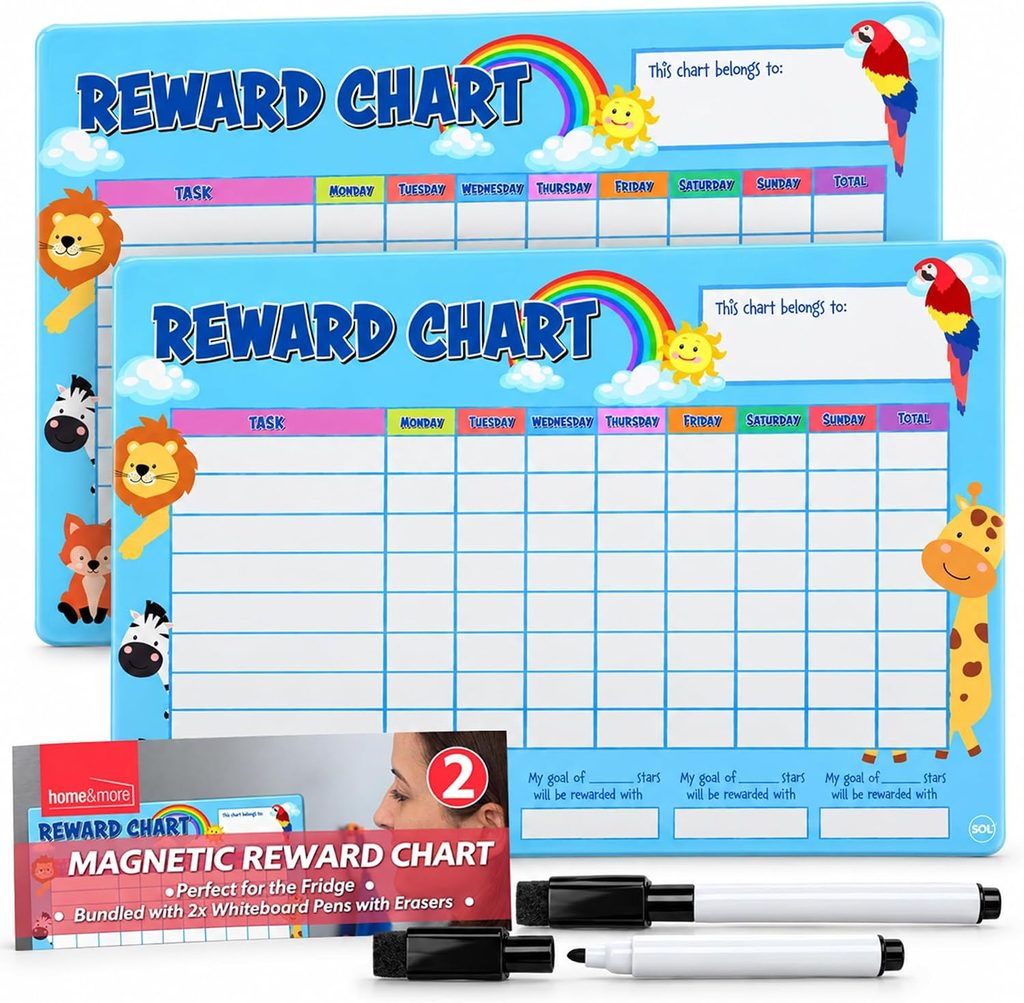
Visual bedtime routine charts
A visual routine chart can help children understand what is expected without parents repeating the same instructions throughout the evening.
Look for charts with clear pictures, simple steps, and space for children to tick off completed activities.
They can be particularly helpful for toddlers and preschoolers who are still learning to follow routines independently.
SOL 2pk Magnetic Reward Chart – Behaviour Charts for Children with Pens
Gentle night-lights
A night-light may help children who feel uncomfortable in a completely dark room.
Choose one with a soft, adjustable glow rather than a bright light that illuminates the entire bedroom.
A night-light should be positioned safely and used according to the manufacturer’s instructions.

Children’s bedtime books

Bedtime books can help children slow down, connect with their parents, and develop a positive association with bedtime.
Look for stories that explore themes such as courage, feeling safe, managing worries, and saying goodnight.
Reading together does not need to be a long activity. Even one familiar story can become a comforting part of the routine.
Free Printable: Bedtime Visual Routine and Worry Parking-Lot Page
Sometimes, children need more than verbal reminders.
A simple visual routine can help them see what comes next, while a worry parking-lot page gives them a place to express concerns before bedtime.
This free printable is designed to make bedtime more predictable and less stressful for both parents and children.
What is included?
Bedtime visual routine
A child-friendly checklist showing the steps from getting ready for bed to saying goodnight.
Children can tick off each step as they complete it.
Worry parking-lot page
A simple page where children can draw or write their worries, followed by a reminder that they can talk about them with a trusted adult.
Download your free bedtime routine and worry parking-lot printable
Final Thoughts: Bedtime Does Not Have to Be Perfect
When your child refuses to sleep, it can feel as though every evening becomes another test of patience.
But remember that bedtime is a skill children learn gradually.
They are learning how to manage emotions, separate from their parents, settle their bodies, and feel safe when the world becomes quiet.
A predictable bedtime routine, a few reassuring words, and calm, consistent boundaries can make a meaningful difference.
Start small. Choose a routine you can realistically repeat, involve your child in the process, and give them time to become familiar with it.
Some nights will still be difficult. There may be extra requests, worries, or unexpected interruptions.
That does not mean you are doing anything wrong.
Your child does not need a perfect parent or a perfect bedtime. They need a safe, loving environment where they can learn that nighttime is a time to rest and that the people who love them are still there.
And sometimes, that begins with something as simple as one familiar story, one gentle goodnight, and the reassurance that tomorrow is another day to try again.