And how two-letter word play can transform speech and set the foundation for early reading
For many parents, speech development feels like a mystery. One moment your toddler is pointing and babbling… and the next you’re wondering:
“Should they be saying more by now?”
“Why won’t they copy words?”
“How do I help them speak without pressure?”
If your child isn’t talking much yet or they’re only saying a few words you’re not alone. Many children build communication at different paces, and a slow start doesn’t define their future.
But here’s the good news:
There are simple, everyday strategies that encourage speech, connection, and confidence and they work whether your child is 18 months, 2, 3, or even 4 years old.
This guide breaks everything down in a calm, supportive, research-informed way, with tools you can start using today.
And yes! word-play with two-letter words is one of the most effective early steps, which is why we created the Raising Smiles Early Reading Series (Two-Letter Words) and its progression book for three-letter words.
Let’s dive in.
Start With What Science Knows About Speech Development
Speech isn’t just “talking.”
It’s the result of many skills developing at once:
- Listening
- Understanding
- Sound awareness
- Mouth coordination
- Memory
- Confidence
- Interaction
This is why the first stage of speech often looks like:
- pointing
- pulling you
- babbling
- copying your tone
- repeating sounds like “ba-ba” or “da-da”
- reacting to familiar words
Speech grows from connection first.
Words come next.
This is wonderful news because it means parents can make small, powerful changes that spark progress.
Two Speech Strategies That Works Like Magic
1. Use “One Word Ahead”
This strategy is gentle, natural, and highly recommended by speech specialists.
Here’s how it works:
Say one word slightly ahead of what your child already uses.
If your toddler says:
🐶 “Dog!”
You say:
➡️ “Big dog!”
➡️ “Dog run!”
If your toddler only points:
You say the simple word for them:
➡️ “Ball.”
➡️ “Up.”
➡️ “More.”
Your child hears manageable, bite-sized language not long sentences.
And this is where two-letter words shine:
up, on, in, at, go, my, it, to, me, no
They are short.
They are familiar.
They are powerful for speech.
This is exactly why the Raising Smiles Two-Letter Words Book was designed:
to give parents ready-made “first speech words” that are easy for children to copy.
2. Build Speech Through Play (the most effective way)
Talking feels like work when a child is unsure.
But play removes pressure.
Here are the top play-based speech boosters:
a. Imitation Play– Copy your toddler’s actions they feel understood, so they copy your words back.
b. Sound Play– Make fun sounds before “real” words:
- “moo”
- “beep”
- “yay!”
- “uh-oh”
These are speech muscles in training.
c. Hide-and-find games – Hide a toy, say “in” “out” “up” “down.”
These two-letter words become meaningful.
d. Pretend play – Little worlds unlock language “go car,” “in bed,” “my cup.”
Our book series follows this approach, with objects children can act out, match, mimic, and repeat.
The Secret: Two-Letter Words Build the Path to Reading and Speech
This is the most overlooked truth:
👉 Speech and early reading skills come from the same foundation to sound awareness.
When a toddler can copy simple sounds and connect them to meaning, they are building the same pathways used to read later.
Two-letter words are perfect because:
- They require minimal mouth movement
- They give quick success (“I said a whole word!”)
- They blend easily into three-letter words later
- They help children understand how words work
And when they’re ready?
They naturally progress to CVC (three-letter) words like:
cat
dog
sun
cup
pan
This is why the Raising Smiles early series intentionally follows this sequence:
Two-Letter Words → Three-Letter Words → Early Readers
Speech Delays: When to Seek Support and Not Stress
- Every child develops differently.
- Some talk early.
- Some take time.
- Some explode with language at 3.
- Some speak little but understand everything.
While professionals can help with assessments, parents have A LOT of influence at home.
Here are gentle signs a child needs speech-building support (not anxiety):
- not copying sounds
- using fewer than 15–20 words by age 2
- not joining two words by 2.5–3 years
- relying mostly on pointing
- difficulty understanding simple instructions
None of these mean “there is a problem.”
They mean:
It’s time to intentionally build speech, connection, and confidence. In addition, you should consult with your doctor if you have any serious concerns.
And that’s exactly what we offer below.
Raising Smiles Digital Course and Free Printables (Download + Use Daily)– The Ultimate Parent Guide To Speech Development.
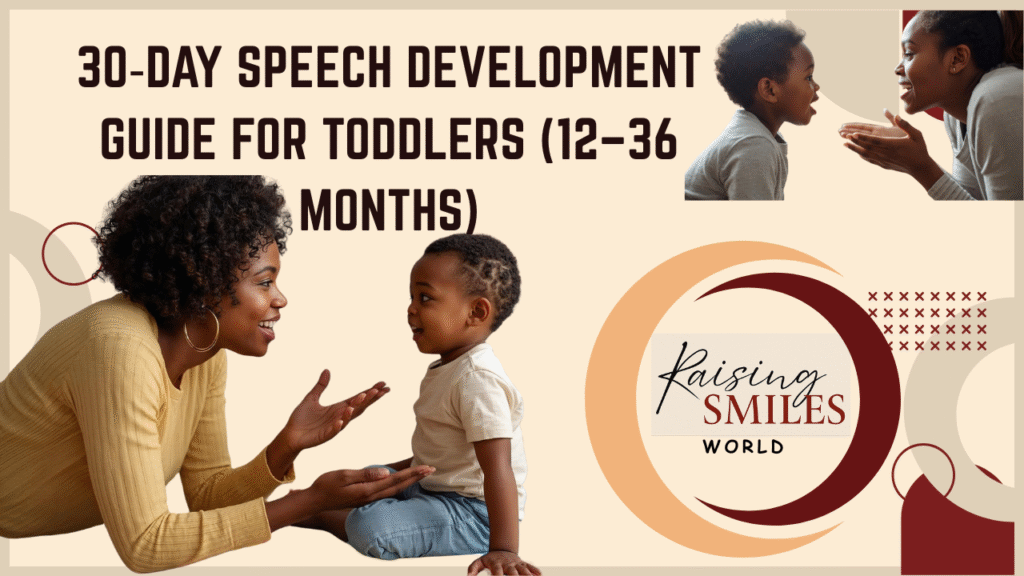
This 30‑day course is designed for parents of toddlers aged 12–36 months who want to support speech development in a practical, consistent, and joyful way. Each day builds slowly and steadily from listening and sound imitation to naming objects, forming first words, and combining simple phrases.
Its more than that, you will be guided all through the way in a consistent manner that will yield positive result.
This course contains:
Week 1: Sound Awareness & Play
- Sound Play Chart– 30 fun daily sounds that will prepare them for speech (eg “ba, da, ma”) perfect for playtime repetition.
- Mouth Movement Mirror Guide– Simple illustrations that show parents how to model sounds toddlers love to copy.
- Clap & Sound Game Sheet– Interactive clapping game that turns sound practice into giggle. Mouth Movement Mirror Guide- Simple illustrations that show parents how to model sounds toddlers love to copy.es and bonding.
🟨 Week 2: First Words & Vocabulary
- First Words Tracker (100 words) A milestone checklist to celebrate every new word your toddler learns from “ball” to “banana.”
- Daily Object Naming Sheet (40 items)– Real-life objects toddlers see every day with clear images and space to point, name, and repeat.
- Routine Words Chart (30 words)– Mealtime, bath time, bedtime build vocabulary through daily routines with fun icons and prompts.
🟩 Week 3: Word Practice & Repetition
- 2-Letter Word Practice Sheets (30 pages)– From our popular Two-Letter Word Book, includes stories, tracing, and playful activities for “up,” “go,” “no,” “in.”
- Favourite Words Flashcards (15–30 words)– Bright, toddler-friendly cards for everyday words perfect for fridge, playroom, or travel.
- Sing-Along Word Chart (10 rhymes)– Classic rhymes with missing words for toddlers to fill in, example- “Baa baa ___ sheep” and more.
🟥 Week 4: Phrases & Confidence
2-Word Phrase Builder Cards (20 phrases) Build toddler confidence with phrases like “more juice,” “big ball,” “go home.” Easy to model and repeat.
Everyday Conversation Sheet– These are cues on simple everyday sentences you make with your toddler with focus on making a sentence instead of one word. Examples- Narrating routines naturally – “We are walking,” “You are eating.” Helps toddlers hear full sentences and practice saying them. Start with 3-word sentence and move up to 4 and 5 respectively. We have made it simple for you with our printable.
Story Time Prompt Cards (10 illustrated sheets) Beautiful picture prompts to help toddlers name, describe, and answer “What’s this?” during story time.
Quick, repeatable actions to build speech daily.
These printables support both early talkers and late talkers in a gentle, joyful way.
Useful Tools for Speech Development
These are categories parents often look for. They blend naturally into speech support.
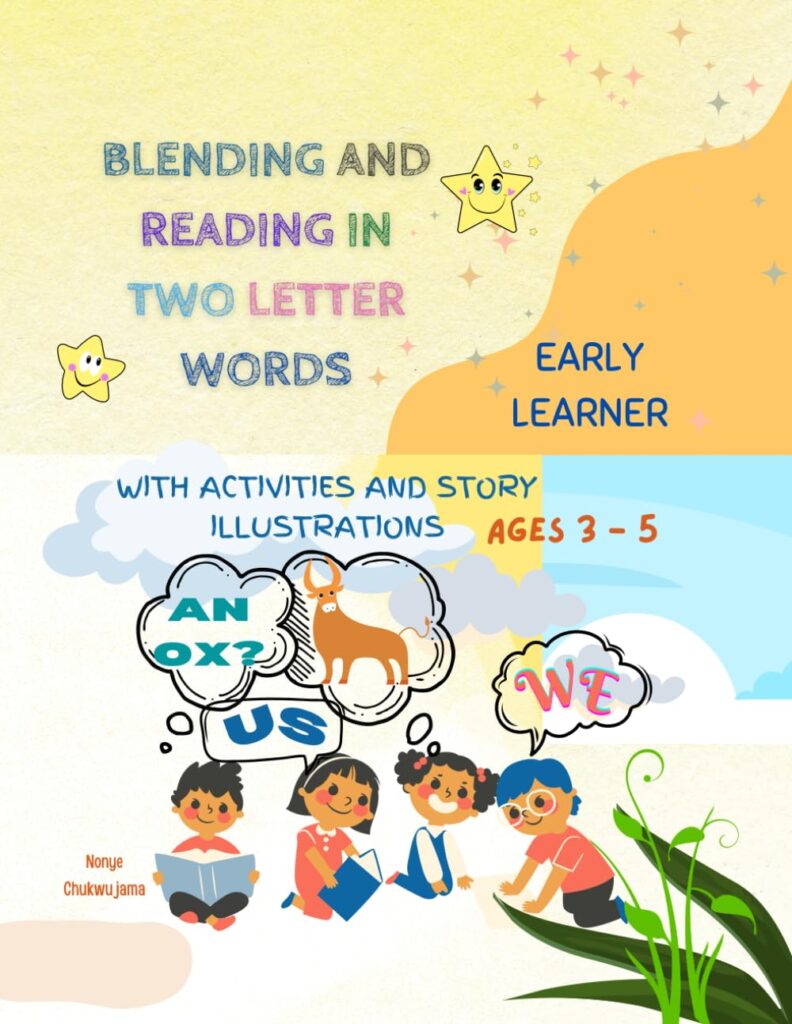
✔ Blending and Reading In Two Letter Words– Early Learner Story and Activity Book: 1 (Early Word Blending to Story Reading
✔ First-Words Board Books– Thick pages, high contrast, easy images.–

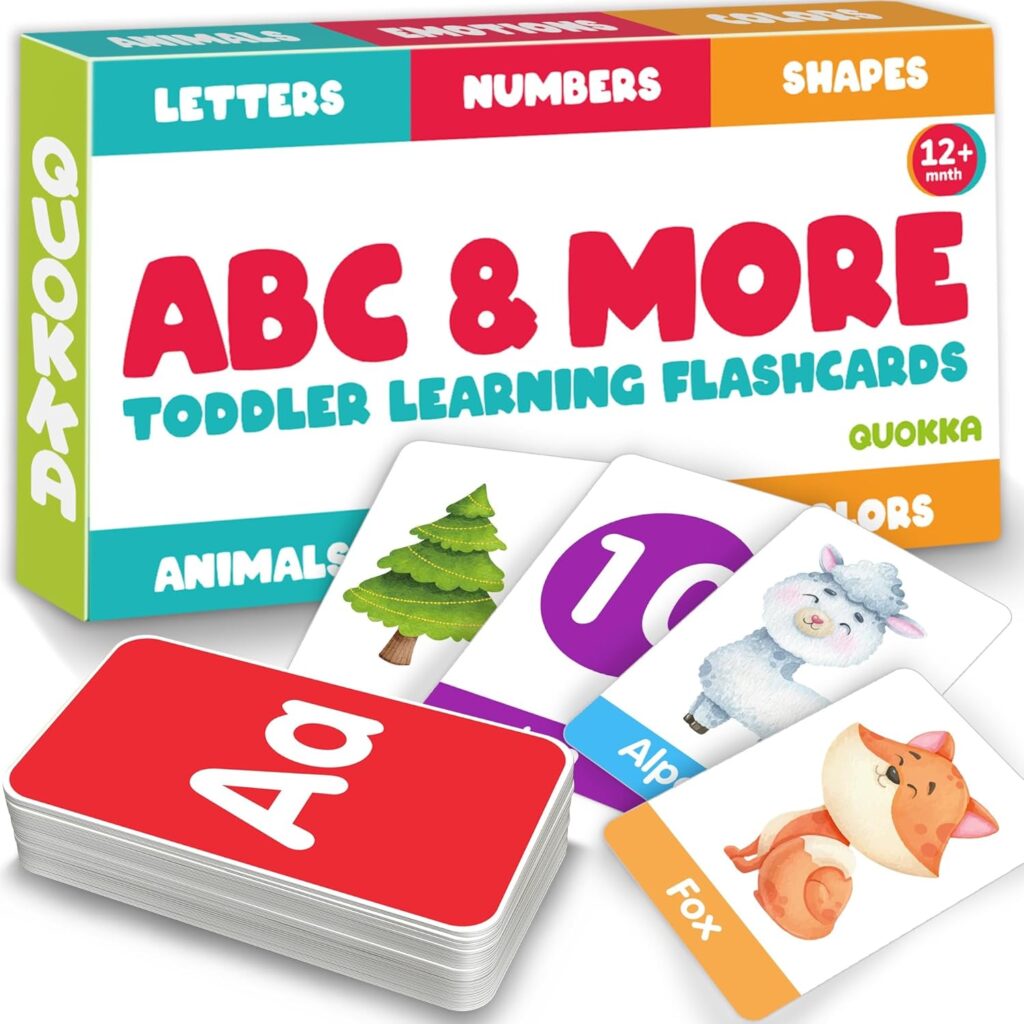
✔ Speech-building flashcards– Simple images → simple words → quick wins.
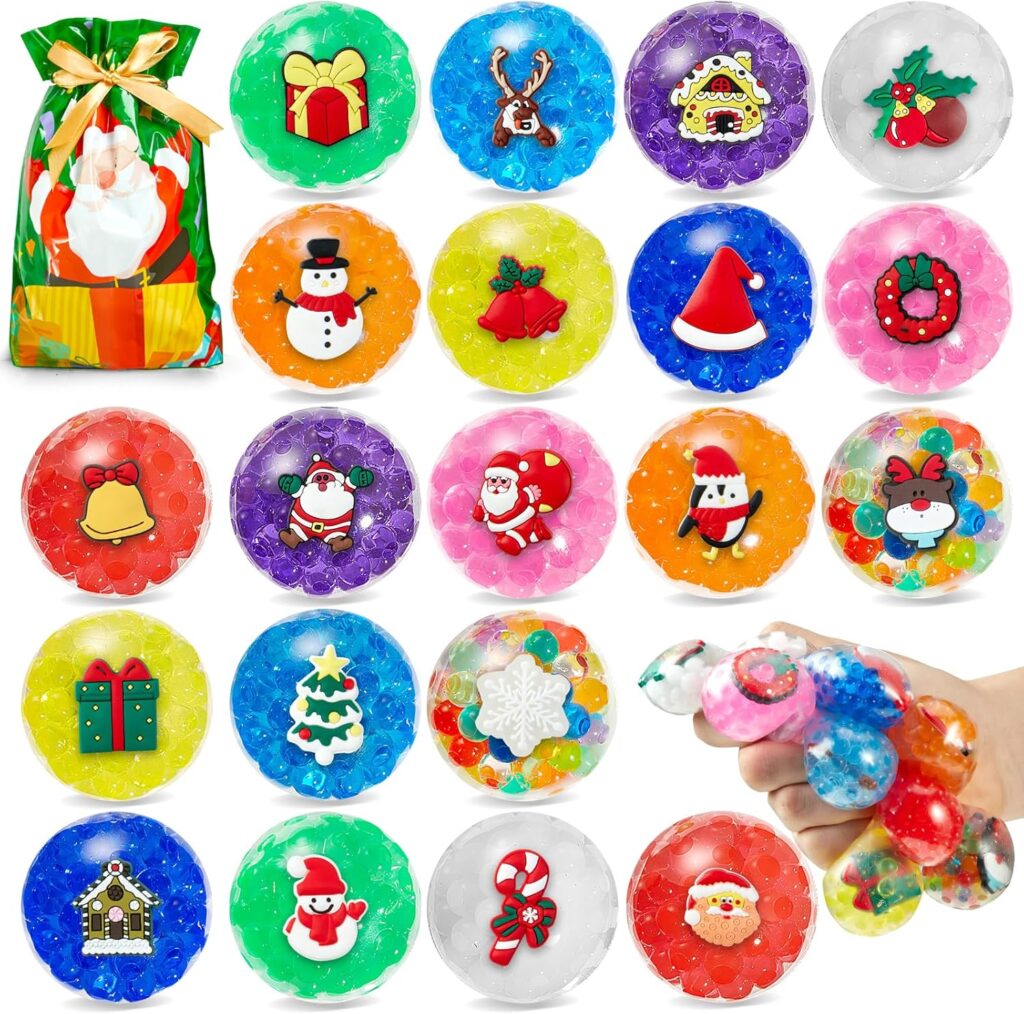
✔ Sensory Toys– Poppers, squishy toys, stacking cups — all useful for “sound play.”
✔ Magnetic Letters / Alphabet Blocks– Perfect for two-letter word formation.

✔ Mouth-motor toys– Blowing bubbles, whistles — GREAT for speech muscles.

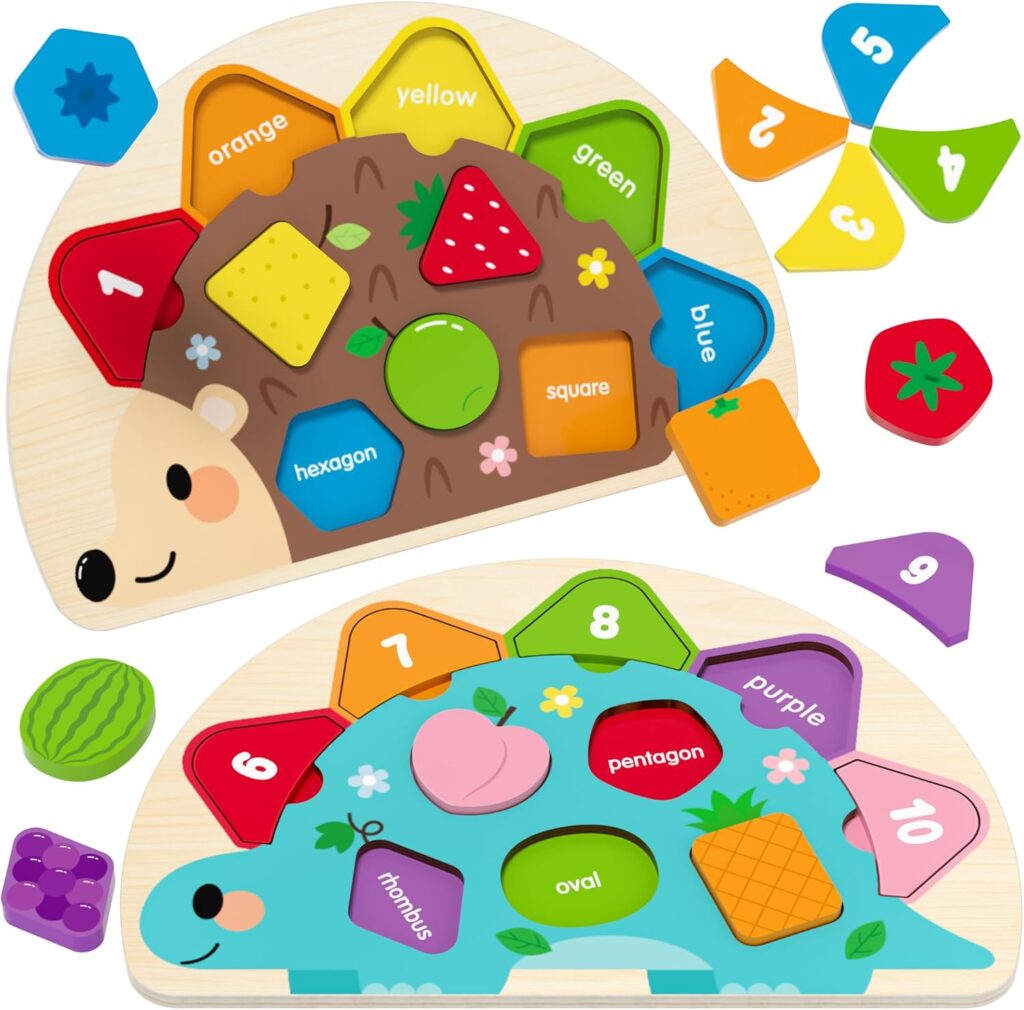
✔ Toddler puzzles– Shape and object puzzles encourage clear naming.
These affiliate suggestions will link effortlessly inside the blog.
Raising Smiles Early Reading Series (Why It Works for Speech + Reading)
Our Two-Letter Word Book was created because parents were asking:
“What do I do BEFORE ABC and long phonics lessons?”
This book is designed for:
- late talkers
- toddlers building first words
- early readers
- receptive language support
- play-based speech learning
Each page is:
- colourful
- short
- predictable
- interactive
- easy for a child to copy
- built on speech science
The progression to three-letter words is natural and gentle, no pressure, no lessons, just connection.
Final Takeaway: Speech grows when children feel capable
Your child isn’t behind.
They’re building their own language journey.
Every sound, every copied word, every pointing moment has meaning.
With the right tools, a supportive parent, short simple words, playful routines, and gentle guidance
your child can begin talking more confidently and naturally.
And Raising Smiles is here to guide you through every step.