
Have you ever finished a long day of parenting, sat down for the first time, and realised you have absolutely nothing left to give?
You have answered questions, prepared meals, reminded someone to get dressed, broken up an argument, checked homework, negotiated screen time, tidied up, and somehow managed to keep everyone alive, fed and reasonably happy. You may even have squeezed in a conversation about feelings, encouraged independence, praised good behaviour and tried to make sure nobody’s emotional needs were overlooked.
And tomorrow, you will do it all again.
Yet somewhere between getting everyone ready in the morning and finally switching off at night, you might find yourself wondering why parenting feels so much harder than it used to.
After all, parents have always had responsibilities. Children have always had big feelings. Teenagers have always pushed boundaries, toddlers have always tested patience, and getting children to eat vegetables has probably challenged parents for generations.
So what has changed?
The truth is that parenting in 2026 comes with a different set of pressures. Parents are raising children in a world shaped by smartphones, social media, rising living costs, constant information, changing expectations and increasingly busy family lives. They are expected to protect their children from the world while preparing them to succeed in it.
They are also expected to do all this calmly, consistently and with the right parenting technique.
No wonder so many parents feel exhausted.
If you have been feeling that parenting is harder than you expected, you are not necessarily doing anything wrong. You may simply be trying to meet an enormous number of demands in a world that rarely gives parents the space to breathe.
Let’s look at why modern parenting feels so difficult, what has changed, and how you can make family life feel a little more manageable without putting even more pressure on yourself.
1. There Is Too Much Parenting Advice, and Everyone Has an Opinion
One of the biggest differences between parenting today and parenting in previous generations is the amount of information available.
If your child refuses to listen, you can search for an explanation. If they have a tantrum, there are videos explaining what to do. If they struggle with friendships, sleep, homework, confidence or behaviour, there is an article, podcast, expert or social media account ready to offer advice.
Access to information can be incredibly helpful. Parents can learn about child development, recognise when a child needs additional support and discover approaches that work better for their family.
But there is a downside.
When every parenting challenge comes with a hundred different opinions, it becomes difficult to trust your own judgement.
One expert says you should establish firm boundaries. Another says you need to understand the emotion behind the behaviour. Someone else explains that the behaviour may be a sign of an unmet need.
All three perspectives may have something useful to offer. The problem is trying to apply every piece of advice to every situation.
Imagine your child has ignored your instruction for the fifth time.
You are tired. Dinner is getting cold. You have already asked them to put their shoes away several times.
Instead of simply responding to the situation, you may find yourself thinking about whether you have given a clear instruction, whether your tone was too harsh, whether your child is dysregulated, whether you should offer a choice or whether you are damaging their confidence by raising your voice.
Sometimes, you need to address the behaviour. Sometimes, your child needs support. Sometimes, everyone needs a break.
You do not have to solve every parenting challenge perfectly in the moment.
How to make parenting advice work for you
Rather than trying to follow every parenting trend, focus on what is useful for your child and your circumstances.
Ask yourself:
- Is this advice appropriate for my child’s age and stage?
- Does it address the actual problem we are experiencing?
- Is it realistic for our family?
- Does it help us build a healthier relationship, or does it leave me feeling unnecessarily guilty?
You can learn from parenting experts without treating every recommendation as a rule you must follow.
Good parenting is not about knowing every technique. It is about understanding your child, responding thoughtfully where you can and recognising that you will sometimes get things wrong.
2. Social Media Has Made Parenting Feel Like a Performance
Social media has changed how we see other families.
Open Instagram or TikTok, and you might see beautifully organised playrooms, elaborate lunchboxes, patient parents explaining boundaries, children completing educational activities and families enjoying seemingly effortless weekends together.
There is nothing wrong with sharing these moments. Many parents genuinely enjoy creating activities, documenting family life and exchanging ideas.
However, social media rarely shows the entire picture.
You see the finished activity, not the argument about tidying it away. You see the peaceful bedtime routine, not the forty minutes of negotiation that came before it. You see the parent calmly explaining a boundary, but not necessarily the moment they had to step away because they were overwhelmed.
The result is an unfair comparison.
You are comparing your entire family life, including its mess, noise, uncertainty and difficult moments, with carefully selected snapshots of somebody else’s.
Over time, this can make ordinary parenting feel inadequate.
Perhaps your child spends Saturday morning watching television while you catch up on laundry. Another family appears to have spent the morning baking, reading, exploring nature and making memories.
You might start wondering whether you are doing enough.
But children do not need every afternoon to become a meaningful learning opportunity. They do not need a perfectly planned childhood.
They need care, connection, opportunities to learn and room to experience ordinary life.
Sometimes, a good Saturday is one where everyone gets some rest.
Your child’s childhood does not need to look impressive online
It is worth remembering that children benefit from ordinary experiences: helping prepare dinner, talking about their day, playing with siblings, getting bored, making mistakes and spending time with people who care about them.
These moments may not look particularly exciting in a photograph, but they are part of family life.
You do not need to turn every activity into an opportunity to develop a skill. You do not need to recreate every educational idea you see online.
And you certainly do not need to prove that you are a good parent by documenting your efforts.
Your family life is allowed to be ordinary.
3. The Cost of Living Has Made Family Life More Stressful
Parenting is not separate from financial reality.
Housing, food, childcare, transport, school essentials, clubs, clothing and household bills all compete for a family’s income. Even when parents manage their money carefully, the cost of providing for a family can feel overwhelming.
Financial pressure affects more than what a family can afford. It can affect time, energy, relationships and the emotional atmosphere at home.
A parent working additional hours to cover expenses may have less time to spend with their children. Someone juggling work and childcare may have little flexibility when a child becomes ill. Families may have to turn down activities, delay purchases or make difficult decisions about what they can realistically manage.
There is also the mental burden of constantly calculating.
Can we afford the school trip? Is there enough money for the birthday party? Will the car need repairing? How much will the next food shop cost?
These concerns do not disappear when you walk through the front door.
If you are worried about money, it can be difficult to switch off and give your children your full attention. You may feel guilty about working too much, even when working is necessary to provide for them.
This is one reason parenting can feel harder than it appears from the outside.
You are not just raising children. You may also be managing financial uncertainty, employment pressures and responsibilities that leave very little room for recovery.
Making family life manageable on a realistic budget
A meaningful childhood does not have to be an expensive one.
Library visits, walks, board games, cooking together, local parks and simple family traditions can create opportunities for connection without requiring constant spending.
It can also help to plan around what your family can genuinely afford, rather than what you feel you should be providing.
Children do not need every new toy, paid activity or popular experience.
They need opportunities to participate in family life, develop interests and feel included.
And if money is particularly tight, seeking support is not a parenting failure. Depending on your circumstances, local family services, school support and community organisations may be able to help.
4. Parents Are Expected to Do More Than Ever
Modern parenting often involves balancing several roles simultaneously.
You may be an employee, a partner, a carer, a household manager and the person responsible for remembering that your child needs new school shoes next week.
You might also be expected to monitor screen time, encourage physical activity, support emotional development, oversee homework, maintain friendships and prepare your children for an uncertain future.
Many of these responsibilities matter. The difficulty is that they all require time and attention, and parents have a limited amount of both.
Even when another adult shares the parenting responsibilities, one person may still carry much of the mental load: remembering appointments, anticipating problems, organising activities and noticing what needs doing before anyone else does.
This work is easy to overlook because much of it happens in the background.
You might spend ten minutes arranging a school appointment, another fifteen checking an email from a teacher and the rest of your lunch break ordering something your child needs.
Individually, these tasks seem small. Collectively, they can make it feel as though you are always working.
And when you finally have time to sit down, there may still be a mental list running through your head.
You cannot be fully available to everyone all the time
One of the most useful things parents can do is recognise that not every task requires immediate attention.
Some things need to happen today. Others can wait.
Your home does not have to be spotless before you relax. Every meal does not need to be prepared from scratch. Not every school activity needs an elaborate contribution.
Where possible, share responsibilities with other adults and give children age-appropriate tasks.
Children can help put away their belongings, prepare simple snacks, organise school items and participate in household routines.
These tasks may take longer initially, but they help children develop independence and reduce the expectation that one person must do everything.
You are raising children to become capable adults, not training yourself to remain permanently indispensable.
5. Technology Has Added a New Layer to Parenting
Previous generations of parents worried about where their children went after school, who they spent time with and whether they were safe.
Those concerns still exist.
However, technology means that children’s social lives, entertainment and potential risks can extend into the home through phones, tablets, gaming platforms and social media.
Parents now have to consider questions that did not affect their own childhoods in the same way.
How much screen time is appropriate? When should a child have a phone? What happens when classmates are using social media? How do you discuss online bullying, inappropriate content, privacy and contact with strangers?
There is no single answer that suits every child.
A teenager may need more independence than a primary-school child, while a child who struggles with self-regulation may need different boundaries from a sibling of the same age.
Meanwhile, technology can create conflict within families.
A child may become upset when asked to put away a device. A parent may worry that limiting access will leave their child feeling excluded. Another parent may feel uncomfortable about how much time the whole family spends looking at screens.
These are real challenges, and they are not always solved by simply taking devices away.
Finding a healthier relationship with screens
Instead of focusing exclusively on the number of minutes a child spends on a device, consider the wider picture.
Is screen use affecting sleep, physical activity, schoolwork, relationships or other important activities? Is your child accessing age-appropriate content? Can they stop using a device without significant difficulty? Do they have opportunities to enjoy activities away from screens?
These questions can help you decide where boundaries are needed.
It also helps to establish clear expectations before conflict arises.
For example, devices might be put away during meals, switched off at an agreed time before bed or kept outside bedrooms overnight, depending on the child’s age and circumstances.
Explain the reasons for your rules and review them as your child grows.
And remember that children notice adult behaviour, too.
If you regularly check your phone while they are talking to you, they may reasonably wonder why their own screen use is treated differently.
You do not need to be perfect with technology. You do need to be willing to think about the example you set.
6. Children’s Emotional Needs Are Better Understood, but That Can Feel Exhausting
There is a positive side to modern parenting: we have greater public awareness of children’s emotional development, mental health, neurodiversity and the importance of safe relationships.
Parents have more opportunities to learn why children behave in certain ways and how experiences can affect them.
However, greater awareness can sometimes leave parents feeling responsible for interpreting every emotion and preventing every difficult experience.
A child is upset, and you wonder whether you have acknowledged their feelings properly.
They become angry, and you try to understand what triggered the reaction.
They struggle socially, and you worry about their confidence.
They make a mistake, and you want to help them learn without making them feel ashamed.
These are thoughtful concerns. But they can become exhausting when you feel that every difficult moment requires a perfect response.
Children are allowed to experience disappointment, frustration, boredom and sadness. They will sometimes be unhappy with your decisions.
Your responsibility is not to prevent every uncomfortable feeling.
It is to help them learn how to experience emotions, respond to challenges and seek support when they need it.
Understanding feelings does not mean removing boundaries
You can acknowledge your child’s disappointment without changing a decision.
You can understand why they are angry while still making it clear that hitting is unacceptable.
You can listen to their frustration about homework without agreeing that they should never have to do it.
For example, you might say, “I know you wanted more time to play, and I understand that you’re disappointed. It’s still time to get ready for bed.”
This recognises the child’s feelings without making the boundary negotiable.
There will also be moments when you respond impatiently or misunderstand what your child needs.
What matters is what happens next.
If you speak harshly, you can apologise. If you misunderstand them, you can listen again. If a conversation goes badly, you can revisit it when everyone is calmer.
Repairing a relationship after a difficult moment is an important part of parenting.
You do not have to handle every interaction perfectly to build a secure, loving relationship with your child.
7. Children Face Pressures That Parents Cannot Always See
Parents naturally want to prepare their children for the future. However, the world children are growing up in can feel increasingly complicated.
Academic expectations, friendship difficulties, online comparison, concerns about appearance and pressure to fit in can all affect children’s experiences.
Some children may feel that they need to perform well academically, excel at a sport, look a certain way and maintain a particular social image.
Others may struggle with anxiety, attention, confidence or learning differences that are not immediately obvious to adults.
Parents are left trying to understand what their children are experiencing while making decisions about how best to support them.
You might wonder whether your child needs more encouragement or less pressure. Whether to intervene in a friendship problem or give them space to resolve it. Whether a difficult school term is a temporary challenge or a sign that additional support is needed.
There are no universal answers.
Children differ in temperament, development, interests and support needs. What works for one child may not work for another, even within the same household.
Make room for conversations without turning everything into a lesson
It can be tempting to use every difficult experience as an opportunity to teach resilience, problem-solving or emotional regulation.
Sometimes, children simply need you to listen.
Instead of immediately offering solutions, try asking questions such as:
“What has been the hardest part of your day?”
“Do you want help working out what to do, or would you rather talk about it first?”
“Is there anything you wish had gone differently?”
These questions can help children communicate without feeling that every conversation will become a lecture.
They also give you a better understanding of what support is actually needed.
If a problem persists or begins affecting your child’s wellbeing, sleep, attendance or daily life, consider speaking with their school or an appropriate health professional.
You do not have to work everything out alone.
8. Parents Have Less Time to Rest and Recover
This may be one of the most overlooked reasons parenting feels difficult.
Parents need rest, but family life does not always provide many opportunities for it.
Even when children are asleep, there may be laundry to finish, lunches to prepare, work emails to answer or household tasks waiting.
Parents who work shifts, care for relatives, manage health challenges or raise children without consistent support may have even fewer opportunities to recover.
Over time, persistent tiredness can affect patience, concentration and emotional regulation.
A minor disagreement may feel enormous when you are exhausted. Repeated questions may become harder to tolerate. A child’s refusal to cooperate may feel like one more demand in a day already full of them.
This does not mean you love your children any less.
It means you are human.
There is a difference between occasionally having a difficult day and feeling persistently overwhelmed, irritable or unable to cope.
If exhaustion has become your normal state, it may be worth looking at the demands placed on you rather than assuming you simply need to become more patient.
Rest is not something you have to earn
You do not need to complete every household task before you are allowed to rest.
If the essentials are covered, some things can wait.
You might simplify meals, reduce unnecessary commitments, arrange a more realistic household routine or ask someone you trust for practical support.
If you have a co-parent, discuss how responsibilities can be shared more fairly, including the planning and remembering that happen behind the scenes.
If you are parenting alone, consider whether trusted friends, relatives, school-based support or local community services can offer some practical help.
And if you are struggling emotionally for a prolonged period, speak to your GP or another appropriate professional.
You deserve support before you reach breaking point.
9. We Compare Our Parenting With an Ideal That May Not Be Realistic
Perhaps the most difficult part of modern parenting is the feeling that we should be doing everything well, all the time.
We should be patient but firm, affectionate but consistent, involved but not overbearing.
We should protect our children without making them fearful, encourage independence without withdrawing support and prepare them for the future without putting too much pressure on them.
We should work, maintain relationships, look after our health, manage our homes and somehow remain calm throughout it all.
The problem is not that these goals are unreasonable individually. It is the expectation that we can achieve them all simultaneously, regardless of our circumstances.
Real family life involves competing needs.
There will be days when work takes more of your attention than you would like. There will be evenings when you choose a simple meal because you are tired. There will be times when your child needs more patience than you have available.
And there will be moments when you look back and wish you had handled something differently.
That is not evidence that you are failing.
It is part of being a parent.
What good parenting can look like in real life
Good parenting is not a continuous performance of patience, emotional intelligence and perfectly managed routines.
It can look like apologising after an argument.
It can look like listening to your child while you wash the dishes.
It can look like saying no to an activity because the family needs a quieter weekend.
It can look like asking for help when you are struggling.
It can also look like recognising that a difficult week does not define your relationship with your child.
Children do not need parents who never make mistakes. They need adults who care for them, provide appropriate boundaries, remain willing to learn and take responsibility when things go wrong.
That is a much more realistic standard to work towards.
10. How to Make Parenting Feel More Manageable in 2026
You cannot remove every pressure associated with modern parenting. You may not be able to change your working hours, household expenses, school expectations or the wider world your children are growing up in.
But you can make some parts of family life easier.
The aim is not to become a more productive parent who fits even more into the day.
It is to create a family life that feels more manageable for everyone.
Choose a few priorities instead of trying to fix everything
When family life feels overwhelming, it is tempting to create a long list of things you need to change.
You might decide to improve the bedtime routine, reduce screen time, organise the house, prepare healthier meals, spend more one-to-one time with each child and become more consistent with boundaries.
Trying to tackle everything at once can create another source of pressure.
Instead, identify one or two areas that would make the biggest difference right now.
Perhaps mornings are particularly stressful. Start there.
Maybe everyone is tired and irritable by the evening. Look at how the family can simplify the end of the day.
Small, sustainable changes are generally more useful than ambitious routines that become impossible to maintain.
Build routines that reduce the need for constant reminders
Simple routines can reduce the number of decisions and instructions required throughout the day.
For example, children might get into the habit of placing school bags in the same location, preparing their clothes the night before or checking a short list before leaving the house.
A bedtime routine might include washing, preparing for the next day and choosing a quiet activity before sleep.
The routine does not have to be complicated.
Its purpose is to make certain tasks more predictable and help children gradually take responsibility for them.
Spend time together without making it another task
Connection matters, but it does not always require a special activity.
You might talk during the school run, play a quick game after dinner, listen to music together or ask your child to help you prepare a meal.
If you have several children, you may not be able to give each one an hour of uninterrupted attention every day.
That does not mean you cannot build meaningful relationships with them.
Look for realistic opportunities to connect rather than measuring your parenting by the number of planned activities you complete.
Decide what you can stop doing
This is often more helpful than adding another strategy.
Do you need to attend every social event? Does the house need to be perfectly tidy every evening? Are you taking on responsibilities that another family member could manage?
Are you following parenting advice that does not fit your child or your circumstances?
You are allowed to reconsider commitments that are making family life unnecessarily difficult.
Sometimes, the most useful change is not doing something better.
It is recognising that you do not need to do it at all.
Give yourself the same understanding you want your children to develop
Parents often tell children that mistakes are opportunities to learn, that difficult feelings will pass and that nobody gets everything right.
Yet adults can struggle to apply those principles to themselves.
If you have had a difficult parenting day, acknowledge it without turning it into a judgement about your entire ability as a parent.
Ask yourself what made the situation difficult, whether something could change and whether you need more support.
Then move forward.
You can take responsibility for your actions without treating every mistake as proof that you are not good enough.
Helpful Resources for Making Family Life Easier
Parenting products will not solve every family challenge, and buying more things is not the answer to feeling overwhelmed.
However, a few practical resources can make everyday routines easier, particularly when they address a specific problem your family is experiencing.
If you recommend products through affiliate links on your website, consider resources that offer genuine value rather than encouraging parents to purchase things they do not need.
Here are some categories worth exploring for this article.
1. Family planners and weekly organisers
A family planner can help parents keep track of school activities, appointments, work commitments, meal plans and household responsibilities in one place.
Look for a simple layout that is easy to maintain. A complicated planning system may become another task on an already full to-do list.
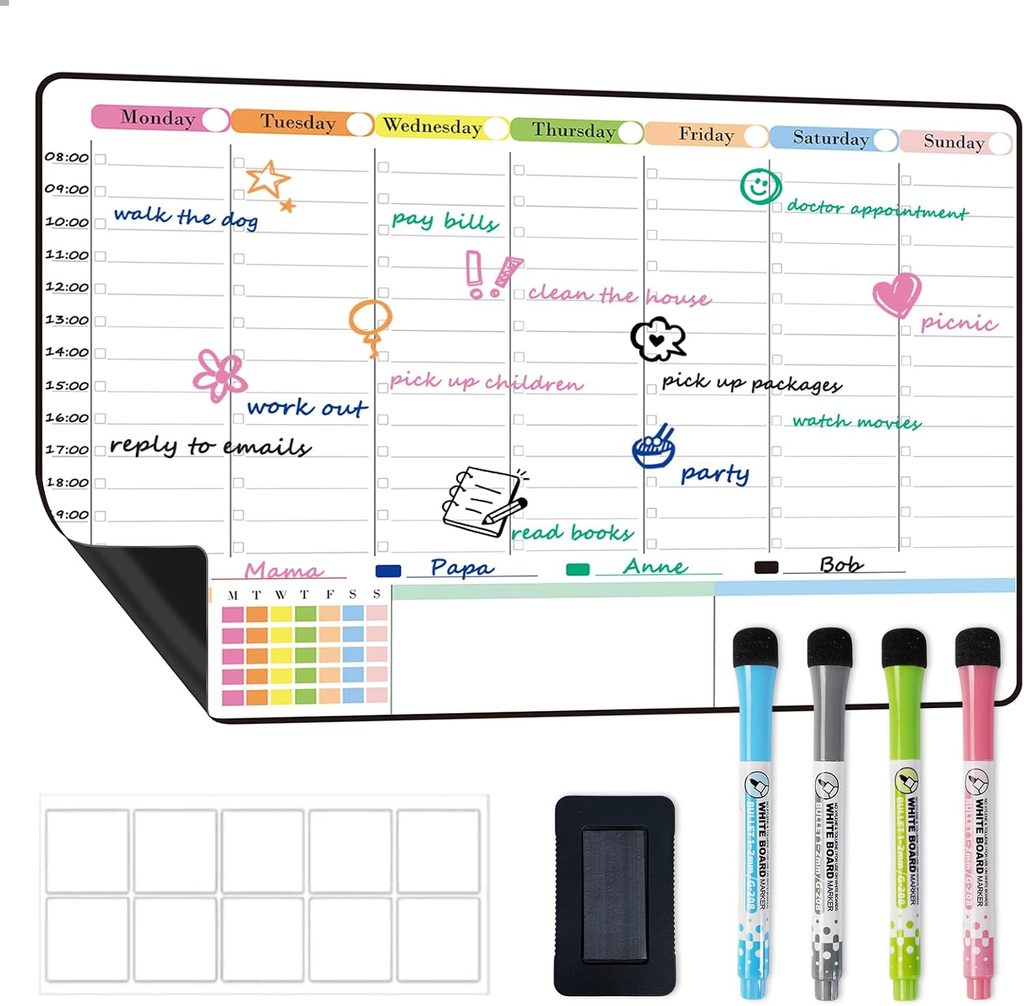
- Family wall planners, magnetic weekly calendars and family organisation planners.
2. Children’s visual routine charts
Visual routine charts can help younger children understand the steps involved in everyday tasks, such as getting ready for school or preparing for bed.
They can also reduce the need for parents to repeat the same instructions throughout the day.
Choose age-appropriate charts that encourage independence without turning ordinary family routines into a system of constant rewards and penalties.
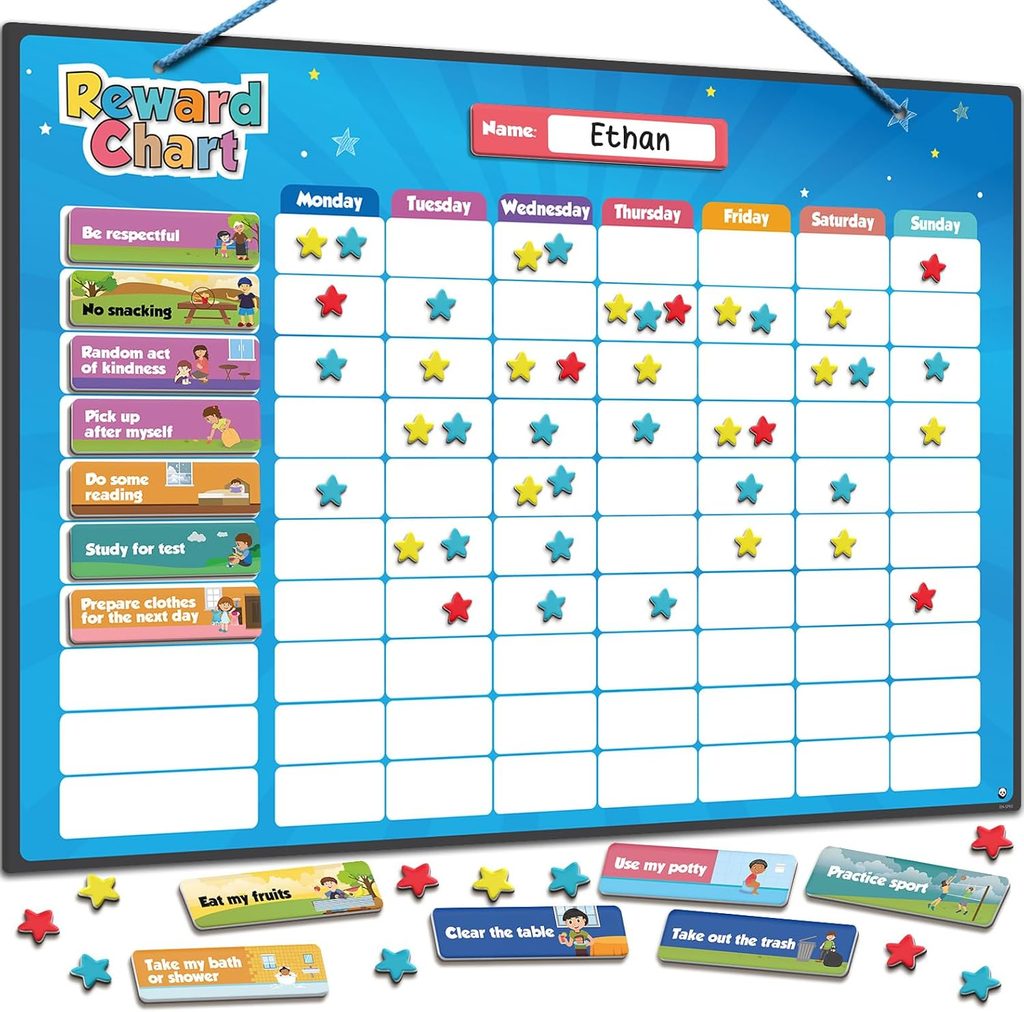
- Reusable morning routine charts, bedtime routine boards and magnetic children’s planners.
3. Screen-time management tools
Families who struggle with device boundaries may find parental-control tools useful for managing age-appropriate access, setting limits and understanding how devices are being used.
The right choice depends on the child’s age, the devices involved and the family’s needs.
Remember that technology tools work best alongside conversations about online safety, privacy and responsible use.

4. Family games and screen-free activity resources
Board games, card games, activity books and simple craft resources can give families easy alternatives to screen-based entertainment.
You do not need to buy a large collection. One suitable game or activity that everyone enjoys may be more useful than a cupboard full of things nobody uses.

Card Games for Families Kids and Adults – Board Game for 5 6 8-12 Year Old | What Would You Choose? Do Kids Rather? – Card Quiz Game – Childrens Travel…
- Age-appropriate family board games, conversation card games, activity books and reusable craft kits.
Printable Offer: The Family Reset Planner
Sometimes, the hardest part of parenting is not knowing what to do. It is trying to remember everything while managing the demands of everyday life.
A simple family planner can help you get some of those responsibilities out of your head and onto paper.
Rather than creating another complicated system to maintain, offer readers a practical Family Reset Planner that helps them organise the week without aiming for perfection.
The printable includes:
- Our priorities this week: Identify the two or three things that matter most to your family.
- Appointments and activities: Keep track of school events, clubs, work commitments and appointments.
- Meals and shopping: Plan a few meals and record essential groceries.
- Children’s responsibilities: Note age-appropriate tasks children can manage themselves.
- One thing we can simplify: Identify a commitment, task or expectation that can be reduced or removed.
- Time to recharge: Make space for one realistic opportunity for rest or family connection.
- A note to myself: Write a reminder that you do not have to do everything perfectly.
The purpose is not to help parents squeeze more into their week.
Parenting in 2026 comes with pressures that can make family life feel relentless.
It is to help them decide what genuinely needs their attention and what can wait.
Feeling like there is too much to keep track of? Download our free Family Reset Planner and create a more manageable week, one small step at a time.
Final Thoughts: Parenting Is Hard, but You Do Not Have to Make It Harder for Yourself
There is more information to process, more online comparison, a complicated digital environment to navigate and, for many families, considerable financial and practical strain.
Parents are also trying to balance their children’s needs with work, relationships, household responsibilities and their own wellbeing.
It is understandable that this can feel exhausting.
But recognising these pressures is not about deciding that parenting was easy in the past or that today’s parents have it harder in every possible way. Every generation has faced its own challenges, and many parents today benefit from information, resources and opportunities that were less accessible to previous generations.
The important point is that modern parenting has its own particular demands, and those demands deserve to be acknowledged.
You do not have to follow every parenting trend. You do not have to turn every difficult moment into a teaching opportunity. You do not have to provide an endlessly stimulating childhood or keep every part of family life running perfectly.
You can set boundaries, make mistakes, apologise, learn and try again.
You can love your children deeply and still find parenting difficult.
You can be grateful for your family and still need a break.
And you can be a good parent without doing everything.
Perhaps the most useful question to ask yourself this week is not, “What else should I be doing for my children?”
Instead, ask, “What could I make easier for our family right now?”
The answer might be a simpler bedtime routine, fewer commitments, more shared responsibilities or permission to leave the washing until tomorrow.
It might be asking for help.
Whatever it is, start there.
You do not need to transform your parenting overnight. Sometimes, making one part of family life a little easier is enough to help everyone breathe.
Because raising children is already a big responsibility. You do not need to carry the additional burden of believing you must do it perfectly.