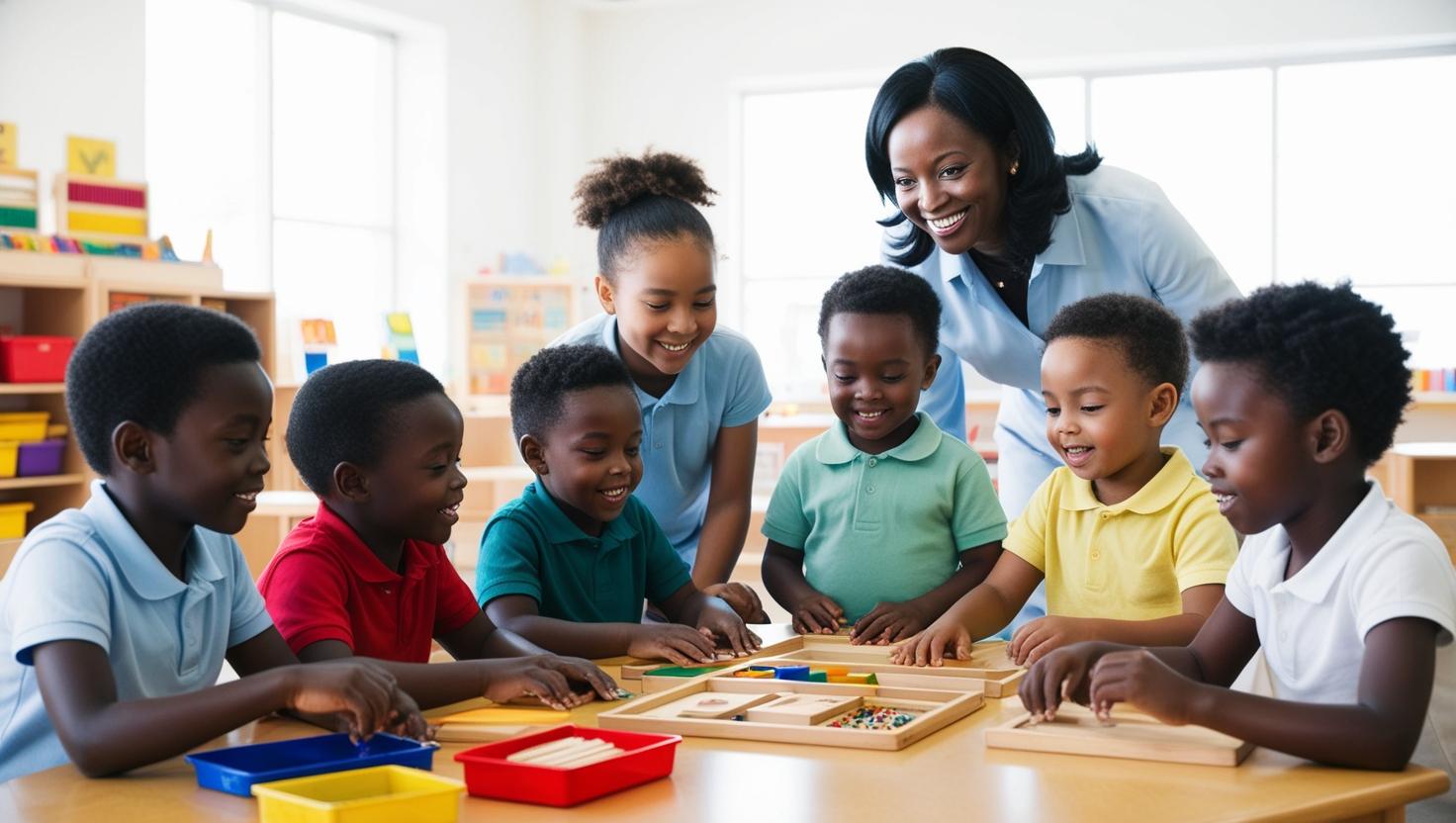
Creating a Nurturing Space for Independent Learning
In today’s parenting world, many parents are turning to Montessori education as a way to foster independence, creativity, and a love for learning in their children. The Montessori method focuses on creating a prepared environment where children can explore, learn, and grow at their own pace. One of the key elements of this approach is the playroom – a space designed to encourage autonomy and hands-on learning. But before diving into the essentials, it’s important to understand the history behind the Montessori method and how it differs from traditional education.
A Brief History of the Montessori Method

The Montessori method was developed by Dr. Maria Montessori, an Italian physician and educator, in the early 1900s. Dr. Montessori’s work was rooted in the belief that children are naturally curious and have an intrinsic desire to learn. She observed that children learned best in an environment that encouraged independence and allowed them to explore at their own pace.
In 1907, Dr. Montessori opened the first Montessori school in Rome. Her approach was revolutionary at the time, as it emphasized hands-on learning, self-directed activities, and a prepared environment that encouraged the child to take charge of their own education.
The Montessori method quickly spread across the globe and continues to be a popular educational choice today, with thousands of Montessori schools operating worldwide. The approach has been adapted for use at home, creating Montessori-inspired playrooms that focus on creating a space for children to learn and grow independently.
Montessori vs. Traditional Education: A Comparison
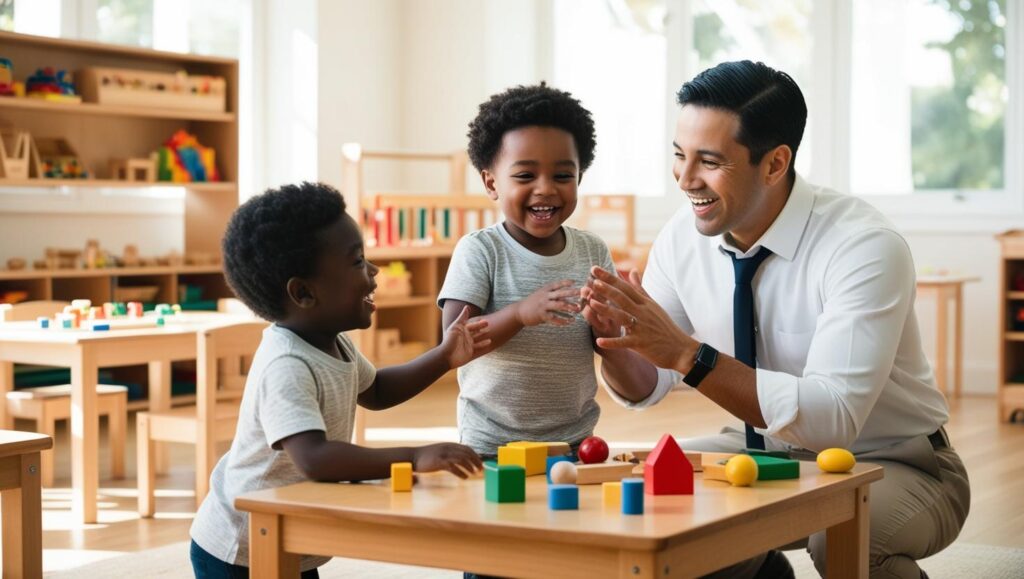
While both Montessori and traditional education aim to promote learning and development, they differ significantly in their approaches to teaching, classroom structure, and student engagement.
1. Learning Approach
- Montessori: The Montessori method is student-centred and emphasizes hands-on learning. Children are encouraged to explore and discover concepts through self-directed activities. Teachers act as guides or facilitators, offering support when needed, but allowing the child to take the lead.
- Traditional Education: In traditional settings, the teacher is typically the primary authority figure, and lessons are often teacher-directed. Students are expected to follow the teacher’s instructions, complete assignments, and learn in a structured, one-size-fits-all approach.
2. Curriculum Structure
- Montessori: The curriculum in a Montessori environment is flexible and tailored to the individual child’s interests and developmental stage. There are no fixed subjects or grade levels. The emphasis is on experiential learning and exploration, allowing children to learn at their own pace.
- Traditional Education: Traditional classrooms often follow a set curriculum with specific grade-level expectations. Children are taught specific subjects such as math, reading, and science, and progress is typically measured by standardized tests or exams.
3. Classroom Environment
- Montessori: Montessori classrooms are carefully prepared environments designed to encourage independence, creativity, and exploration. Furniture is child-sized, and materials are organized on open shelves to allow children to access them independently. The space is designed to foster a sense of order, beauty, and freedom of movement.
- Traditional Education: Traditional classrooms are often designed for teacher-led instruction, with desks arranged in rows facing the teacher. The environment is more structured, and there may be fewer opportunities for independent exploration or hands-on learning.
4. Role of the Teacher
- Montessori: The role of the teacher in a Montessori setting is to observe and guide the children, offering support when needed and ensuring that the materials are available for exploration. Teachers are less likely to deliver direct instruction and more likely to facilitate learning by providing opportunities for discovery.
- Traditional Education: In traditional education, the teacher is the primary source of knowledge and instruction. Teachers often lead lessons, give instructions, and assess student progress through tests and assignments.
5. Learning Pace
- Montessori: Children in Montessori classrooms are encouraged to learn at their own pace. They are free to explore topics that interest them, which may mean that some children move ahead quickly while others take more time. This personalized approach allows each child to follow their natural curiosity.
- Traditional Education: In traditional settings, the pace of learning is generally determined by the curriculum and the teacher. All students are expected to meet the same standards and learn at the same pace, which can be limiting for children who learn faster or slower than their peers.
6. Assessment
- Montessori: Assessment in a Montessori setting is based on observation rather than formal testing. Teachers observe the child’s progress and development over time and provide feedback as needed. The focus is on the child’s individual growth and ability to demonstrate skills rather than test scores.
- Traditional Education: In traditional education, assessment is often based on grades, standardized tests, and quizzes. Students are assessed on their ability to meet specific academic standards, and success is measured through scores or rankings.
Why Create a Montessori Playroom?
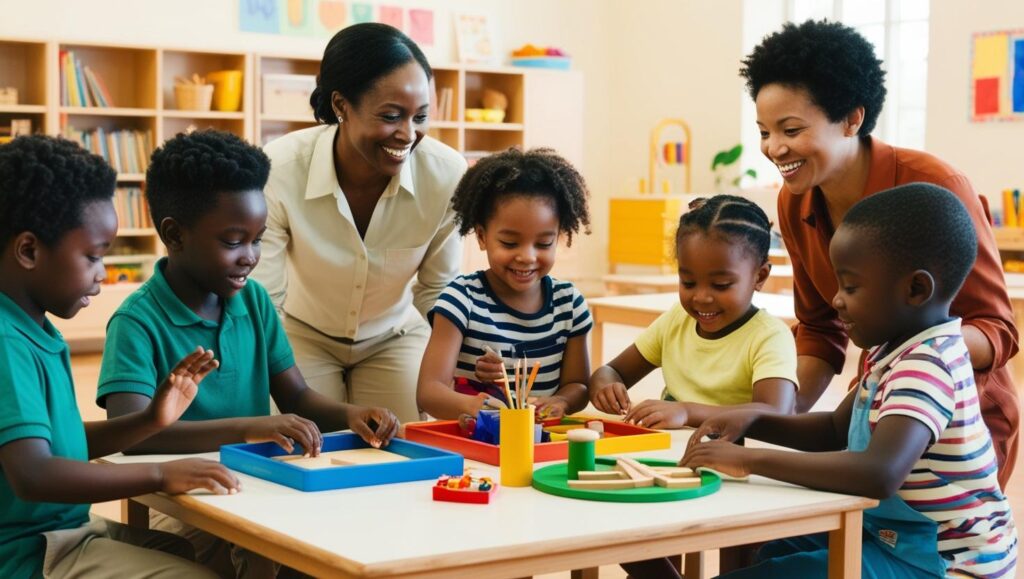
Creating a Montessori-inspired playroom at home allows you to bring the principles of Montessori education into your child’s daily life, even if they aren’t enrolled in a Montessori school. The playroom is the perfect space to implement a child-centred environment that encourages independence, exploration, and learning through hands-on activities. Here’s how you can incorporate the essential elements of a Montessori playroom:
1. Simple, Natural Furniture
The foundation of a Montessori playroom is simplicity. Montessori environments are designed to be free of distractions, allowing children to focus on the task at hand. Choose natural, sustainable furniture such as wooden shelves, tables, and chairs. These should be sized appropriately for your child, so they can easily access their materials without needing adult assistance
2. Open Shelving for Easy Access
Montessori playrooms prioritize the importance of children being able to independently access their toys and learning materials. Open shelving is an excellent solution for this. By using low shelves, your child can see all their available options and choose what they want to play with without asking for help. This encourages decision-making and self-direction.
3. Natural Light and Comfortable Flooring
A Montessori playroom should have plenty of natural light to create a calm and inviting atmosphere. If possible, position the play area near a window, or choose soft lighting that mimics natural daylight. Flooring is also crucial – opt for soft rugs or carpets that are comfortable for your child to sit on while engaging in activities like reading, drawing, or building.
4. Rotating Toys and Learning Materials
In the Montessori method, children are encouraged to learn through hands-on experiences. Select toys and materials that promote exploration and skill-building, such as puzzles, building blocks, art supplies, and books. Make sure to rotate the toys regularly to keep things fresh and engaging. The key is to avoid overwhelming your child with too many choices at once
5. Practical Life Stations
A key component of Montessori education is “Practical Life” activities, which teach children important life skills like pouring, cleaning, and dressing themselves. Set up a small kitchen or cleaning station in your playroom, where your child can practice these tasks. These activities not only help develop fine motor skills but also foster independence and confidence.
6. Books and Reading Corner
A love of reading is an essential part of Montessori education. Create a cosy reading nook with a small, accessible bookshelf stocked with age-appropriate books. Choose books that are both engaging and educational, helping to build vocabulary and cognitive skills. Add cushions or a comfortable chair for your child to sit and immerse themselves in their stories
7. Creative and Sensory Play
Montessori playrooms are designed to stimulate creativity and sensory exploration. Include materials that allow your child to use their senses – such as playdough, water tables, or musical instruments. These types of activities support sensory development and encourage children to use their hands and minds in creative ways
8. Calm, Neutral Colors
Montessori environments focus on creating a calm, peaceful space for learning. Use neutral tones such as soft whites, beiges, and pastels for walls and furniture. These colours promote focus and allow the toys and materials to stand out without overwhelming the senses.
9. Clear, Defined Areas for Different Activities
A Montessori playroom is divided into distinct zones, each dedicated to a specific activity, such as art, reading, and construction. Having clearly defined areas helps children focus on one activity at a time, reducing distractions and encouraging deep engagement.
10. A Sense of Beauty and Order
The final touch for your Montessori playroom is creating an environment that feels beautiful and orderly. While the space should be functional, it should also feel aesthetically pleasing. Use natural materials, such as wooden toys, baskets, and textiles, to create a harmonious and calm environment. This will help your child feel at ease and encourage them to take care of their space
Final Thoughts
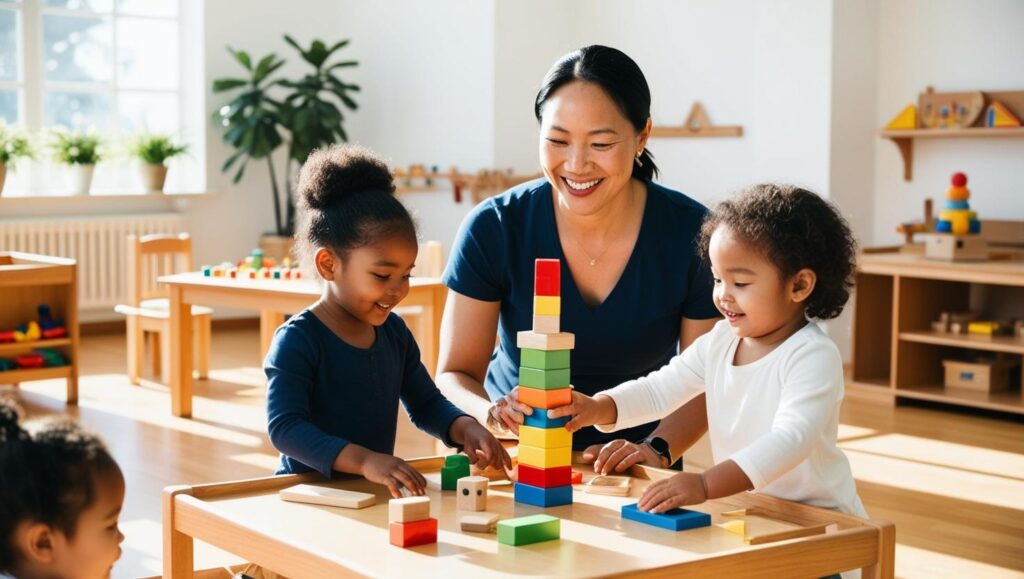
Creating a Montessori playroom is an investment in your child’s development, independence, and love of learning. By incorporating these essential elements, you can build a space that nurtures creativity, fosters independence, and supports lifelong learning. Whether you’re using sustainable furniture, focusing on sensory play, or curating an educational toy collection, the key is to design a space that is both beautiful and functional for your little one.